Science as a Force for Progress Part 6: Unseen Worlds and Hidden Forces

In the fifth part of this series, we examined how Watt, Davy, and Faraday harnessed energy through steam and electromagnetism, propelling the Industrial Revolution and transforming human capability. In Part 6, we delve into the mid-to-late 19th century, when science uncovered invisible realms within biology and physics. Charles Darwin revealed life’s evolutionary mechanisms, Louis Pasteur and Robert Koch established the germ theory of disease, and James Clerk Maxwell unified electromagnetism into a predictive framework. These breakthroughs dismantled myths of creation and spontaneous life, replacing them with evidence-based explanations that revolutionized health, agriculture, and technology.

The Diversity of Life Locked in Mystery

For millennia, the diversity of life was attributed to divine creation, with species seen as fixed and unchanging since their origin. Similarly, diseases were blamed on miasmas (bad air) or imbalances, while many believed life could arise spontaneously from non-living matter, as maggots seemed to emerge from decaying meat.

Charles Darwin, an English naturalist born in 1809, shattered these views with evidence gathered during his five-year voyage on HMS Beagle (1831–1836). Observing variations in species across continents and islands – particularly the Galápagos finches, whose beaks adapted to different food sources – Darwin developed the theory of evolution by natural selection.
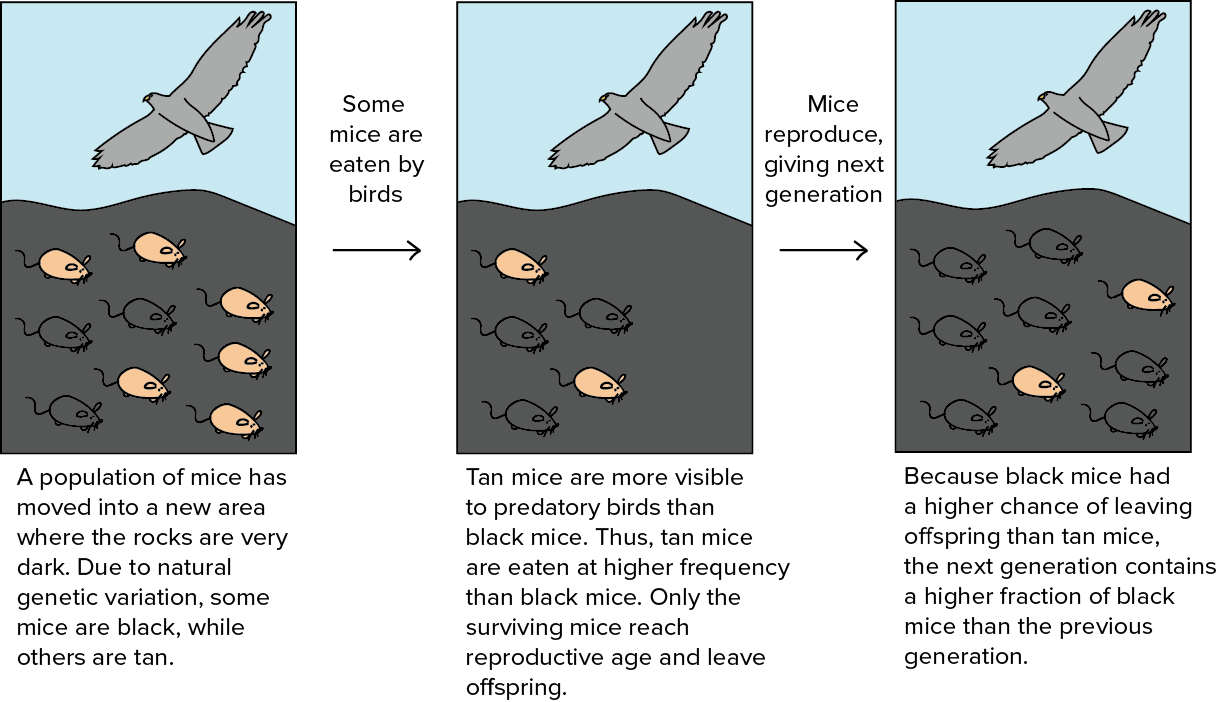
Illustration of Darwin's finches demonstrating natural selection.
Illustration of Darwin’s finches demonstrating natural selection.
(Credit: Kahn Academy)

Published in 1859 as On the Origin of Species, Darwin’s work proposed that species evolve over generations through variation, inheritance, and the survival of the fittest in competitive environments. Though initially controversial because it challenged religious literalism, his theory is supported by fossils, geography, and breeding evidence. It unified biology and explained life’s diversity without supernatural intervention.

Breaking the Living World Open

In medicine, the germ theory overturned spontaneous generation and miasma ideas. Louis Pasteur, a French chemist born in 1822, disproved spontaneous generation in the 1860s with elegant swan-neck flask experiments: broth in curved-neck flasks stayed sterile despite air access, as dust-borne microbes were trapped; breaking the neck allowed contamination. Pasteur extended this to fermentation and disease, showing microbes caused spoilage and infection. His work led to pasteurization that resulted in saving industries like wine and milk, and vaccines, including for rabies.
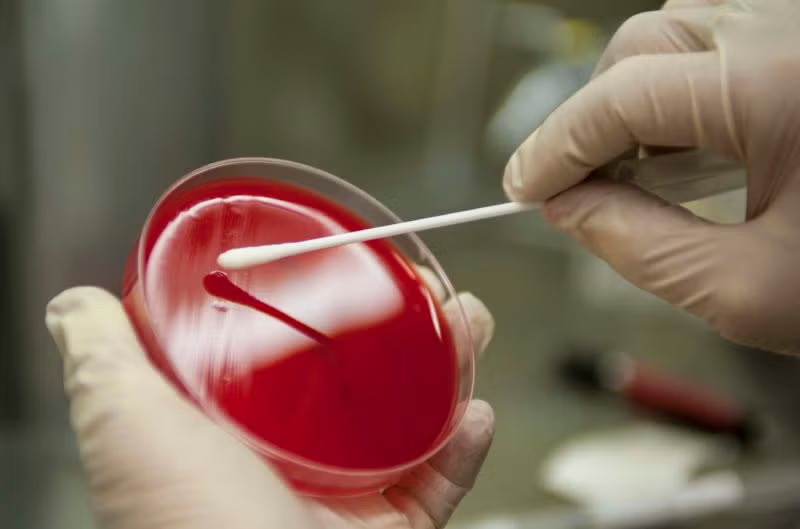
A petri dishes with bacterial cultures, foundational to Robert Koch's work.
A petri dishes with bacterial cultures, foundational to Robert Koch’s work.

Robert Koch, a German physician born in 1843, advanced this with rigorous methods. In the 1870s–1880s, he isolated bacteria like anthrax and tuberculosis using solid cultures on potato slices and later agar in Petri dishes (invented by his assistant). Koch’s postulates – criteria to prove a microbe causes disease – established microbiology as a science, enabling targeted treatments and public health measures that conquered epidemics.
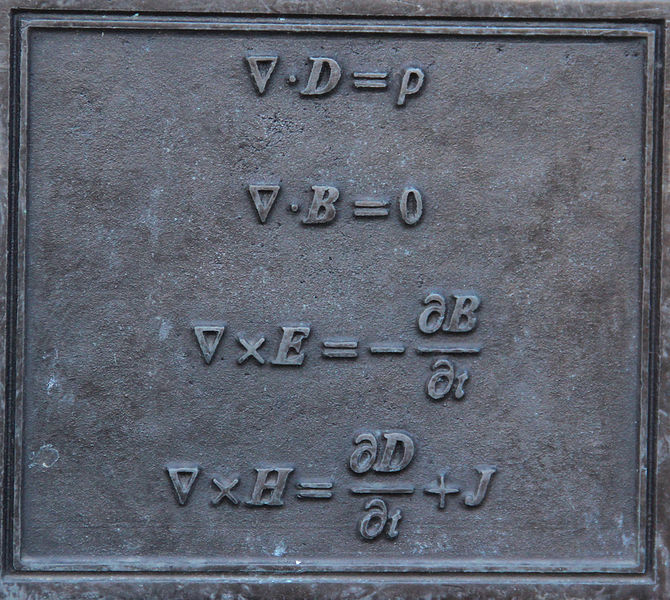
James Clerk Maxwell's electromagnetic equations
James Clerk Maxwell’s electromagnetic equations.

In physics, James Clerk Maxwell, a Scottish theorist born in 1831, synthesized electricity and magnetism. In his 1865 treatise, he formulated four equations showing electric and magnetic fields as intertwined and propagating as waves at the speed of light. It predicted other forms of electromagnetic radiation like radio waves. Maxwell’s work unified phenomena from Faraday’s induction to light itself, providing the theoretical foundation for wireless communication and modern physics.

Darwin, Pasteur, Koch, and Maxwell illuminated hidden forces of life and nature. Darwin explained biological change, Pasteur and Koch conquered invisible pathogens, and Maxwell revealed electromagnetism’s unity. Their evidence-driven methods extended science’s reach, improving health, food security, and technology while deepening our understanding of existence.

As we advance to Part 7 of this series, Atoms, Quanta, and the Fabric of Reality, we explore the early 20th-century revolutions that probed the subatomic world and spacetime itself. Just as Darwin traced life’s descent, scientists like Marie Curie unlocked radioactivity, Albert Einstein redefined gravity and energy, and Niels Bohr and others unveiled quantum mechanics. Science, undeterred by the unseen, continued to reshape our cosmic and material worldview.
Continue reading Part 7 of Science as a Force for Progress.

Science as a Force for Progress Part 5: Steam and Revolution

In the fourth part of this series, we saw how Enlightenment thinkers like Lavoisier, Priestley, and Franklin dismantled ancient mysteries of chemistry and electricity through precise experimentation and measurement. In Part 5, we explore how these insights fueled the Industrial Revolution from the late 18th to the mid-19th century. Innovators such as James Watt, Humphry Davy, and Michael Faraday harnessed energy on an unprecedented scale, perfecting steam power and unlocking electromagnetism. Their achievements transformed economies, transportation, and daily life, proving science’s power to drive material progress and elevate human productivity beyond imagination.

The Ancient Power Locked in Inefficiency

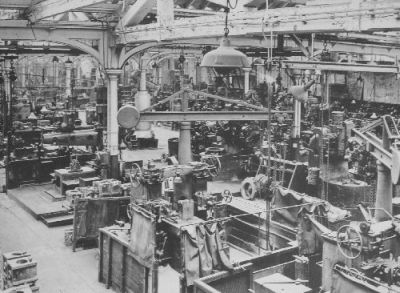
Early Industrial Revolution factory powered by steam engines

Early steam engines, like Thomas Newcomen’s atmospheric engine from 1712, were revolutionary machines but woefully inefficient. Their initial use was primarily to pump water from coal mines, where their source of fuel was already located. They wasted vast amounts of heat and fuel, limiting their application outside these mines. Up to this time, the world relied on human, animal, water, and wind power – much more reliable but constrained by nature’s whims and human limits.

James Watt, a Scottish instrument maker born in 1736, changed everything. In the 1760s, while repairing a Newcomen engine, Watt realized the key flaw: alternating heating and cooling of the cylinder wasted energy. His breakthrough was the separate condenser, allowing the cylinder to remain hot while condensation occurred elsewhere. Patented in 1769 and refined with partner Matthew Boulton, Watt’s engine also added rotary motion, turning pistons into reliable power for machinery.

By the 1780s, Watt’s engines powered textile mills, ironworks, and factories, dramatically increasing output. His additions, like the governor for speed control and double-acting cylinder, made steam power efficient and versatile. Factories no longer needed rivers for water wheels; they could cluster in cities, drawing coal-fueled steam to drive mechanized production. This sparked explosive economic growth, urbanization, and the factory system, ushering in a new era known as the Industrial Revolution.

Breaking the Energy Open

Advancements in electrochemistry and electromagnetism further amplified this era’s progress. Humphry Davy, an English chemist born in 1778, built on Volta’s battery to perform large-scale electrolysis. In 1807–1808, using powerful voltaic piles, he isolated elements like potassium and sodium for the first time, revealing electricity’s chemical power.

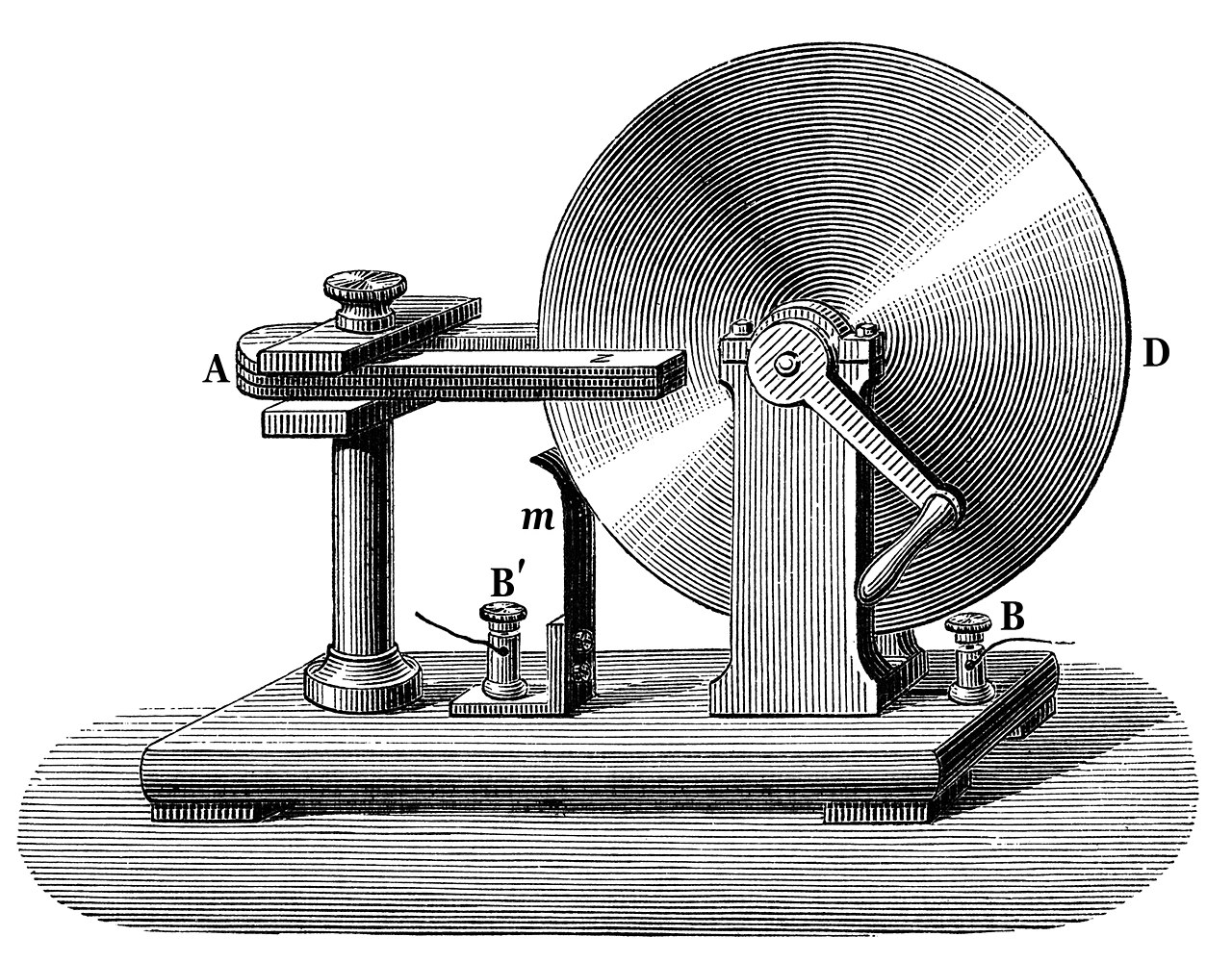
Davys work not only expanded the periodic table but demonstrated electricity’s practical potential, from mining safety lamps (his famous Davy lamp prevented explosions) to industrial processes. The pinnacle came with Michael Faraday, Davy’s protege, born in 1791. A self-taught genius, Faraday discovered electromagnetic induction in 1831: moving a magnet near a coil induced electric current. His simple experiments, including the homopolar generator (Faraday disk), laid the foundation for electric generators and electric motors.

Michael Faraday's electromagnetic induction experiment with the Faraday disk.
Michael Faraday’s electromagnetic induction experiment with the Faraday disk.

Faraday’s insights into electromagnetic fields unified electricity and magnetism, enabling the dynamo and transformer. Combined with steam power driving factories and railways (George Stephenson’s Rocket in 1829 exemplified steam locomotion), these discoveries heralded an age of abundant energy.

Watt, Davy, and Faraday embodied science’s transformative force in industry. Watt unleashed steam’s potential for mechanical work, Davy bridged chemistry and electricity, and Faraday generated electricity from motion. Their inventions powered factories, illuminated cities, and connected continents, lifting standards of living and accelerating innovation at a rapid pace.

As we proceed to Part 6 of this series, Unseen Worlds and Hidden Forces, we delve into the 19th-century discoveries that revealed life’s deepest mechanisms and nature’s invisible realms. Just as Watt harnessed steam, scientists like Charles Darwin explained evolution by natural selection, while Louis Pasteur and Robert Koch conquered germs, and James Clerk Maxwell unified light and electromagnetism. Science continued its march, illuminating biology and physics with profound implications for health, society, and our place in the universe.

Continue reading Part 6 of Science as a Force for Progress.

Science as a Force for Progress 4: Sparks of Enlightenment

In the third part of this series, we explored how Vesalius, Harvey, and Van Leeuwenhoek revolutionized medicine by dismantling the ancient humoral theory and revealing the body’s inner workings through dissection, experimentation, and microscopic observation. In Part 4, we enter the 18th-century Enlightenment, an era when reason and empirical inquiry accelerated scientific progress across multiple fields. Pioneers like Antoine Lavoisier, Benjamin Franklin, and Joseph Priestley overthrew outdated theories in chemistry and electricity, transforming vague speculations into precise, predictive sciences. Their work not only illuminated natural phenomena but also fueled technological and industrial advancements, demonstrating science’s growing role in reshaping society.

The Ancient Elements Locked in Mystery

For centuries, chemistry was shackled to ancient ideas of matter, rooted in Aristotle’s four elements—earth, air, fire, and water—and the elusive phlogiston theory. Proposed in the late 17th century, phlogiston was imagined as a weightless substance released during combustion, explaining why materials like wood seemed to lose something when burned (though ashes weighed less). This theory, while intuitively appealing, failed to account for observed weight gains in some reactions and hindered true understanding.

The Enlightenment brought a demand for quantitative precision. Antoine Lavoisier, a French polymath born in 1743, revolutionized chemistry by insisting on meticulous measurement. Known as the “father of modern chemistry,” Lavoisier disproved phlogiston through careful experiments with balances and closed systems. He showed that combustion involved combining with a component of air—what we now call oxygen—rather than releasing a mysterious substance. In one famous experiment, he heated mercury in a sealed vessel, observing weight gain as it formed a red calx, and then reversed the process, proving mass conservation.

Antonine Lavoisier in his Laboratory

Lavoisier’s 1789 treatise, Elements of Chemistry, established the law of conservation of mass and a new system of nomenclature, replacing alchemical obscurity with clear, rational naming. His work laid the foundation for chemistry as a rigorous science, enabling future discoveries in industry and medicine.

Breaking the Sparks Open

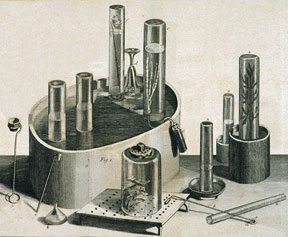
Joseph Priestly's experiments with a mouse and oxygen
Joseph Priestly’s experiments with a mouse and oxygen

Parallel advances occurred in understanding electricity and gases. Joseph Priestley, an English theologian and scientist born in 1733, isolated oxygen in 1774 by heating mercuric oxide, calling it “dephlogisticated air” under the old theory. His experiments with gases, including placing a mouse under a bell jar to observe its survival in oxygen-rich air, highlighted air’s role in respiration and combustion – insights that bridged chemistry and biology.

Meanwhile, Benjamin Franklin, the American polymath born in 1706, demystified electricity. In his famous 1752 kite experiment, he flew a kite in a thunderstorm, drawing sparks from a key to prove lightning was electrical discharge, not divine wrath. This led to the invention of the lightning rod, protecting buildings and lives. Franklin’s work unified atmospheric and laboratory electricity, promoting the idea of positive and negative charges. Together with Priestley’s gases and Lavoisier’s precision, these breakthroughs dismantled mystical views of fire, air, and lightning, replacing them with mechanistic explanations grounded in experiment.

Lavoisier, Priestley, and Franklin exemplified the Enlightenment’s scientific ethos: rigorous testing, collaboration (despite rivalries), and application for human benefit. Lavoisier modernized chemistry, Priestley unveiled vital gases, and Franklin harnessed electricity’s power. Their collective efforts sparked the Chemical Revolution and laid groundwork for electrical engineering, propelling humanity toward industrialization.

As we advance to Part 5 of this series, Steam and Revolution, we examine how these Enlightenment insights ignited the Industrial Revolution in the late 18th and 19th centuries. Innovators like James Watt perfected the steam engine, while Humphry Davy and Michael Faraday unlocked electrochemistry and electromagnetism. Just as Lavoisier quantified reactions, these advances harnessed energy on a massive scale, transforming economies and daily life through factories, railways, and electric power.

Continue reading Part 5 of Science as a Force for Progress.

Science as a Force for Progress 3: From Humors to Heartbeats

In the second part of this series, we witnessed how Copernicus, Galileo, and Newton shattered the geocentric worldview, replacing dogma with evidence-based understanding of the cosmos. In Part 3, we shift our focus inward to the human body, tracing the scientific revolution in medicine during the same transformative era. Pioneers like Andreas Vesalius, William Harvey, and Antonie van Leeuwenhoek challenged ancient theories of health and disease, dismantling the long-held doctrine of the four humors and establishing a foundation for modern physiology and microbiology. Their work demonstrated science’s capacity to conquer ignorance about our own bodies, paving the way for treatments that would dramatically extend and improve human life.

The Ancient Body Locked in Imbalance

For over a millennium, medicine was dominated by the theory of the four humors, originating with Hippocrates and Galen in ancient Greece and Rome. This framework posited that health depended on the balance of four bodily fluids: blood, phlegm, yellow bile, and black bile. Imbalances were thought to cause disease, and treatments like bloodletting or purging aimed to restore equilibrium. Endorsed by religious and scholarly authorities, this model aligned with intuitive observations of the body but lacked empirical verification. It persisted through the Middle Ages, often intertwined with superstition, hindering genuine progress in understanding anatomy and physiology.

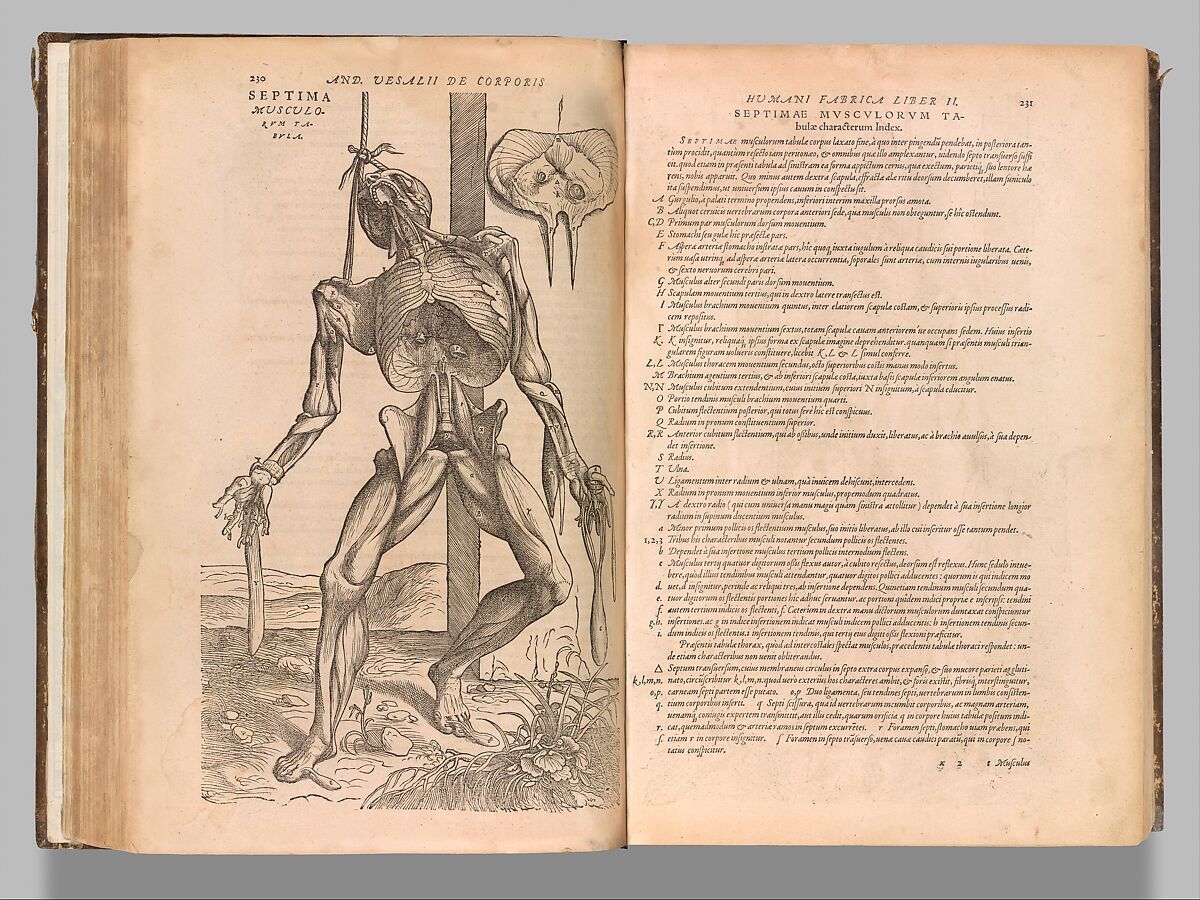
The revolution began with Andreas Vesalius, a Belgian anatomist born in 1514, who dared to question Galen’s teachings through direct observation. Galen had based much of his anatomy on animal dissections, as human dissection was taboo in ancient Rome. By the 16th century, attitudes had shifted slightly, allowing limited human autopsies. Vesalius seized this opportunity, performing dissections himself and correcting hundreds of Galen’s errors. His masterpiece, De humani corporis fabrica (On the Fabric of the Human Body), published in 1543—the same year as Copernicus’s heliocentric work—featured exquisitely detailed illustrations of muscles, bones, nerves, and organs derived from actual human cadavers.

Illustration from De humani corporis fabrica

Vesalius’s approach was revolutionary: he prioritized hands-on evidence over ancient texts, encouraging students to dissect and see for themselves. His work exposed inaccuracies, such as Galen’s claim of pores in the heart’s septum allowing blood to pass between chambers—a notion that persisted despite contradicting reality. Though Vesalius faced backlash from traditionalists who accused him of heresy, his accurate depictions laid the groundwork for modern anatomy. By insisting on empirical validation, Vesalius exemplified science’s power to liberate knowledge from outdated authority.

Breaking the Body Open

Vesalius’s approach was revolutionary: he prioritized hands-on evidence over ancient texts, encouraging students to dissect and see for themselves. His work exposed inaccuracies, such as Galen’s claim of pores in the heart’s septum allowing blood to pass between chambers—a notion that persisted despite contradicting reality. Though Vesalius faced backlash from traditionalists who accused him of heresy, his accurate depictions laid the groundwork for modern anatomy. By insisting on empirical validation, Vesalius exemplified science’s power to liberate knowledge from outdated authority.

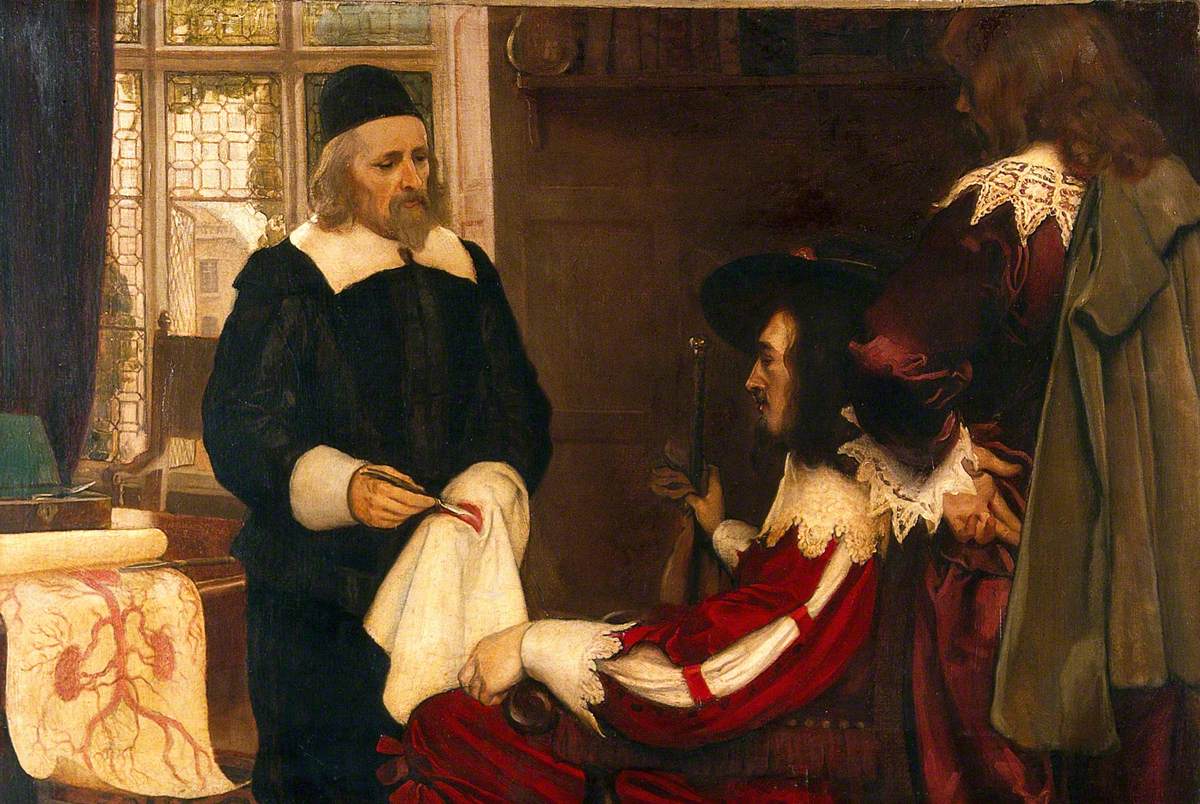
William Harvey Demonstrating His Theory of Circulation of Blood before Charles I

Published in 1628 as De motu cordis (On the Motion of the Heart and Blood), Harvey’s discovery was a triumph of quantitative reasoning and experimentation. He calculated that the heart pumped far more blood than the body could consume or the liver produce, necessitating recirculation. Though initially met with skepticism – some called it impossible – his ideas gained acceptance, especially as they aligned with emerging mechanical views of the body inspired by the Scientific Revolution. Harvey’s work transformed medicine from speculative philosophy into a science grounded in observable mechanisms, enabling future advances in surgery, cardiology, and beyond.

The era’s microscopic explorations further expanded this progress. Antonie van Leeuwenhoek, a Dutch draper and self-taught scientist born in 1632, crafted powerful single-lens microscopes far superior to contemporaries’. Peering into rainwater, saliva, and scrapings from his teeth, he discovered a hidden world of “animalcules”- what we now know as bacteria, protozoa, and spermatozoa. His detailed drawings and reports to the Royal Society in London, starting in the 1670s, revealed life invisible to the naked eye, challenging the notion of spontaneous generation and hinting at microbial causes of disease. Leeuwenhoek’s observations, though not immediately applied to medicine, opened the door to microbiology. Combined with Harvey’s circulation and Vesalius’s anatomy, they dismantled humoral theory’s grip, replacing it with a dynamic, evidence-based understanding of the body

Together, Vesalius, Harvey, and Leeuwenhoek forged a new era in medicine. Vesalius provided the accurate map of the body, Harvey explained its vital engine, and Leeuwenhoek unveiled its tiniest inhabitants. Their reliance on dissection, experimentation, and observation over tradition mirrored the astronomical breakthroughs, proving science’s universal method could heal as profoundly as it enlightened.

As we move to Part 4 of this series, Sparks of Enlightenment, we explore how these foundational shifts ignited the 18th-century Enlightenment, where reason and experimentation accelerated progress across chemistry, electricity, and biology. Figures like Antoine Lavoisier would overthrow ancient elements with modern chemistry, just as Benjamin Franklin tamed lightning and Joseph Priestley uncovered oxygen’s role in life. Science, now a disciplined force, was poised to reshape industry, society, and human potential.

Continue reading Part 4 of Science as a Force for Progress.