In the second part of this series, we witnessed how Copernicus, Galileo, and Newton shattered the geocentric worldview, replacing dogma with evidence-based understanding of the cosmos. In Part 3, we shift our focus inward to the human body, tracing the scientific revolution in medicine during the same transformative era. Pioneers like Andreas Vesalius, William Harvey, and Antonie van Leeuwenhoek challenged ancient theories of health and disease, dismantling the long-held doctrine of the four humors and establishing a foundation for modern physiology and microbiology. Their work demonstrated science’s capacity to conquer ignorance about our own bodies, paving the way for treatments that would dramatically extend and improve human life.
The Ancient Body Locked in Imbalance
For over a millennium, medicine was dominated by the theory of the four humors, originating with Hippocrates and Galen in ancient Greece and Rome. This framework posited that health depended on the balance of four bodily fluids: blood, phlegm, yellow bile, and black bile. Imbalances were thought to cause disease, and treatments like bloodletting or purging aimed to restore equilibrium. Endorsed by religious and scholarly authorities, this model aligned with intuitive observations of the body but lacked empirical verification. It persisted through the Middle Ages, often intertwined with superstition, hindering genuine progress in understanding anatomy and physiology.
The revolution began with Andreas Vesalius, a Belgian anatomist born in 1514, who dared to question Galen’s teachings through direct observation. Galen had based much of his anatomy on animal dissections, as human dissection was taboo in ancient Rome. By the 16th century, attitudes had shifted slightly, allowing limited human autopsies. Vesalius seized this opportunity, performing dissections himself and correcting hundreds of Galen’s errors. His masterpiece, De humani corporis fabrica (On the Fabric of the Human Body), published in 1543—the same year as Copernicus’s heliocentric work—featured exquisitely detailed illustrations of muscles, bones, nerves, and organs derived from actual human cadavers.
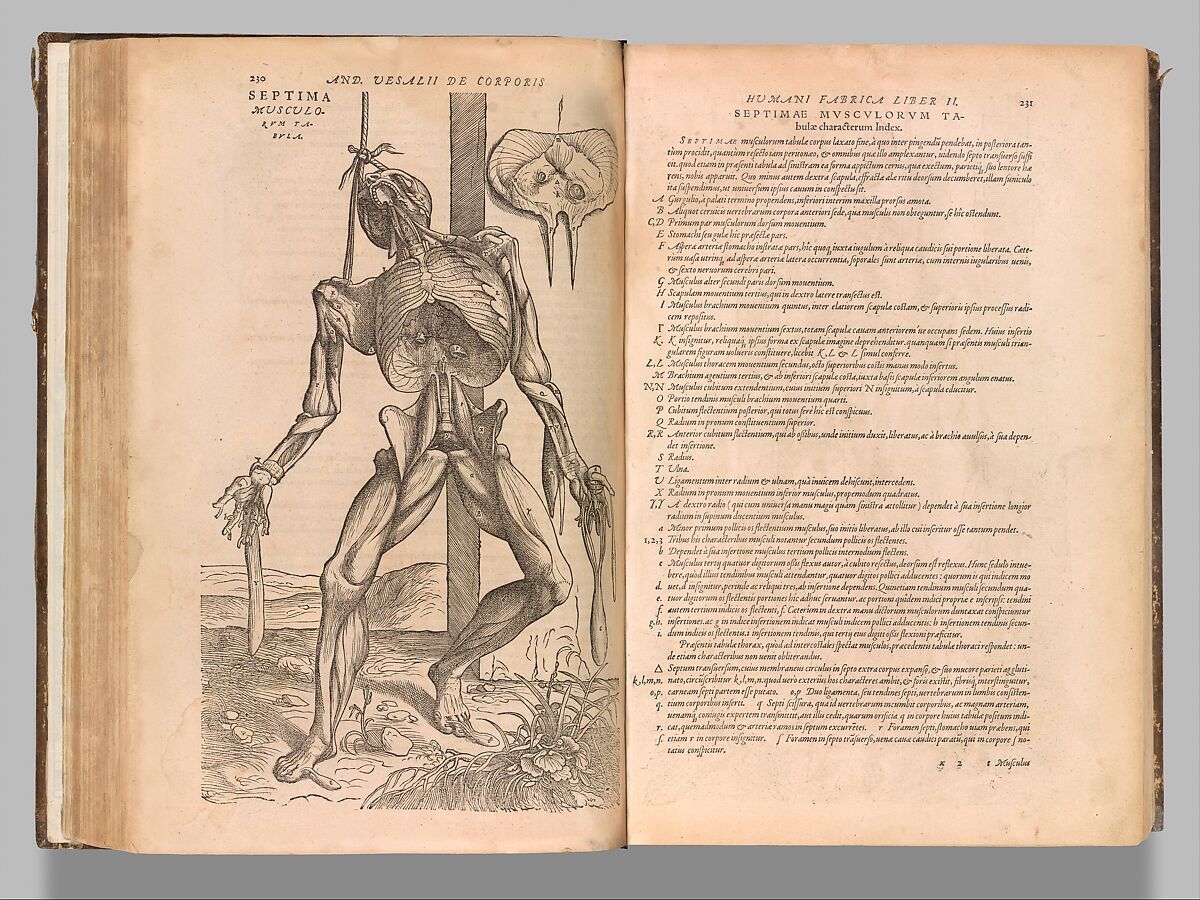
Vesalius’s approach was revolutionary: he prioritized hands-on evidence over ancient texts, encouraging students to dissect and see for themselves. His work exposed inaccuracies, such as Galen’s claim of pores in the heart’s septum allowing blood to pass between chambers—a notion that persisted despite contradicting reality. Though Vesalius faced backlash from traditionalists who accused him of heresy, his accurate depictions laid the groundwork for modern anatomy. By insisting on empirical validation, Vesalius exemplified science’s power to liberate knowledge from outdated authority.
Breaking the Body Open
Vesalius’s approach was revolutionary: he prioritized hands-on evidence over ancient texts, encouraging students to dissect and see for themselves. His work exposed inaccuracies, such as Galen’s claim of pores in the heart’s septum allowing blood to pass between chambers—a notion that persisted despite contradicting reality. Though Vesalius faced backlash from traditionalists who accused him of heresy, his accurate depictions laid the groundwork for modern anatomy. By insisting on empirical validation, Vesalius exemplified science’s power to liberate knowledge from outdated authority.
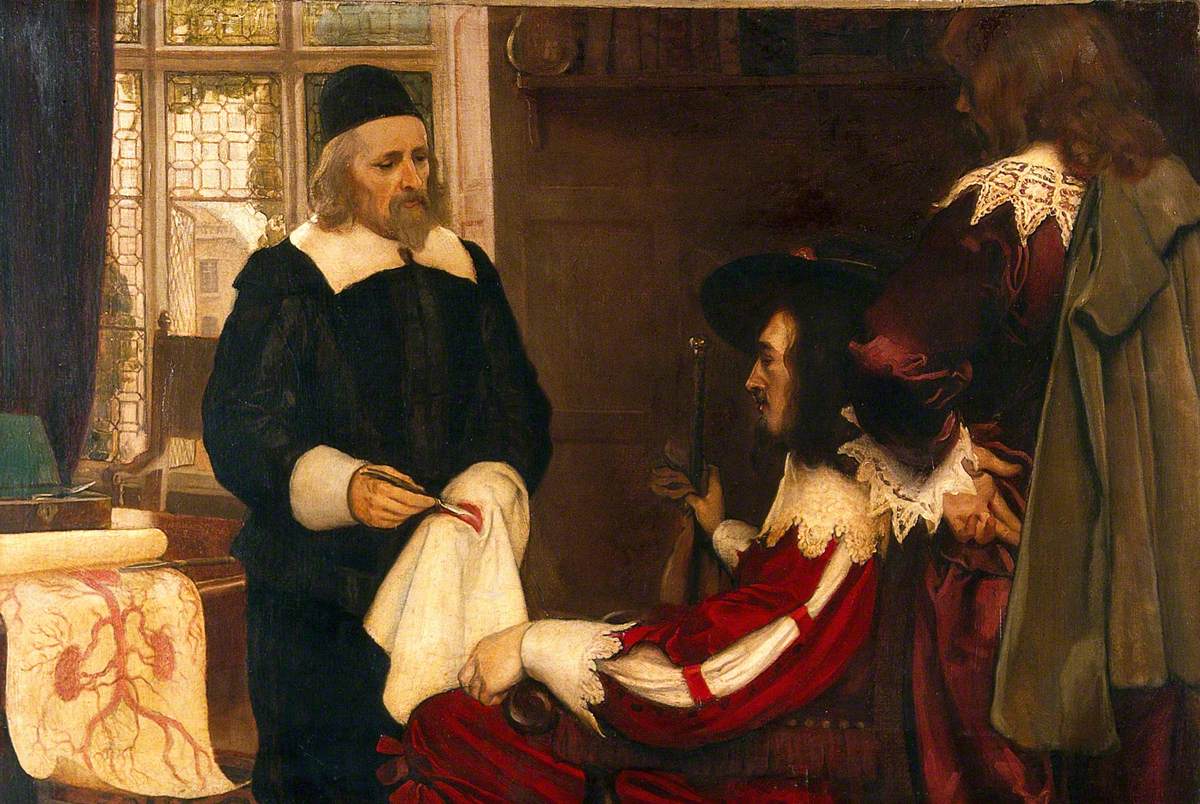
Published in 1628 as De motu cordis (On the Motion of the Heart and Blood), Harvey’s discovery was a triumph of quantitative reasoning and experimentation. He calculated that the heart pumped far more blood than the body could consume or the liver produce, necessitating recirculation. Though initially met with skepticism – some called it impossible – his ideas gained acceptance, especially as they aligned with emerging mechanical views of the body inspired by the Scientific Revolution. Harvey’s work transformed medicine from speculative philosophy into a science grounded in observable mechanisms, enabling future advances in surgery, cardiology, and beyond.
The era’s microscopic explorations further expanded this progress. Antonie van Leeuwenhoek, a Dutch draper and self-taught scientist born in 1632, crafted powerful single-lens microscopes far superior to contemporaries’. Peering into rainwater, saliva, and scrapings from his teeth, he discovered a hidden world of “animalcules”- what we now know as bacteria, protozoa, and spermatozoa. His detailed drawings and reports to the Royal Society in London, starting in the 1670s, revealed life invisible to the naked eye, challenging the notion of spontaneous generation and hinting at microbial causes of disease. Leeuwenhoek’s observations, though not immediately applied to medicine, opened the door to microbiology. Combined with Harvey’s circulation and Vesalius’s anatomy, they dismantled humoral theory’s grip, replacing it with a dynamic, evidence-based understanding of the body
Together, Vesalius, Harvey, and Leeuwenhoek forged a new era in medicine. Vesalius provided the accurate map of the body, Harvey explained its vital engine, and Leeuwenhoek unveiled its tiniest inhabitants. Their reliance on dissection, experimentation, and observation over tradition mirrored the astronomical breakthroughs, proving science’s universal method could heal as profoundly as it enlightened.
As we move to Part 4 of this series, Sparks of Enlightenment, we explore how these foundational shifts ignited the 18th-century Enlightenment, where reason and experimentation accelerated progress across chemistry, electricity, and biology. Figures like Antoine Lavoisier would overthrow ancient elements with modern chemistry, just as Benjamin Franklin tamed lightning and Joseph Priestley uncovered oxygen’s role in life. Science, now a disciplined force, was poised to reshape industry, society, and human potential.