In the third part of this series, we explored how Vesalius, Harvey, and Van Leeuwenhoek revolutionized medicine by dismantling the ancient humoral theory and revealing the body’s inner workings through dissection, experimentation, and microscopic observation. In Part 4, we enter the 18th-century Enlightenment, an era when reason and empirical inquiry accelerated scientific progress across multiple fields. Pioneers like Antoine Lavoisier, Benjamin Franklin, and Joseph Priestley overthrew outdated theories in chemistry and electricity, transforming vague speculations into precise, predictive sciences. Their work not only illuminated natural phenomena but also fueled technological and industrial advancements, demonstrating science’s growing role in reshaping society.
The Ancient Elements Locked in Mystery
For centuries, chemistry was shackled to ancient ideas of matter, rooted in Aristotle’s four elements—earth, air, fire, and water—and the elusive phlogiston theory. Proposed in the late 17th century, phlogiston was imagined as a weightless substance released during combustion, explaining why materials like wood seemed to lose something when burned (though ashes weighed less). This theory, while intuitively appealing, failed to account for observed weight gains in some reactions and hindered true understanding.
The Enlightenment brought a demand for quantitative precision. Antoine Lavoisier, a French polymath born in 1743, revolutionized chemistry by insisting on meticulous measurement. Known as the “father of modern chemistry,” Lavoisier disproved phlogiston through careful experiments with balances and closed systems. He showed that combustion involved combining with a component of air—what we now call oxygen—rather than releasing a mysterious substance. In one famous experiment, he heated mercury in a sealed vessel, observing weight gain as it formed a red calx, and then reversed the process, proving mass conservation.

Lavoisier’s 1789 treatise, Elements of Chemistry, established the law of conservation of mass and a new system of nomenclature, replacing alchemical obscurity with clear, rational naming. His work laid the foundation for chemistry as a rigorous science, enabling future discoveries in industry and medicine.
Breaking the Sparks Open
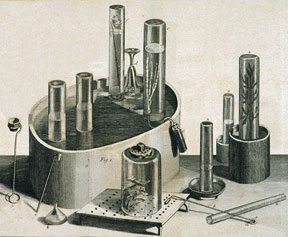
Parallel advances occurred in understanding electricity and gases. Joseph Priestley, an English theologian and scientist born in 1733, isolated oxygen in 1774 by heating mercuric oxide, calling it “dephlogisticated air” under the old theory. His experiments with gases, including placing a mouse under a bell jar to observe its survival in oxygen-rich air, highlighted air’s role in respiration and combustion – insights that bridged chemistry and biology.
Meanwhile, Benjamin Franklin, the American polymath born in 1706, demystified electricity. In his famous 1752 kite experiment, he flew a kite in a thunderstorm, drawing sparks from a key to prove lightning was electrical discharge, not divine wrath. This led to the invention of the lightning rod, protecting buildings and lives. Franklin’s work unified atmospheric and laboratory electricity, promoting the idea of positive and negative charges. Together with Priestley’s gases and Lavoisier’s precision, these breakthroughs dismantled mystical views of fire, air, and lightning, replacing them with mechanistic explanations grounded in experiment.
Lavoisier, Priestley, and Franklin exemplified the Enlightenment’s scientific ethos: rigorous testing, collaboration (despite rivalries), and application for human benefit. Lavoisier modernized chemistry, Priestley unveiled vital gases, and Franklin harnessed electricity’s power. Their collective efforts sparked the Chemical Revolution and laid groundwork for electrical engineering, propelling humanity toward industrialization.
As we advance to Part 5 of this series, Steam and Revolution, we examine how these Enlightenment insights ignited the Industrial Revolution in the late 18th and 19th centuries. Innovators like James Watt perfected the steam engine, while Humphry Davy and Michael Faraday unlocked electrochemistry and electromagnetism. Just as Lavoisier quantified reactions, these advances harnessed energy on a massive scale, transforming economies and daily life through factories, railways, and electric power.