In the fourth part of this series, we saw how Enlightenment thinkers like Lavoisier, Priestley, and Franklin dismantled ancient mysteries of chemistry and electricity through precise experimentation and measurement. In Part 5, we explore how these insights fueled the Industrial Revolution from the late 18th to the mid-19th century. Innovators such as James Watt, Humphry Davy, and Michael Faraday harnessed energy on an unprecedented scale, perfecting steam power and unlocking electromagnetism. Their achievements transformed economies, transportation, and daily life, proving science’s power to drive material progress and elevate human productivity beyond imagination.
The Ancient Power Locked in Inefficiency
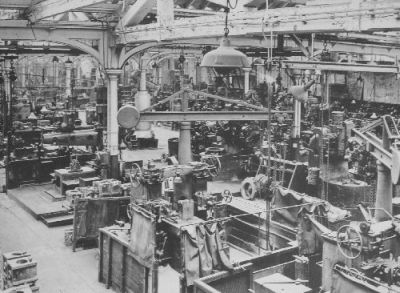
Early steam engines, like Thomas Newcomen’s atmospheric engine from 1712, were revolutionary machines but woefully inefficient. Their initial use was primarily to pump water from coal mines, where their source of fuel was already located. They wasted vast amounts of heat and fuel, limiting their application outside these mines. Up to this time, the world relied on human, animal, water, and wind power – much more reliable but constrained by nature’s whims and human limits.
James Watt, a Scottish instrument maker born in 1736, changed everything. In the 1760s, while repairing a Newcomen engine, Watt realized the key flaw: alternating heating and cooling of the cylinder wasted energy. His breakthrough was the separate condenser, allowing the cylinder to remain hot while condensation occurred elsewhere. Patented in 1769 and refined with partner Matthew Boulton, Watt’s engine also added rotary motion, turning pistons into reliable power for machinery.
By the 1780s, Watt’s engines powered textile mills, ironworks, and factories, dramatically increasing output. His additions, like the governor for speed control and double-acting cylinder, made steam power efficient and versatile. Factories no longer needed rivers for water wheels; they could cluster in cities, drawing coal-fueled steam to drive mechanized production. This sparked explosive economic growth, urbanization, and the factory system, ushering in a new era known as the Industrial Revolution.
Breaking the Energy Open
Advancements in electrochemistry and electromagnetism further amplified this era’s progress. Humphry Davy, an English chemist born in 1778, built on Volta’s battery to perform large-scale electrolysis. In 1807–1808, using powerful voltaic piles, he isolated elements like potassium and sodium for the first time, revealing electricity’s chemical power.
Davys work not only expanded the periodic table but demonstrated electricity’s practical potential, from mining safety lamps (his famous Davy lamp prevented explosions) to industrial processes. The pinnacle came with Michael Faraday, Davy’s protege, born in 1791. A self-taught genius, Faraday discovered electromagnetic induction in 1831: moving a magnet near a coil induced electric current. His simple experiments, including the homopolar generator (Faraday disk), laid the foundation for electric generators and electric motors.
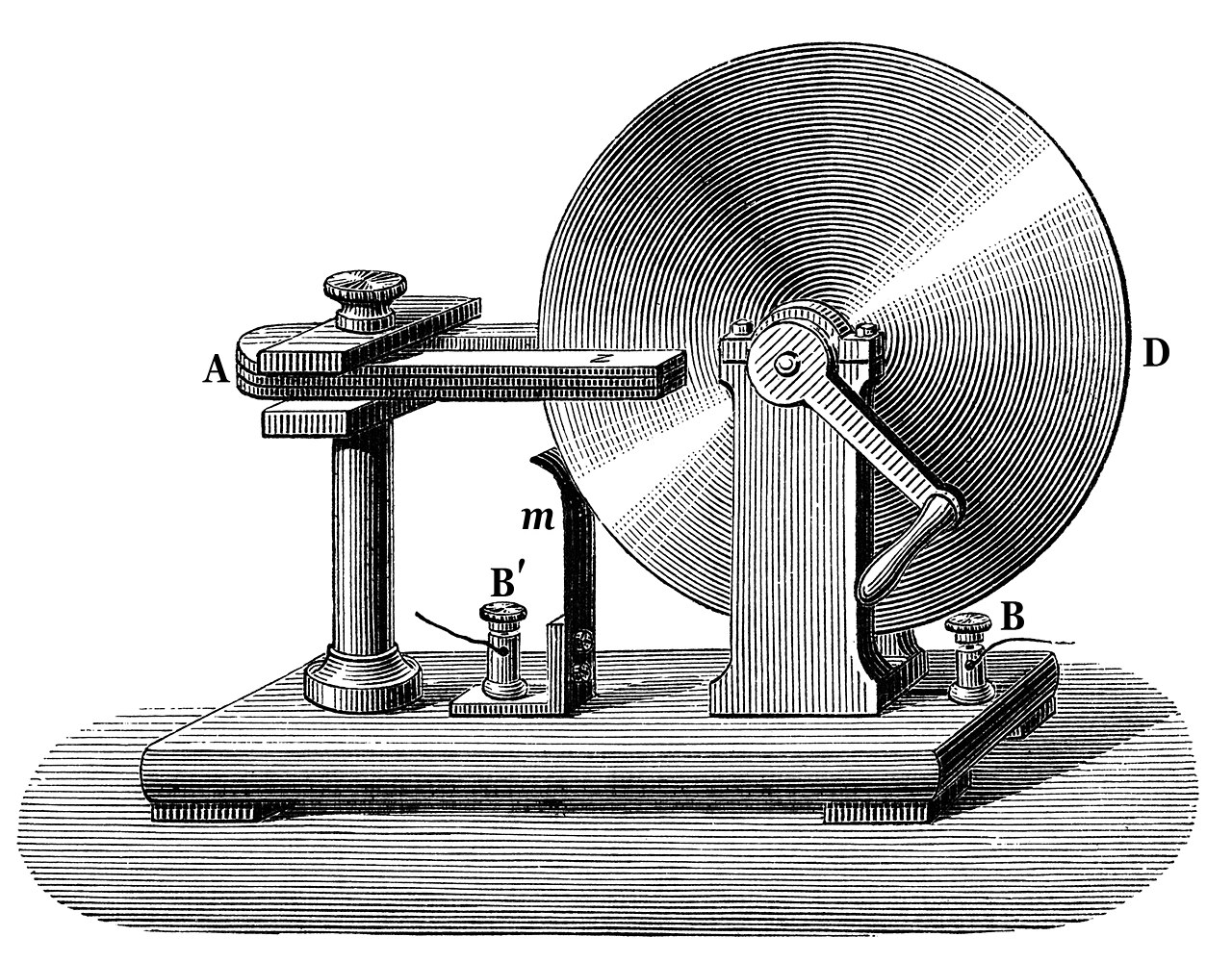
Faraday’s insights into electromagnetic fields unified electricity and magnetism, enabling the dynamo and transformer. Combined with steam power driving factories and railways (George Stephenson’s Rocket in 1829 exemplified steam locomotion), these discoveries heralded an age of abundant energy.
Watt, Davy, and Faraday embodied science’s transformative force in industry. Watt unleashed steam’s potential for mechanical work, Davy bridged chemistry and electricity, and Faraday generated electricity from motion. Their inventions powered factories, illuminated cities, and connected continents, lifting standards of living and accelerating innovation at a rapid pace.
As we proceed to Part 6 of this series, Unseen Worlds and Hidden Forces, we delve into the 19th-century discoveries that revealed life’s deepest mechanisms and nature’s invisible realms. Just as Watt harnessed steam, scientists like Charles Darwin explained evolution by natural selection, while Louis Pasteur and Robert Koch conquered germs, and James Clerk Maxwell unified light and electromagnetism. Science continued its march, illuminating biology and physics with profound implications for health, society, and our place in the universe.