In the seventh part of this series, we witnessed how Curie, Einstein, and Bohr unraveled the atom and spacetime, introducing revolutions in energy, matter, and reality that powered modern technology. In Part 8, we explore mid-20th-century breakthroughs that decoded the blueprint of life and traced the universe’s birth. Rosalind Franklin’s pivotal imaging, followed by James Watson and Francis Crick’s model of DNA, unveiled heredity’s mechanism, while Edwin Hubble’s observations and George Gamow’s theories established the expanding universe and Big Bang. These discoveries bridged biology and cosmology, replacing static or divinely fixed views with dynamic, evidence-based narratives of evolution.
The Codes of Life and Origins of the Universe Locked in Mystery
For centuries, both the diversity of life and the origins of the universe itself were shrouded in myth and religious doctrine rather than empirical inquiry. Heredity was speculated upon through ideas like “bloodlines” or blending inheritance, with no grasp of its material foundation. Similarly, the cosmos was often regarded as eternal and unchanging, or created in a finite act of divine will.
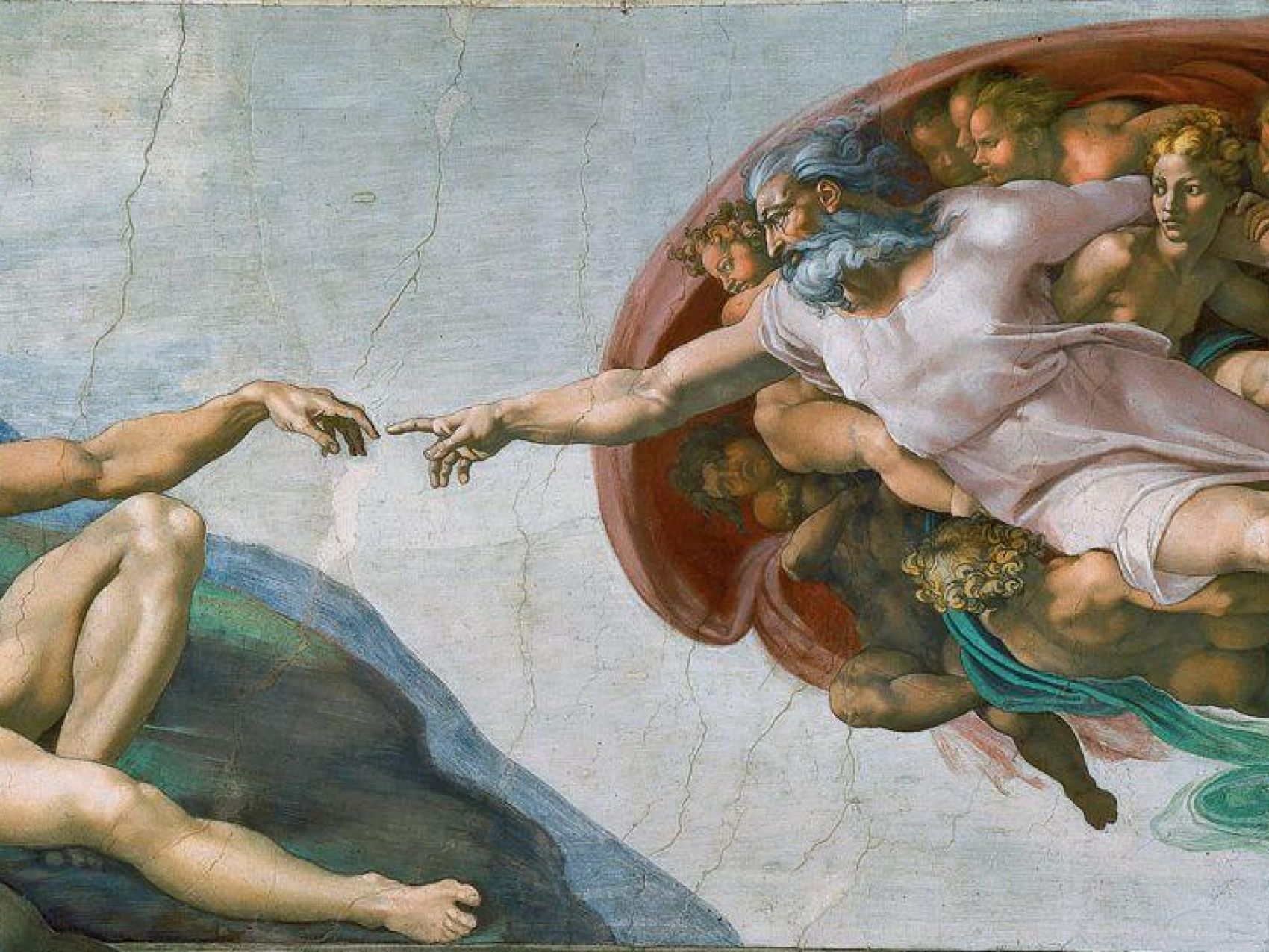
Many cultures explained universal origins through creation myths: ancient Egyptians envisioned the god Atum emerging from primordial waters to create the world, while Norse mythology described a void giving rise to ice and fire forming the first beings. Abrahamic traditions, influential in Western thought, held to a literal six-day creation as described in Genesis, with the universe and all life formed ex nihilo by divine command – a static, young cosmos centered on humanity. Even into the 20th century, some scientific models like the steady-state theory proposed an infinite, eternal universe in perfect balance, continuously creating matter to maintain density amid expansion—avoiding a beginning that might imply a creator. These views, whether mythological or theoretical, lacked testable mechanisms and often aligned with philosophical or theological preferences for an unchanging or purposefully designed reality.
The molecular era began with Rosalind Franklin, a British crystallographer born in 1920. At King’s College London in the early 1950s, Franklin perfected X-ray diffraction techniques on DNA fibers. Her famous Photograph 51 revealed a clear X-pattern, indicating a helical structure with precise dimensions. This was crucial evidence that DNA was not a random coil but an ordered double helix. Though her contributions were underrecognized in her lifetime (she died in 1958), Franklin’s data provided the empirical foundation for decoding life’s code.
Breaking Open the Codes of Life and the Origins of the Universe
James Watson, an American biologist born in 1928, and Francis Crick, a British physicist born in 1916, at Cambridge University, built directly on this. Using Franklin’s measurements and Chargaff’s base-pairing rules, they constructed a physical model in 1953: DNA as a double helix of sugar-phosphate backbones with complementary base pairs (A-T, G-C) connected by hydrogen bonds.
This elegant structure explained replication (helices unzip, each strand templates a new partner) and mutation, unifying genetics with chemistry. Their 1953 paper revolutionized biology, enabling the genetic code’s cracking, biotechnology, and medicine – from CRISPR to personalized treatments.
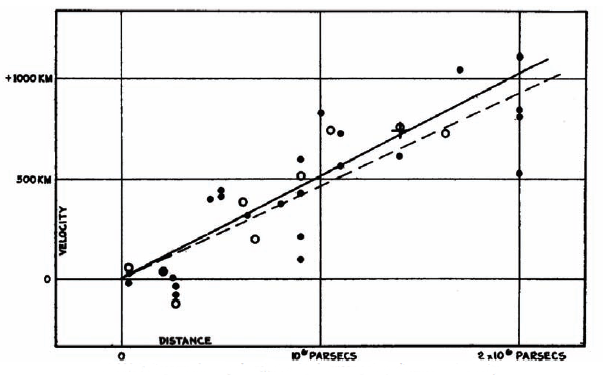
In cosmology, Edwin Hubble, an American astronomer born in 1889, transformed our view using the 100-inch Hooker Telescope at Mount Wilson. In the 1920s, he measured galaxies’ distances via Cepheid variables and their redshifts – light stretched by motion away from us. His 1929 plot showed velocity proportional to distance: the farther the galaxy, the faster it recedes.
(Credit: Wikipedia)
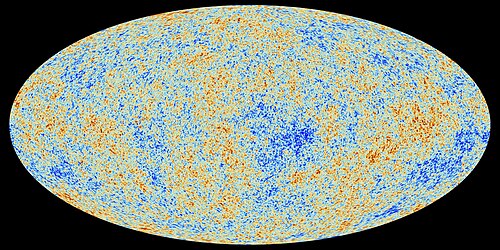
George Gamow, a Ukrainian-American physicist born in 1904, formalized this in the 1940s as the Big Bang theory: the universe began approximately 13.8 billion years ago in a primordial explosion, cooling to form matter. With Ralph Alpher and Robert Herman, he predicted “relic radiation” – the cosmic microwave background (CMB), discovered in 1965 by Penzias and Wilson.
Franklin, Watson, Crick, Hubble, and Gamow decoded profound mysteries. The DNA trio revealed heredity’s mechanism, while Hubble and Gamow traced cosmic origins. Their work, rooted in observation, data, and theory, fueled genetics revolutions and modern astronomy, linking life’s evolution to the universe’s.
As we approach Part 9 of this series, Digital Dawn and Connected Minds, we turn to the late 20th and early 21st centuries, where computing and networks amplified science’s reach. Just as Watson and Crick modeled DNA, pioneers like Alan Turing and Tim Berners-Lee built information systems, while neuroscience and AI began decoding consciousness and extending human intellect.