In the eighth part of this series, we traced how Franklin, Watson, Crick, Hubble, and Gamow decoded the molecular basis of life and the universe’s cosmic origins, linking biological inheritance to the grand scale of existence. In Part 9, we examine the late 20th and early 21st centuries, when computing and global networks transformed information into a ubiquitous force. Alan Turing laid the theoretical foundations for programmable machines, Tim Berners-Lee invented the World Wide Web to connect humanity’s knowledge, and advances in neuroscience and artificial intelligence began mapping and extending the human mind. These developments democratized access to information, accelerated discovery, and augmented intelligence, marking science’s shift toward a digital, interconnected era.
The Analog World Locked in Isolation
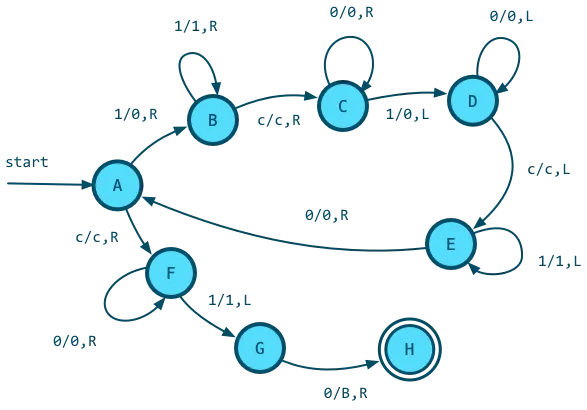
(Credit: Diagram of a Turing Machine)
Before the digital age, computation was mechanical and limited. It consisted of punch cards, analog devices, and human “computers”, all of which performed calculations slowly. Knowledge was siloed in libraries and institutions, accessible only to the privileged few, while understanding the brain relied on crude observations rather than precise mapping.
Alan Turing, a British mathematician born in 1912, provided the conceptual breakthrough. In his 1936 paper he described a hypothetical “universal machine” capable of simulating any algorithm through a simple tape, read-write head, and instruction table. This became known as the Turing machine, a model that formalized computation as the manipulation of symbols, revealed fundamental limits such as the halting problem, and laid the foundation for computability theory.
During World War II, Turing applied these ideas to crack Enigma codes, hastening victory. His 1950 paper “Computing Machinery and Intelligence” introduced the Turing Test, probing machine intelligence and sparking AI. Postwar designs like the ACE computer realized programmable digital machines.
Breaking the Information Open
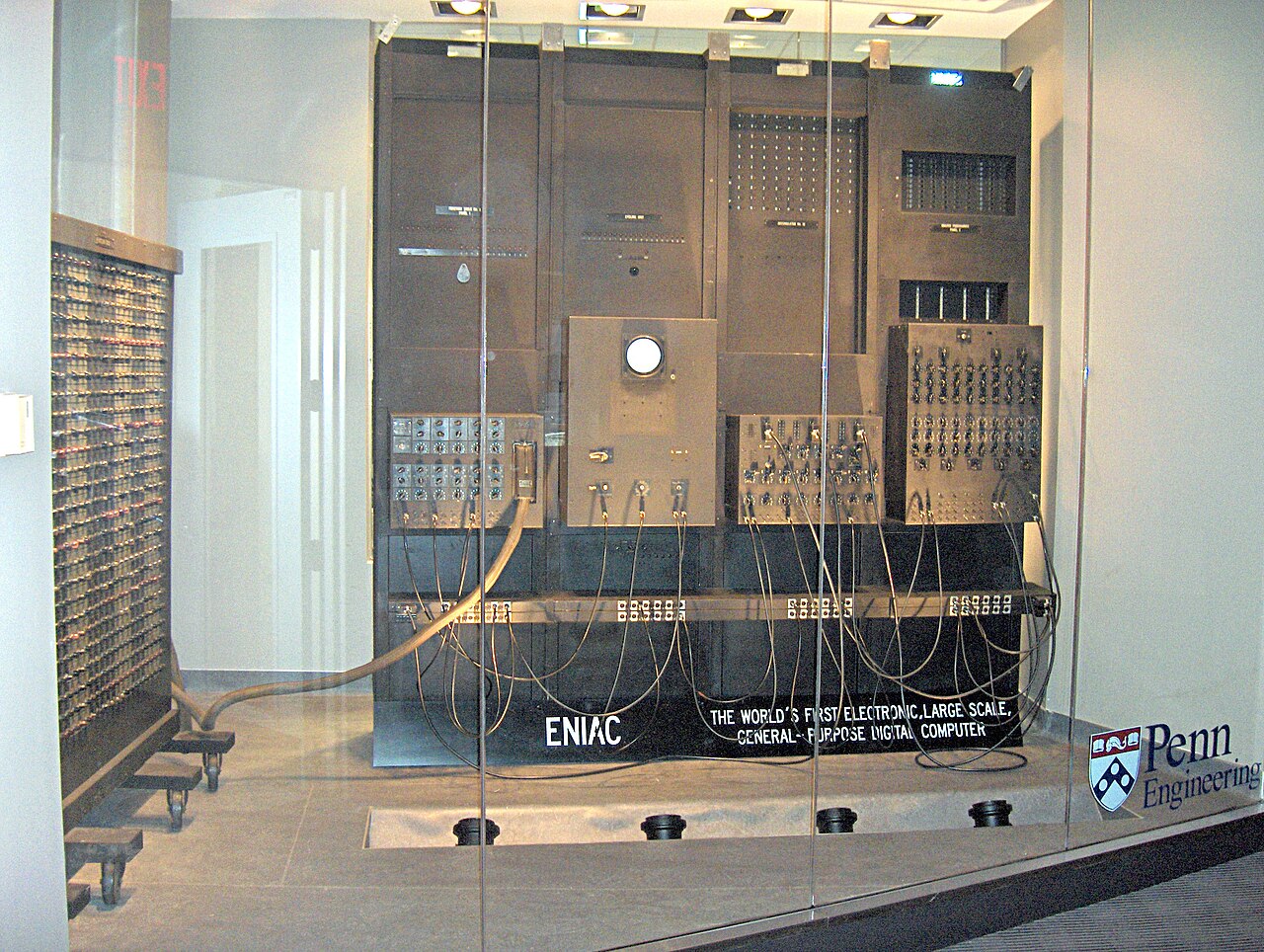
The physical manifestation came swiftly. ENIAC, unveiled in 1946 by Americans John Presper Eckert and John Mauchly, was the first general-purpose electronic computer—programmable, electronic, and vastly faster than predecessors, though room-sized and vacuum-tube based. Transistors and integrated circuits miniaturized computing, leading to personal computers by the 1970s–1980s.
Tim Berners-Lee, a British computer scientist born in 1955, connected it all. Working at CERN in 1989, he proposed a hypertext system for sharing documents over networks. By 1990–1991, on a NeXT computer, he created HTTP, HTML, URLs, and the first web browser/editor. Releasing it freely in 1993, the Web exploded, turning the Internet into a global repository of knowledge. The power of the internet empowered education, business collaboration, and innovation worldwide.
Parallel progress in mind sciences augmented human cognition. Functional MRI (fMRI) in the 1990s allowed real-time brain activity imaging, revealing neural correlates of thought and emotion. Artificial neural networks, inspired by biology, revived in the 1980s–2010s with deep learning, enabling machines to learn patterns, powering image recognition, translation, and AI like modern language models.
Turing theorized universal computation, early computers and the Web realized interconnected information, while neuroscience and AI extended mental capabilities. Their legacies are rooted in logic, engineering, and biology. It created an information ecosystem that accelerates all sciences, fosters global progress, and redefines human potential.
As we conclude this series in Part 10, Frontiers Ahead, we reflect on science’s ongoing trajectory and future promises. From quantum computing to gene editing and sustainable energy, the method of evidence-based inquiry continues to drive humanity forward, building on centuries of relentless curiosity.
Continue reading Part 10 of Science as a Force for Progress.