1897: Electron

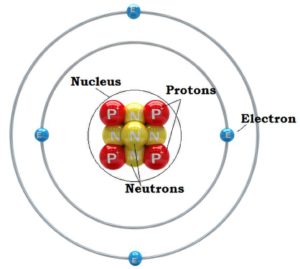
An atom showing its protons, neutrons, and electrons.
Nuclear Structure of the Atom

The atomic theory of the atom was proposed by John Dalton in the early 19th century. Dalton claimed that all atoms of the same element are identical, but that atoms of different elements vary in size and in mass. His theory suggested that atoms were indivisible particles, making them the smallest building blocks of matter. However by the middle of the 19th century, a growing body of experiment evidence began to challenge this notion. As the century drew to a close some scientists that speculated that atoms may be composed of additional fundamental units, and by the late 19th century convincing evidence began to emerge from experimental research to support this hypothesis.   The discovery of the electron was the first of a series of discovery’s, spanning a few decades, that identified the major subatomic particles of the atom.

J. J. Thompson’s Experiments

This experimental evidence came during the years 1894-1899 when J. J. Thomson conducted research with cathode ray tubes, the same technology that also played a critical role in the discovery of X-rays and on work which led to the discovery of radioactivity.  Cathode rays are the currents of electricity observed inside a high vacuum tube.  When two electrodes are connected to each end of the tube and voltage is supplied, a beam of particles flows from the negatively charged electrode (the cathode) the positively charged electrode (the anode).  In a lecture to the Royal Institution on April 30, 1897, J. J. Thomson suggested that these beams of particles were smaller, more fundamental units of the atom.  He termed them ‘corpuscles’ but the name never stuck, and they were eventually given name we are familiar with today: electrons. 
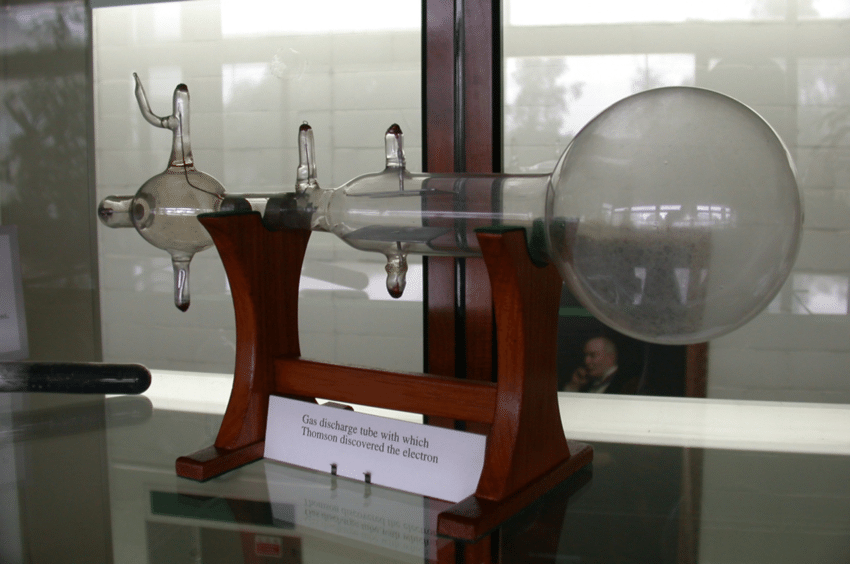
J. J. Thomson's cathode ray tube used to discover the electron
J. J. Thomson’s cathode ray tube used to discover the electron
(Credit: Donald Gillies)

J.J. Thomson performed several experiments whose conclusions supported his hypothesis.  Firstly, in 1894 Thomson established that cathode rays were not a form of electromagnetic radiation, the assumption at that time, by showing that they much move slower than the speed of light. Soon after he conducted experiments deflecting the rays from negatively charged electric plates to positively charged plates where he was able to show that the beams were streams of negatively charged particles.  In another experiment he used magnets to deflect the beams which allowed him to determine their mass-to-charge ration.  He approximated their mass at 1/2000th of a hydrogen atom indicating that they must be only a part of an atom.  This is an incredibly small mass and is the smallest measured mass of any particle that has mass.  Lastly, he showed that these particles are present in different types of atoms.
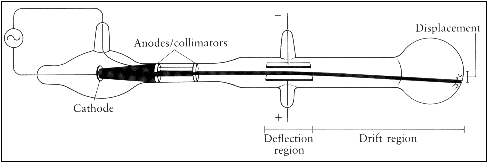
Diagram of a cathode ray tube

The revelation that atoms are made of smaller constituent units revolutionized how scientists viewed the atom world and spurred research on nuclear particles.  Soon after the atomic nucleus was discovered, and the field of nuclear physics was born.  Thomson went on to create one of the first models of the atom, which was called the plum pudding model.  He knew that atoms had an overall neutral charge.  Therefore, his model depicted the negatively charged electrons floating in a “soup” of positively charged protons.  It was a good first attempt at designing a model of the atom but was soon discarded for Ernest Rutherford’s nuclear model of the atom based on the results of his gold foil experiment.  

Impact and Legacy

The discovery of the electron had profound effects on both theoretical and applied science.

The discovery of the electron helped to usher in the era of atomic physics and help to give birth to the completely new and foreign field of quantum mechanics.   Both of these fields are closely related and describe the behavior of particles at the atomic and subatomic level.  Both fields rely on an understanding of atomic structure, of which electrons are a key component.

The discovery of the electron also had a fundamental impact on applied science as it laid the foundation for the development of electronics, a technology that would revolutionize our world.  Electrons, being charge carries, are the fundamental working units of electronic components such as capacitors, diodes, resistors, and transistors.  They are used in all of the familiar electronic devices such as televisions, smartphones, and computers and have made possible the digital transformation of our civilization. In addition to electronics, electrons are involved in atomic spectroscopy, which is the study of the interaction between light and matter. By studying energy levels and transitions of electrons, atomic physicists can identify elements, determine their properties, and study their behavior in various conditions. Spectroscopy is the method used by astronomers to determine the temperature, chemical composition, luminosity, and other characteristics of distant stars across the universe.

Continue reading more about the exciting history of science!
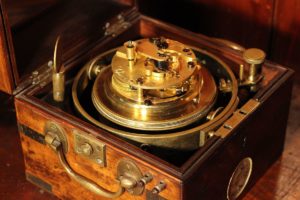
1730: The Marine Chronometer

Marine Chronometer
A Marine Chronometer

Amazing that it may seem to people living in the 21st century, finding reliable longitudinal position at sea was not possible until 1730 when John Harrison invented the marine chronometer, a timepiece c

Maritime travel and trade was rapidly expanding in the time leading up to the 18th century.  The discovery of the North and South American continents by European explorers resulted in transoceanic voyages being made for the first time.  This meant a majority of time spent at sea spent out of sight of any landmass, making it trickier to accurately navigate the voyage.

The principle unresolved problem in these transoceanic voyages was finding reliable a longitudinal position while at sea.  This was not possible until 1730 when John Harrison invented the marine chronometer, a timepiece capable of keeping accurate time of a known, fixed location.  

The Longitude Problem

To determine a location one needs to know both the latitude and longitude of the location.  Latitude could easily be measured by using the sun or the stars.  Longitude was more difficult in that it could be calculated by comparing two accurate times – one of a known longitude (a Prime Meridian) and the other at any other location.  A little math works out the rest.  The Earth makes one full rotation per day (360º of longitude) and therefore turns one degree of longitude in 1/360th of a day, or every four minutes.  Work out the time distance from your location to the Prime Meridian, and you know your degree of longitude from the Prime Meridian.

Therefore the trick to determining longitude at sea then required an accurate timekeeping device that had to work on a ship.  However the only known accurate timekeeping devices of the time used a pendulum, which swayed as the boat rocked at sea.

Early methods of measuring longitude proved to be inaccurate, sometimes with deadly consequences.  The most common technique was called dead reckoning.  Beginning with a know starting location, the longitude was simply estimated by the captain based on a number of factors such as current and wind speed, direction of travel, and other factors.  The result was at best a close approximation with compounding errors decreasing the accuracy over time and distance.

A series of naval disasters, most notably a 1707 wreck of four British war ships that saw a loss of over 1500 lives, prompted the British government into action.  The Longitude Act of 1714 provided an incentive to solve this problem by offering a longitude prize ranging from £10,000 to £20,000 to anyone who could provide a simple and practical method to accurately determine a ship’s longitude at sea within one half of a degree.  Four years later the Academie de Paris offered a similar prize.  The race was on to solve the problem. 

John Harrison and the Marine Chronometer

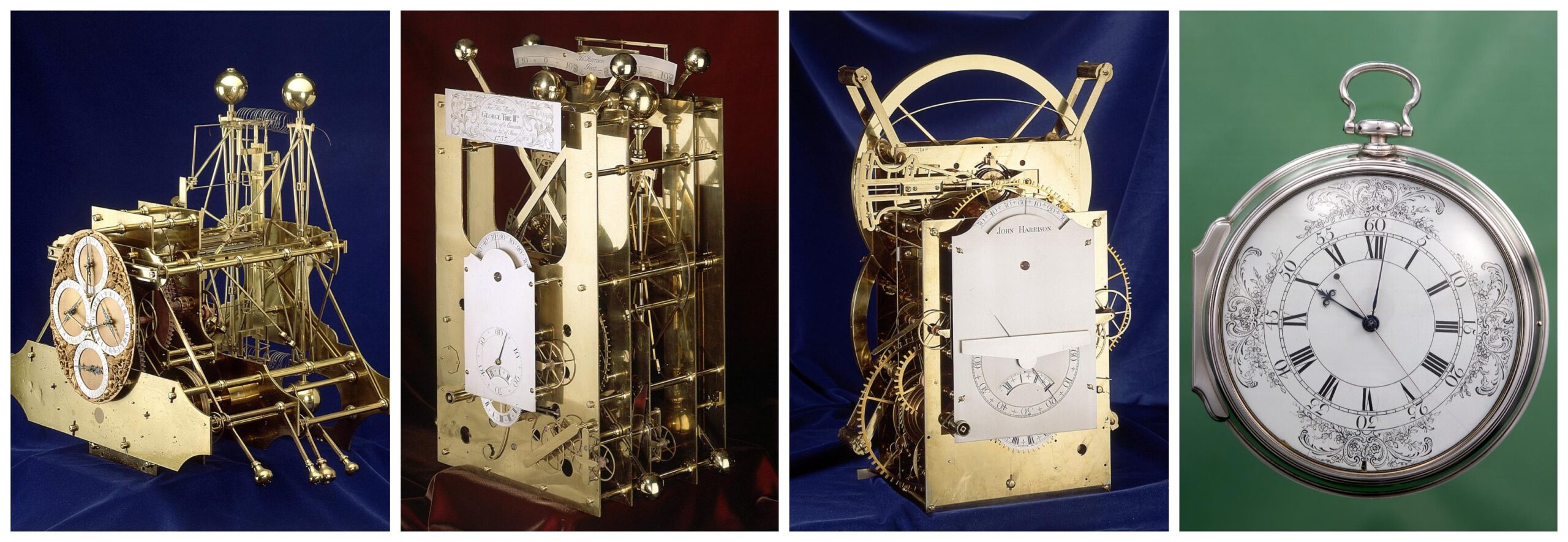
Born in Yorkshire and a carpenter by profession, John Harrison invented a mechanized timekeeping machine that solved this problem which he called a chronometer.  This device was, in a sense, the worlds first global positioning device.  In 1730 he began working on his first prototype which he called H1.  The project took him over five years to complete and he presented his device to the Board of Longitude in 1736.  He was granted a sea trial – the first given by the board – and the device performed well.  He was award small grant for further development and Harrison set to work on his H2 device.

A series of Marine Chronometer devices made by John Harrison - H1 to H4
A series of Marine Chronometer devices made by John Harrison – H1 to H4

Over several years Harrison further refined his sea clock in the form of his H2 and H3 devices, but came to realize the device was fundamentally flawed.  He shifted gears and went from making a sea clock to a sea watch.  He realized that some watches would keep time as accurate as his larger sea clocks and were much more practical for sailing.  This lead to his most famous device the H4, which kept nearly perfect time, was around five inches in diameter.  

Harrison’s H4 watch essentially was a large pocket watch that was wound daily.  It possessed a 30-hour power supply. The main technological breakthrough of all his devices was a spring driven mechanism that replaced the pendulum.  The smaller watch allowed for a higher frequency of the balance, making it more accurate than his clocks. Various combinations of metals were used in the watch to overcome the deleterious effects of humidity and temperature change.  The watch took six years to construct, was completed in 1759 and tested in 1761.  The watch passed the test with remarkable accuracy.  It lost a mere five seconds on an 81 day voyage to the West Indies and back.  After some wrangling Harrison was able to receive his prize from the British government for the design. 

Continue reading more about the exciting history of science!
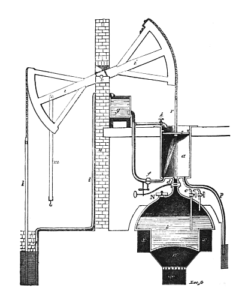
1712: The Newcomen Engine

In 1712 Thomas Newcomen unknowingly ushered the world into the industrial revolution when he built an “atmospheric” engine to pump up water from a coal mine near Dudley Castle in England.  The Newcomen engine, as it came to be known, can thus be considered one of the most influential inventions in all of history.

A Novel Solution to a New Industrial Problem

The Newcomen Engine
The Newcomen Engine

The demand for coal was steadily increasing in the early 18th century and coal miners were having to dig deeper and deeper into to ground to gather it. Flooding of these ever deeper coal mines was becoming a problem to the point that manual and horse powered pumping was becoming an inadequate solution. At the dawn of the industrial revolution, and industrial machine was needed to solve the problem.

An ironmonger named Thomas Newcomen by combining ideas of various precursor engines. About a decade earlier an English inventor named Thomas Savery patented a steam powered pump which was not technically an engine because it had no moving parts. At around the same time the French physicist Denis Papin was conducting experiments using steam cylinders and pistons. Newcomen combined these ideas to eventually solve the problem by inventing the world’s first practical fuel-burning engine in 1712.

The Newcomen engine was a large, lumbering, and inefficient engine that did its work not by the power of steam but by the force of atmospheric pressure.  The discovery of the vacuum in the prior century showed the power of atmospheric pressure and this principle was utilized in the Newcomen engine. This engine was a very complex device despite being predicated on rather simple principles. Its basic method of operation goes as follows. A boiler created the steam that was pumped into a cylinder where the steam was then condensed by cold water. This process of heating and then cooling created a vacuum inside the cylinder.  The resulting atmospheric pressure created inside the cylinder forced a piston downward, pulling the pump upward and thus removing the water out of the mine.  The boiler created more steam pushing the piston upward where more cold water was introduced into the cylinder and the cycle was repeated around twelve times per minute.

Searching for Improvements in Energy Efficiency

What the Newcomen engine possessed in revolutionary status it lacked in efficiency.  The engine was highly inefficient and originally only used in coal mines where a power source was abundant and nearby.  However despite the engineering drawbacks its usefulness proved quite valuable – over 75 were built during Thomas Newcomen’s lifetime and over 1000 were in use by the end of the century.  They quickly spread across most of Europe and to America. The problem with the engine continued to be in its lack of efficiency. It was becoming difficult to operate in area’s where coal was expensive or in low supply.

Still, the Newcomen engine remained largely unchanged and in wide use for most of the 18th century. These engines saw an efficiency improvement later in the century by James Watt. In 1764 Watt was repairing a Newcomen engine when he became fixated on the amount of coal needed to operate the engine because it wasted so much heat. After mulling over a solution for some time he realized that much of the inefficiency had to deal with the heating and the cooling of the steam in the cylinder. He concluded that it would be much more efficient to keep the cylinder heated about boiling points at all times and to have a separate condenser for cooling. In 1769 he acquired a patent for his new device and soon after entered into a partnership with Matthew Boulton. The Boulton & Watt steam engines quickly became the best in the world. Later on Watt designed a double acting steam engine by allowing steam to enter the cylinder at both ends providing for both up and down power strokes. This was now a true steam engine.

Impact of the Newcomen Engine

The invention of the Newcomen engine marked the beginning of the Industrial Revolution. Prior to the Newcomen engine most power was supplied by natural sources such as wind, water, and human and animal muscle. The newcomen engine and the subsequent improvements made by James Watt paved the way for steam powered transportation in the form of boats and railroads. Electricity and the internal combustion engine would eventually replace powering engines for transportation in the 20th century, but even to day we still most of our electricity from steam powered turbines.

Continue reading more about the exciting history of science!
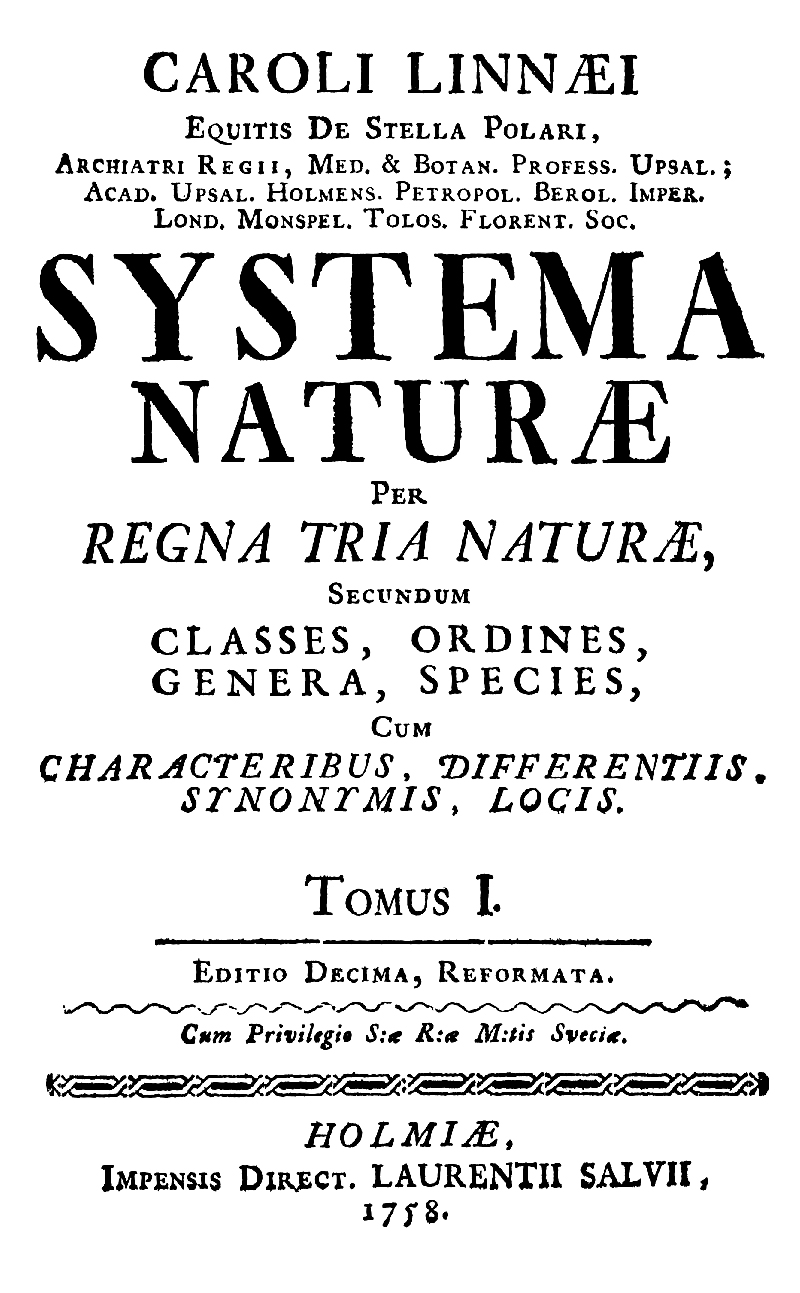
1735: Systema Naturae

Systema Naturae was the manuscript published by Carl Linnaeus that marked the beginning of the modern system of species classification by establishing a hierarchical naming system for organisms.  This manuscript was originally published in 1735 and began as a small twelve page book.  Over the decades subsequent editions were published, twelve in all, with the last one being published in three volumes and consisting of over 2,400 pages.

Earlier Attempts at a Classification System of Life

The Greek philosopher Aristotle was the first to attempt to classify life in his History of Animals.  He chose to classify life according to its similarities in the form of a ladder-like hierarchy.  He regarded species as fixed and unchanged.  Medieval scholars, guided by Aristotle and the Bible, built on this idea creating The Great Chain of Being.  This classification system arranged the universe according to its natural order as decreed by God.  Those of the simplest order such as minerals were placed at the bottom, and that of the highest order which was God is seated at the top.  Consequently, this scale of natural order was borrowed by medieval rulers to justify slavery while helping to create and maintain a socially rigid hierarchy consisting of kings, nobles, vassals, peasants, and slaves. 

During the Renaissance scientists began experimenting on different classification systems. The discovery of new species of plants and animals in the New World, Africa, and Asia prompted excitement from scientists who were eager to place them into existing classification systems. But this also lead to a reanimation of the existing systems and encourages exploring with new and different systems.

Carl Linnaeus and the Classification of Species

Systema Naturae
Systema Naturae

Carl Linnaeus, later known as Carl von Linne, was born in southern Sweden to into a modest family where he became interested in plants form an early age. He was unique among scientists in this age in that his name went from a Latinized form to one of the vernacular, and this probably speaks to the high opinion of himself that he held throughout his life. After completing his medical studies he became intrigued by the idea that plants reproduce sexually through male and female parts corresponding to those of animals, although it seems he never fully understood the role of insects in pollination.

While on an expedition to the Netherlands in 1735 and still a student he published his ideas on taxonomy called Systema Naturae. This work went through many subsequent editions and quickly grew in volume. This first edition only included plants, his later editions included both plants and animals.

The tenth edition, published in 1758, is widely considered as the starting point for modern zoological nomenclature.  Throughout this edition Linnaeus used binomial nomenclature for all species – both plants and animals whereas in previous editions he had only used binomial nomenclature for plants. He was not the first person to use binomial nomenclature for life, Aristotle used it in his classification system but did not do so methodically.

The data accumulated throughout his various publications was immense. He provided names and descriptions for over 4400 species of animals and 7700 species of plants, mostly all of the species known by Europeans at the time. Everything in the living world was placed in a hierarchy of relationships. The hierarchy began with broad categories such as Kingdom and Class and moved down the ranks to the Genus and Species. Linnaeus took the bold step of placing man into his system of biological classification system with the Primates, a controversial move at the time. Despite this move Linnaeus still very clearly a religious man who considered man to be a special creation of God.

The Impact of Systema Naturae

It is had to overstate the influence of this book and its author.  Linnaeus’s system immediately proved useful and was soon quickly adopted by others. One of its main benefits was that it was straightforward and clear. Prior to Linnaeus taxonomy was burdened by cumbersome and inconsistent names.  Systema Naturae created a global system of naming and ranking organisms – a naming system that supersedes languages – that we continue to use to this day, with only some exceptions to the Linnaeus’ ranking system. 

With this rise of evolutionary thought a century later classification became a tool to explain genealogical relationships. Charles Darwin’s Theory of Evolution rendered the old idea of Aristotelian natural order behind Linnaeus’s system invalid. He showed that evolution could produce a hierarchy of similarity based on common decent.

Continue reading more about the exciting history of science!
1668: Reflecting Telescope

The telescope instantly changed the way humanity saw their place in the universe.  The backdrop of fixed stars, no longer fixed. The planets, no longer perfect spheres. Hundreds of stars became thousands of stars, then they became hundreds of thousands of stars. Today they number in the hundreds of trillions. The first telescopes to be invented were a type of refracting telescope, which uses lens to collect and focus the image.  The trouble with refracting telescopes was that the image was blurry along the edges.  This problem was resolved with the design of a new telescope called a reflecting telescope.  A reflecting telescope uses a combination of mirrors to reflect and focus the image.  Isaac Newton is credited with inventing the first practical reflecting telescope. 

Newton’s Reflecting Telescope

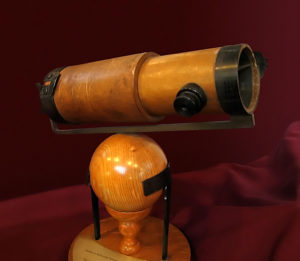
A Replica of Isaac Newton's Reflecting Telescope
A Replica of Isaac Newton’s Reflecting Telescope

After spending time studying optics and the nature of light Isaac Newton became convinced that the image blurriness, called chromatic aberration, could not be eliminated in a refracting telescope design.  Chromatic aberration happens because the lens acts as a prism, splitting the light into its various wavelengths.  Each of these wavelengths is bent at a slightly different angle resulting in a failure to focus all the different wavelengths (different colors) at a single point, creating the blurred image.  Newton did extensive experiments with lights and a prism, so he decided to create an entirely new design for his telescope rather than attempt to improve the design of the refactors.  

In 1668 Newton created his first reflecting telescope.  This telescope consisted of a large concave primary mirror that focused light on a smaller, flat diagonal mirror which reflected the light into an eyepiece on the side of the telescope.  Since no light is being passed through a lens (all of the light is reflected) there is no chromatic aberration.  He presented his telescope to the Royal Society of London in 1672.

Although Newton was the first time build a reflecting telescope the idea had been proposed earlier by other people, most notably by James Gregory in 1663 book Optica Promota.  Earlier still, Italian astronomer Niccolo Zucchi may also have attempted to construct a reflecting telescope as early as 1616, but his device had difficulties producing a quality image.

Reflecting telescopes have several advantages over the refracting telescope.  Significantly, the original refracting telescopes suffered from chromatic aberration noted above which is an optical condition caused by the lens bending light waves onto different focal planes.  This results in a magnified yet blurry image.  Reflecting telescopes avoid this problem since mirrors always reflect light waves in the same way.  This simple fact is obvious to anyone who has looked in the mirror and seen a clear image of themselves.  Today, nearly all large astronomical telescopes are reflecting telescopes due to its various advantages in image clarity, cost, and weight over the refracting telescope.

The Reflector after Newton

Despite these advantages it took some time for reflecting telescopes to surpass refracting telescopes as the industry standard.  William Hershel was the first person to make significant discoveries using a reflecting telescope.  Herschel became interested in astronomy in the 1770s and took to building his own reflecting telescopes to do his research. His early work consisted of searching for binary star systems, during which he made his famous discovery of a new planet in our solar system, Uranus. Uranus, like the classical planets is viable to the naked eye and had been observed before, but was always thought to be a star. In March 1781 Herschel viewed first the planet through his telescope. After subsequent observations using the technique of parallax on fixed stars was able to observe its movement and he initially reported it as a comet. After several more months and with the collaboration of other astronomers it was eventually determined to be a new planet in our solar system.

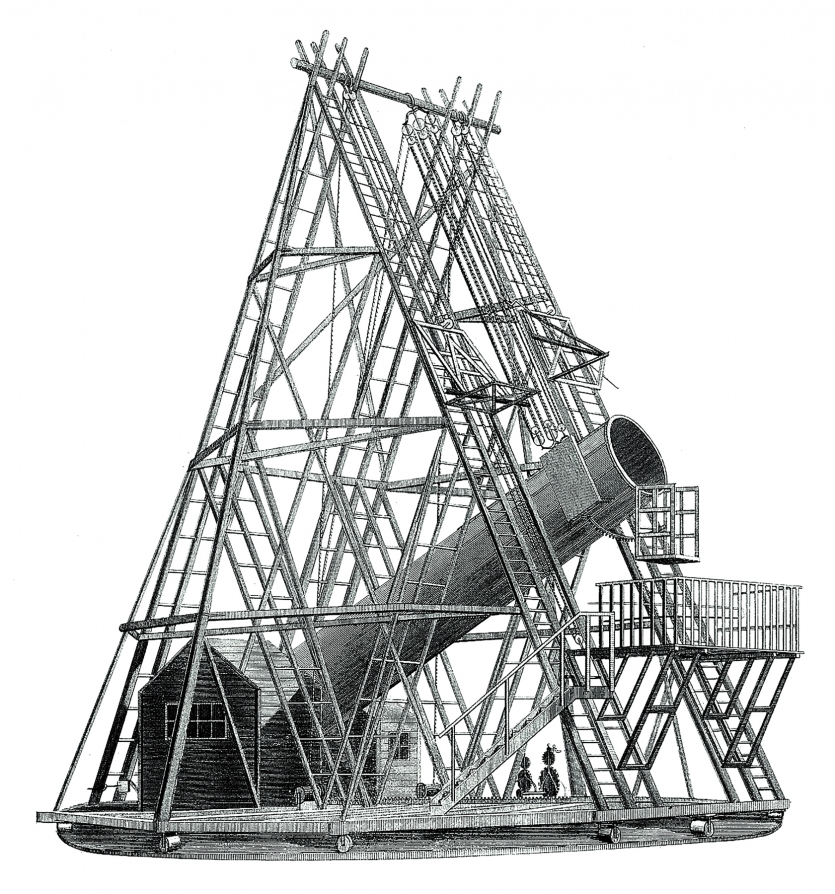
An Illustration of William Herschel's 40 foot long reflecting telescope
An Illustration of William Herschel’s 40 foot long reflecting telescope
(Credit: Charles Hutton’s Philosophical and Mathematical Dictionary, 1815)

Herschel continued to make improvements to his telescope design and in 1789 he completed his largest ever, building a huge 40 foot long telescope that contained a mirror 48 inches in diameter.  At the time of its completion it was the largest scientific instrument every built. The building of larger and larger telescopes had continued to the present day . As of 2021, the largest reflecting telescopes is the Gran Telescopio Canarias in Spain that has a mirror diameter of over 34.2 feet. On Christmas Day 2021, the James Webb Space Telescope, the most powerful telescope ever put into space, was launched to replace the famous but aging Hubble Space Telescope.

Continue reading more about the exciting history of science!
1656: Pendulum Clock

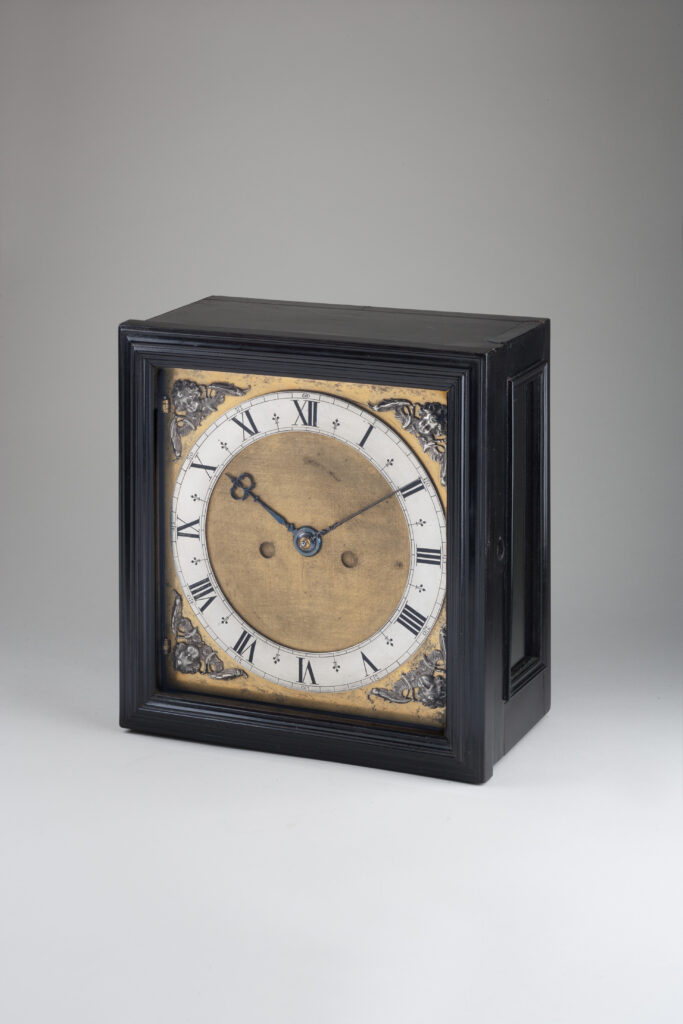
Since the dawn of civilization timekeeping has been an important aspect of human cultures. Sun dials, water clocks, candle clocks and the hourglass were used as early timekeeping instruments but they proved to be unreliable. Mechanical clocks began to appear in Medieval times but these were typically large and clunky devices which also lost up to two hours over the course of a day, again proving to be unreliable. As the economies of civilization became more complex and technology advanced the demands of accurate timekeeping became increasingly necessary. An innovation in clock design was critical to improve the clocks accuracy. This innovation finally arrived in the 17th century with the invention of the pendulum clock.

Swinging to a More Accurate Clock Design

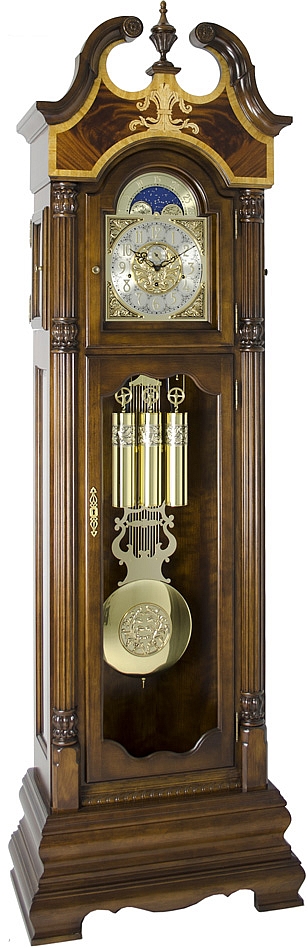
grandfather clock
A Grandfather Clock

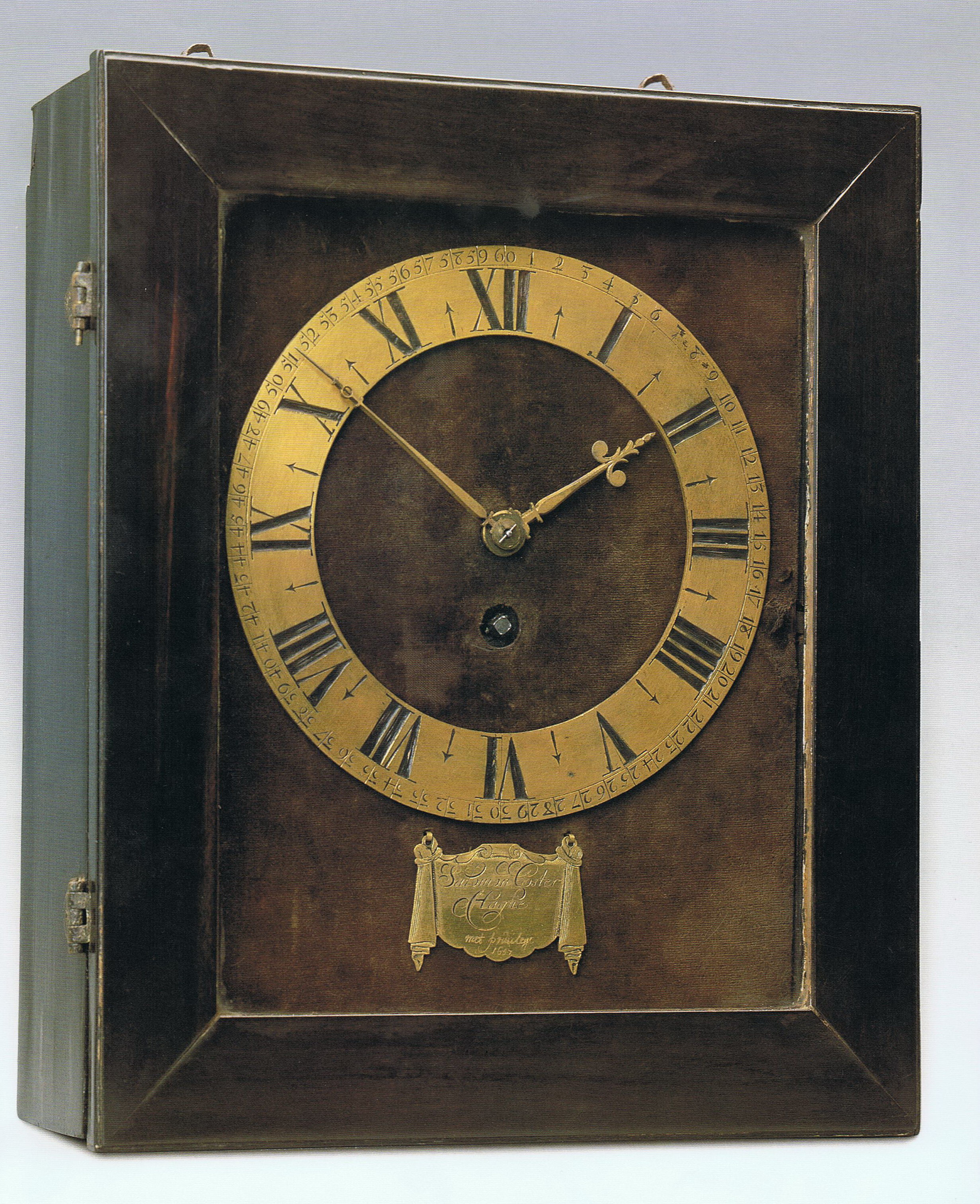
The pendulum clock was invented by the Dutch mathematician Christiaan Huygens in 1656. The pendulum clock quickly established itself as the worlds most accurate time-keeping device.  It was accurate up to a degree of about fifteen seconds per day making it the most accurate timekeeping device until the invention of the quartz clock in late 1920s.

Huygens built on the work of Galileo Galilei’s experiments with the pendulum. Galileo had made some interesting observations about pendulums which he mentioned in several of his books. In the course of time some of his observations have not been proven completely accurate. In any case this are the salient points Galileo noticed:

  • All pendulums nearly return to their release height
  • All pendulums eventually come to rest with lighter ones coming to rest more quickly
  • The oscillation period is independent of the bob weight
  • The oscillation period is independent of the amplitude
  • The square of the oscillation period is proportional to the length of the pendulum

It is with this information in mind that Christiian Huygens had his insight that the pendulum would make for a terrific timekeeping devise while overcoming an illness in December 1655. He immediately set to work on inventing a prototype design.

The Pendulum Clock Design

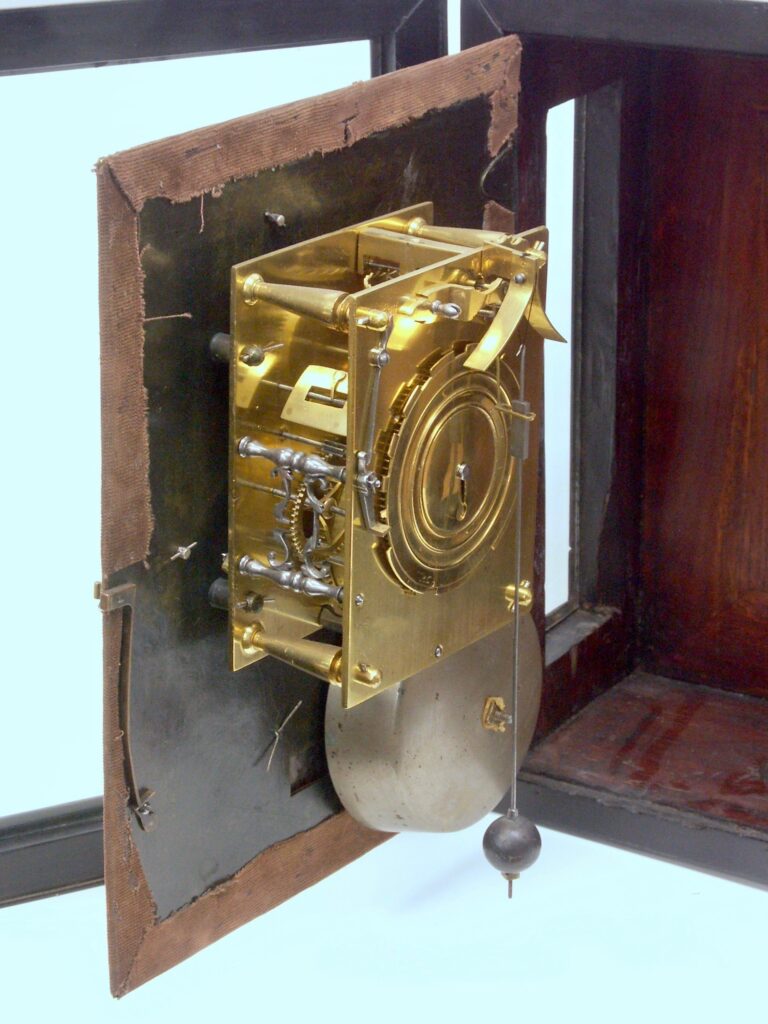
All pendulum clocks have at least five parts making up its mechanism. They are a power source, a gear train, an escapement, the pendulum, and a dial – typically the clock face – showing how much the escapement has rotated and hence how much time has passed. Its power source is a weight that very gradually drops and is reset by winding it up.  A complicated series of gears takes the energy from the weight and applies it to the pendulum, which rocks a lever called the escapement that locks and unlocks a gear at a constant speed.  Since a pendulum swings at a constant speed regardless of the distance it swings in provides an extremely accurate method of keeping time. The clock only works on a steady and level surface – and motion will disrupt the movement of the swinging pendulum

On June 16th, 1657, one year after Christiaan Huygens designed his prototype pendulum clock, he had the design patented. He enlisted a Dutch clockmaker by the name of Salomon Coster the begin construction of pendulum clocks. It did not take long for Huygens’s pendulum clock, in the form of the Coster clock, to spread rapidly all over Europe.

In 1673 Huygens published his influential treatise on pendulums, Horologium Oscillatorium. In it he noticed that early pendulum clocks had wide swings which made them less accurate. Clock makers soon realized that smaller swings of only a few degrees provided for greater timekeeping accuracy while requiring less power and creating less wear and tear on the device. Further design improvements also occurred around this time. The use of an anchor escapement in the 1670s led to a narrower clock design and clock case. The familiar long, narrow clock cases, designed by the English clockmaker William Clement in the 1680s, became known as grandfather clocks. Further improvements in timekeeping accuracy allowed for the minute to begin appearing on pendulum clocks by the 1690s.

Despite these clocks remarkable accuracy there was a significant drawback to the pendulum clocks design. It only operated accurately when it was flat, level, and stationary. This provided for significant challenges for using the clock on ships and later on trains. In fact as Huygens soon realized, it wasn’t practical at all to use pendulum clocks at sea. It would take another half century until the invention of the marine chronometer that accurate timekeeping could be kept at sea. But for the first time in human history and throughout the next two centuries, households, factories, and public institutions had a standard of timekeeping accurate enough that everyone could use. It allowed for the interconnected and fast paced life of the Industrial Revolution to thrive.

Continue reading more about the exciting history of science!
1687: Principia

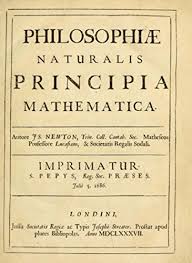
Issac Newton’s 1687 publication of Mathematical Principles of Natural Philosophy, more commonly known as Principia, may have been the most important and influential scientific works of literature of all time.  It’s impact on scientists was enormous and it immediately introduced a new paradigm in physics. 

The State of Science Prior to Newtonian Physics

The 17th century marked an advancement and flourishing of modern science. Aristotelian teachings and the ideas of Christian theologians were coming into question as new observations about the way the universe actually worked were being discovered. Galileo Galilei had recently peered further into the universe, proving once and for all that not all heavenly bodies orbit the Earth. The French philosopher and mathematician Rene Descartes placed an emphasis on mathematical explanations. Newton titled his Principia as an allusion to Descartes’ Principles of Philosophy.

The discovery that most affected Newton and his publishing of the Principia was that of Johannes Kepler. One of the biggest problem facing astronomers at the time was determining how the planets moved against the background of fixed stars. Kepler had put forth three “laws” of planetary motion that show the planets move in an elliptical motion around the Sun. However at the time these laws were known to be close approximations, and there were several other methods that could be used to calculate planetary motion with comparable accuracy.

Newton’s Masterpiece

Newton's Principia
Newton’s Principia

Isaac Newton may have solved the problem of orbital dynamics in 1679, but his solution was unknown to the rest of the scientific world. This changed in 1684 when Edmond Halley came to visit Newton while in Cambridge. During their conversations the topic of planetary motion was brought up. According the the French mathematician Abraham Demoivre’s account of a conversation he had with Newton: “The Dr asked him what he thought the Curve would be that would be described by the Planets supposing the force of attraction towards the Sun to be reciprocal to the square of the distance from it. Sir Isaac replied immediately that it would be an Ellipsi. . . . Dr Halley asked him for his calculation without any further delay. Sir Isaac looked among his papers but could not find it, but he promised him to renew it, and then to send it [to] him.”

In 1684 Newton made good on his promise and sent to Halley a paper on orbital dynamics titled On the Motion of Bodies in an Orbit. After two and a half years of work Newton expanded on this paper to produce his masterpiece Mathematical Principles of Natural Philosophy. Newton published his work into a three Book series. Book One is focused on motion in a medium devoid of resistance. Book Two is focused with motion in a resistive medium. Book Three is an analysis of some specific celestial data and the focuses on the consequences of universal gravitation.

Principia was important for its all-encompassing explanation of physics expressed in mathematical form.  Two major ideas were expressed in the book.  First, it stated Newton’s famous laws of motion which form the foundation of classical physics.  These are:

  1. The law of inertia: An object at rest remains at rest. At object at motion will continue moving in a straight line at a constant velocity unless acted upon by a force.
  2. The law of force: The famous equation F=MA where force equals mass times acceleration.
  3. The law of equal and opposite reaction: This law states that when two bodies impact they apply forces to each other that are equal in magnitude and opposite in direction.

Second, it stated Newton’s law of universal gravitation.  This law states that two masses attract each other by a constant multiplied by the product of the two masses and divided by the square of the distance between them. Stated another way, this is an inverse-square law of gravitation. All of these laws were proven with rigorous mathematical and experimental evidence.

Principia’s Lasting Legacy

The methods and laws in the Principia provided an unrivaled and highly accurate description of the physical universe for the time, making it one of the most important science books ever published. It established mathematics as the language of the physical sciences and continued in the Baconian tradition of relying on observation and experimentation. Newtonian mechanics, as his principles became to be known, were extremely important due to its useful value in everyday life. These methods and equations could be used in a variety of fields such as engineering, astronomy, industry, and agriculture.

Continue reading more about the exciting history of science!
1662: Boyle’s Law

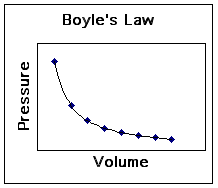
The discovery of the relationship between gas volume and air pressure was published by Robert Boyle in 1662 and is known today as Boyle’s Law.  It states that air pressure is inversely proportional to the volume it occupies, for a fixed temperature in a closed system. 

The Pressure-Volume Correlation

Boyle's Law
Graph of Boyle’s Law

In early human history an understanding of the universe was mostly marked by deep philosophical thinking. Questions were poised and then mulled over. The answers were logical explanations that came directly from the human mind. Little emphasis was placed on observation and experimentation. Starting around the 16th century the field of science was beginning to make radical changes. It marked a period of revolution in a way of thinking and a desire to know and understand natural laws. The new way of thinking affected all aspects of society, influencing and altering belief systems, politics, and the economy. One critical advancement in the way science was conducted was that the mathematization of science was beginning to appear and take hold. Boyle’s Law was the first physical law to be expressed in the form of an equation describing the dependence of two variable quantities.

The foundations of Boyle’s Law was laid on experiments with air pressure and connected with the work of Itialian physicist Evangelista Torricelli and the French mathematician Blaise Pascal. Torricelli’s work on the vacuum began to break down the deeply held Aristotelian notions about the weight and nature of air. Further experiments at this time were conducted that illustrated the compression and expansion abilities of air. Pascal, having learned of Torricelli’s experiments, also began experimenting on the nature of air. He noted that when a half inflated balloon was carried up a mountain (to an place of different air pressure) the balloon would expand. He therefore speculated that there was a relationship between the volume of air and the pressure exerted on it.

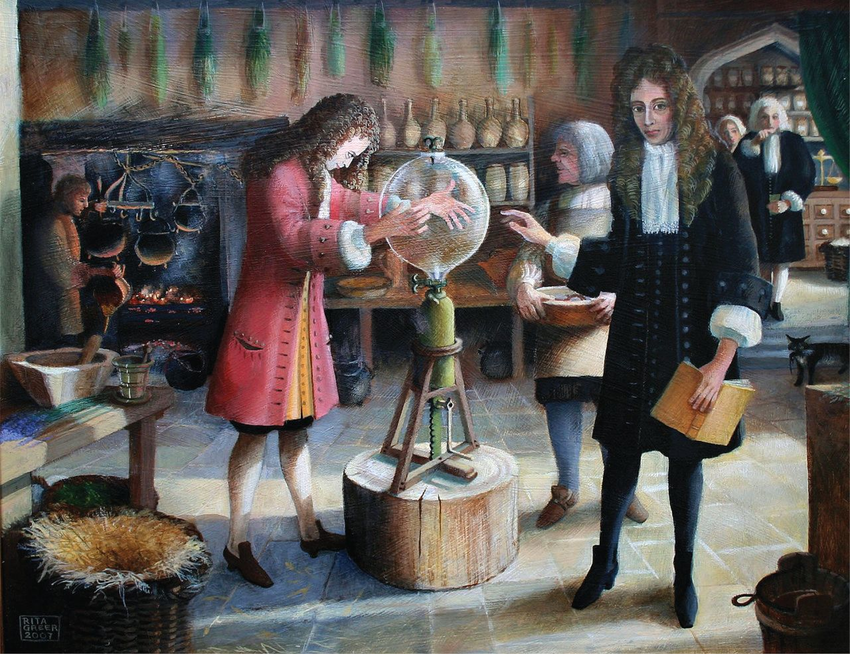
Robert Boyle and Robert Hooke experimenting with an air pump
(Credit: Wikimedia Commons)

The original hypothesis was given to Boyle by Richard Towneley and his assistant Henry Power in 1661 via letter. Power performed his first experiments on air pressure in 1653. He performed more conclusive ones in 1660 with the collaboration of Richard Towneley. These experiments were similar in nature to the Torricellian experiments that were commonly being performed at the time. Boyle was also familiar with the Torricellian experiments when he began systematically investigating air pressure in 1658. He was working with Robert Hooke, who was designing a superior air pump that they were using to investigate the elasticity of air. In 1661 Towneley and Power deduced that there was a proportionality with the volume of air and the external air pressure in their experiments. Boyle devised a series of experiments to check the hypothesis. He repeated several experiments using different amounts of mercury in a J-tube, an apparatus for measuring both the volume of air and its pressure. Publication followed after Boyle and Hooke had successfully verified the Towneley/Power hypothesis.  In 1676 the French chemist Edme Mariotte also came to the same conclusion independently but in addition discovered that air volume changes with temperature.

Boyle’s law can be expressed mathematically as P\propto {\frac {1}{V}} where P is the pressure of the gas and V is the volume of the gas. In simple terms it means that if volume decreases then pressure increases, and vice versa. Boyle’s Law is an equivalency law which can also be expressed as P1V1=P2V2 where P is the pressure of the gas and V is the volume of the gas.

Applications of Boyle’s Law

Practical applications of Boyle’s Law can be applied to nearly anything that involves compressed air to do useful work. One common contemporary example is the aerosol spray. Aerosol spray works by having its contents contained in a can under extremely high pressure. When the nozzle is pressed down the pressure of the gas or liquid inside the can is decreased. As a result the compressed gas expands causing its contents to spray outward. This is how hairspray, spray paint, and every other aerosol spray works. Boyle’s Law can also be applied under varying temperatures. A basketball bounces less and your car tires air pressure decreases as it becomes colder outside.

However the most vital example of Boyle’s Law at work is in the human respiratory system. You bring air into your lungs by contracting your respiratory muscles to increase the volume in your chest, and hence decreasing the pressure on your chest. Basically air moves from your lungs to the atmosphere and back due to a change of pressure inside and outside of your chest. The mechanics of breathing are nicely explained by this scientific principle!

Continue reading more about the exciting history of science!
1643: Discovery of the Vacuum

The existence of a vacuum, a space completely empty of matter, had been debated since at least the ancient Greek philosophers, and probably much longer.  In 1643 the Italian physicist Evangelista Torricelli showed that for all practical purposes a vacuum was indeed possible. 

Philosophical Ideas about a Vacuum

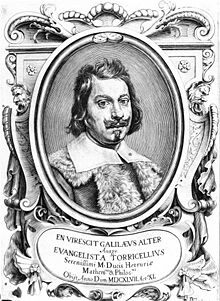
Portrait of Evangelista Torricelli
Evangelista Torricelli

The philosophical debate about the existence of a vacuum, or the void as the Greeks may have called it, has been around for centuries. Is there a void or is no void possible? The debate itself was contentious and much doubt surrounded the idea that a vacuum could actually exist. In ancient Greece the idea began with Democritus, born around 460 BCE, who expanded on and synthesized the work of his teacher Leucippus. Democritus proposed that the world was composed of tiny particles moving around in an infinite void which he called atoms. Thus the space in between these particles was empty space, or what we might today call a vacuum. The most influential Greek thinker, Aristotle, made arguments against these ideas in his book titled Physics. The phrase “horror vacui” (nature abhors a vacuum) is attributed to Aristotle.

Given what we know of the influence of Aristotle over Medieval thinking it is no surprise that the idea of a vacuum fell out of favor during Medieval times. The rejection of a vacuum was restated time and again up until the time of Galileo Galalei.

An Accidental Discovery

Evangelista Torricelli was born in Faenza, Italy in 1608 to a relatively poor family. His father was a textile worker but he had to good sense to realize the extraordinary intellectual talents and abilities of his oldest child. Lacking the resources to provide his son with a proper education he send him to his Jesuit uncle where he was to receive his education at the Jesuit College in Faenza, then later in Rome where he studied science under the Benedictine monk Beneditto Castelli. Castelli was a student of Galileo, a figure who inspired Torricelli’s in his mathematical and scientific career included his experimental verification of a vacuum.

Late in his life, Galileo became preoccupied with the observation that well diggers suction pumps could only raise water about ten meters. In 1640 Galileo, along with his two assistants Torricelli and Giovanni Baliani, conducted a suction pump experiment at a public well. In every instance, no matter what they tried, the water would not rise more than 9.7 meters about the level of the well water. Galileo incorrectly surmised that a force created by a vacuum was preventing the water from rising any higher.

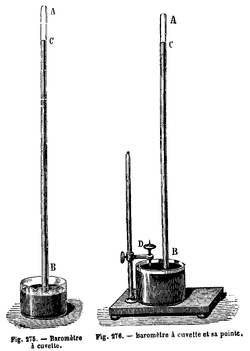
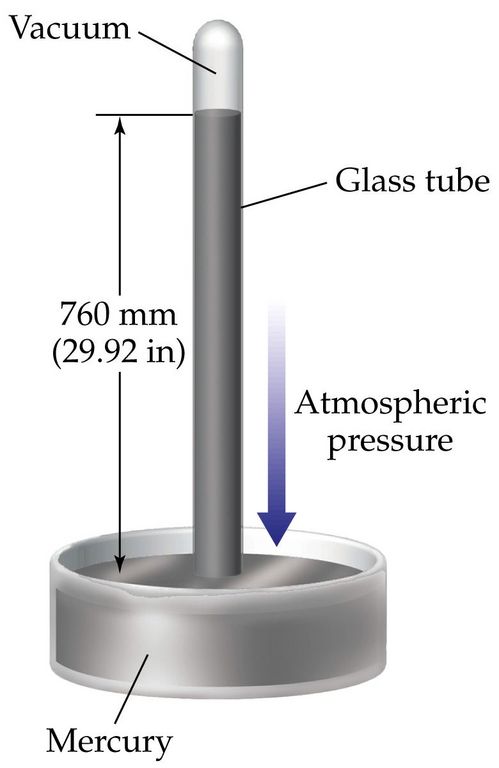
Torricelli discovered the vacuum accidentally when he was conducting experiments that were designed to solve the problem of pumping water out of a deep well.  He tried to scale down the problem using mercury instead of water because liquid mercury is much more dense than water and he hoped to be able to observe the same phenomenon at a lower height.  He took a tube closed at one end and filled it with mercury.  He stuck the open end in a bowl of mercury and slowly raised the closed end, where eventually a gap appeared above the mercury.  The gap could not have been air because when he lowered the tube again the gap vanished immediately, quicker than air could have dissipated. The gap above the mercury was the first experimentally verified vacuum.

As to the problem of rising water and mercury above a certain level, Torricelli proposed the correct answer. It is that the mercury was rising due to the atmospheres weight (or atmospheric pressure) pressing down on the mercury in the dish. He correctly predicted that height of the mercury column would vary from day to day as the atmospheric pressure also changed. In effect, he invented the apparatus known today as the barometer.

Modern Uses of Vacuum Technology

The discovery of the vacuum was eventually applied to advances in technology and its principle many different industries today. One of the most common uses is in the food industry, where vacuum technology is used in the transport, processing, and packaging of food, and in bottling of beer and soft drinks. It prolongs the shelf life of food and maintains its nutritional content. Vacuum technology is used in the chemical industry to treat and purify reactants and products. Other applications of vacuum technology include usage in heating and cooling systems, light bulbs, steam engines, and cathode ray tubes.

Continue reading more about the exciting history of science!
1590s: The Microscope

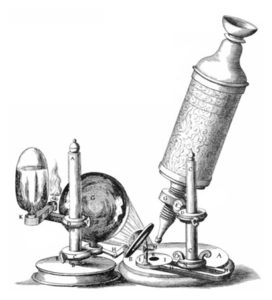
An Early Microscope
An Early, Crude Microscope

The vast scale of the universe, both cosmic and microscope, is one of the marvels that modern science has revealed. The revelation is the result of the invention of two instruments, the telescope for revealing the cosmic and the microscope for revealing the microscopic. Each of these instruments were invented roughly 500 years ago. Each changed how we thought about our place in the universe.

It is extremely difficult to imagine things on a microscopic scale given the limitations of our human senses. But we can try. Let’s take one example to illustrate the miraculous world of the microscopic. In a single drop of seawater one can find tens of millions of viruses and bacteria. Yet these microorganisms are completely invisible to the naked eye. The invention of the microscope was the instrument that shined a light on the realm of the small.

The Invention of the Microscope

Like many pre-modern inventions, the exact date of the first microscope is disputed, murky, and confused. However it is still possible to shine a light on this inventions beginnings. Credit is most commonly given to Zacharias Janssen and his father Hans Martenz for creating the first microscope as early as 1590, or at least sometime during that decade. 

They were, of course, not the first people to have experimented with enlarging objects. Centuries earlier saw lots of people attempting to magnify objects by means of using water to bend light or by using a very simple lens. However it’s probably safe to say that these methods do not meet the qualifications to what most would consider a microscope.

The important point was the people in the ancient world did come to learn that the best way to magnify an object was by viewing it through a lens. The important breakthrough occurred when several lenses were placed in a tube resulting in significant magnification of objects when viewed through a single lens. By using several lens to magnify an object, the compound microscope had just been invented.

An Improved Microscope

Early microscopes came in a variety of forms ranging from single yet sophisticated powerful lens such as the type that Antony van Leeuwenhoek created and used, to simple compound microscopes such as those created and used by Zacharias Janssen, Galileo Galilei, and Robert Hooke.  The term microscope was first used in 1625 to describe one of Galilelo’s instruments that he invented in 1609. Although these microscopes provided increased magnification there were persistent problems with the image quality. The major nagging image issue was called chromatic aberration. It is caused by light passing through the lens at different points and color wavelengths, resulting in a color distortions at the edge of the image. This problem persisted early on due to the relative low quality of glass used combined with flaws in design of the microscopes.

It took about 100 years for significant discoveries to be made with the microscope. This is due to early microscopes having low magnifying power and producing blurry images. The first big breakthrough came with the publication of Robert Hooke’s book Micrographia in 1665. The book dazzled the imagination of the people who read it and naturally sparked an enormous amount of new interest in the emerging field of microscopy. Antony van Leeuwenhoek, a contemporary of Robert Hooke, made some of the most powerful microscopes of the early era. Throughout his life van Leeuwenhoek made over 500 microscopes, which were extremely powerful single lenses as opposed to the compound microscopes that Robert Hooke used.

Modern Microscopes

Today microscopes are available in an even greater variety of forms. By the turn of the 20th century the resolution limit of light microscopes had been reached. This limitation was quickly overcame in 1904 when a UV microscope was invented that had double to resolution of a light microscope. Since that time various types of more powerful microscopes have come onto the scene. One of the most powerful is the electron microscope. First invented in the 1930s, electron microscopes employ beams of electrons rather than light (since the wavelength of electrons is up to 100,000 times shorter than that of light), allowing for significantly greater magnification.

Today’s most powerful electron microscopes allow researchers to see resolutions so clearly that they can view images of individual atoms. Viruses can be viewed at a scale of less than four angstroms, or four ten-billionth of a meter. Resolution of this magnitude provides a powerful tool in advancing the field of microbiology.

Continue reading more about the exciting history of science!