Science as a Force for Progress Part 10: Frontiers Ahead

In the previous part of this series, we explored how Turing, Berners-Lee, and advances in computing and neuroscience created a digital ecosystem that connects minds and accelerates knowledge like never before. In this final part, we reflect on science’s triumphant arc – from centuries dominated by superstition and untestable beliefs to an era of evidence-based mastery over nature’s deepest challenges. Where once plagues were divine wrath and comets omens of doom, today vaccines eradicate diseases and telescopes reveal cosmic truths. As we enter 2026, breakthroughs in quantum computing, biotechnology, fusion energy, space exploration, and artificial intelligence exemplify this shift: replacing fear with understanding, prayer with precision, and limitation with limitless potential. These advances promise to conquer illness, secure sustainable power, unveil the universe, and amplify human intellect – yet they remind us that science’s true power lies in its rigorous, self-correcting pursuit of evidence.

From Superstition’s Shadow to Evidence’s Light

For millennia, humanity attributed misfortune to supernatural forces: earthquakes as godly anger, illnesses as curses, celestial events as portents. Prayers and rituals offered solace but no solutions, leaving life precarious and short. Science overturned this worldview through observation, experimentation, and reproducibility – transforming mystery into mechanism.

Today, this contrast is stark. Where medieval societies blamed miasmas or sin for epidemics, modern microbiology and vaccines, rooted in Pasteur’s germ theory, have nearly eliminated smallpox and dramatically curbed measles. Ancient astrologers read fates in stars; now, telescopes like James Webb pierce cosmic dawn, revealing early galaxies, potential biosignatures on exoplanets, and even a new moon around Uranus in 2025 observations.

Illustration of CRISPR/Cas9 gene editing process.
(Credit: livescience.com)

In health, superstition once prescribed bloodletting or charms; evidence now delivers CRISPR therapies. 2025 saw one-time infusions safely slashing cholesterol by over 50% in high-risk patients via gene editing targeting ANGPTL3, while trials advanced cures for sickle cell, amyloidosis, and rare disorders – building on Watson, Crick, and Franklin’s DNA helix. These are not miracles, but measurable outcomes of methodical inquiry.

A New Era of Discovery

Quantum computing exemplifies progress over prophecy. IBM’s 2025 Nighthawk processor and advancements toward fault-tolerant systems by 2026–2029 promise simulations of molecules for drug design and materials unattainable classically, echoing Curie’s atomic revelations but harnessing them for practical quantum advantage.

Nuclear fusion, long dismissed as eternally distant, advanced decisively: China’s EAST tokamak accessed a “density-free regime” in late 2025, sustaining high-density plasmas for ignition pathways, while global efforts like WEST’s record plasma durations and high-temperature superconductors push toward commercial viability in the 2030s – offering clean, abundant energy without fossil fuels.

Space discoveries further illuminate: Webb’s 2025 views captured supernovae from the universe’s infancy and carbon-rich exoplanet atmospheres hinting at habitability, extending Hubble and Gamow’s Big Bang insights.

An image captured by the James Webb Telescope of galaxies billions of light-years away.
(Credit: livescience.com)

Artificial intelligence accelerates it all. 2025 models excelled on reasoning benchmarks, aiding fusion control, protein design, and hypothesis generation – propelling us toward systems that augment discovery, far from oracles but grounded in data.

From Copernicus repositioning Earth to these revolutions, science has liberated humanity from superstition’s grip, delivering longer lives, interconnected knowledge, and tools to address existential threats. The future gleams with promise: eradicated diseases, limitless clean energy, interstellar exploration, and intelligence beyond biological limits. Yet ethical stewardship—ensuring equitable access, safe AI, and responsible gene-editing demands the same evidence-based rigor.

This series has chronicled science not as arcane facts, but as humanity’s greatest force: dismantling myths, illuminating truths, and empowering progress. Its method – question, test, refine – holds no bounds when guided by curiosity and accountability. In an age where evidence triumphs over enchantment, science lights the way ahead.

Thank you for joining this journey through Science as a Force for Progress.
Science as a Force for Progress Part 9: Digital Dawn and Connected Minds

In the eighth part of this series, we traced how Franklin, Watson, Crick, Hubble, and Gamow decoded the molecular basis of life and the universe’s cosmic origins, linking biological inheritance to the grand scale of existence. In Part 9, we examine the late 20th and early 21st centuries, when computing and global networks transformed information into a ubiquitous force. Alan Turing laid the theoretical foundations for programmable machines, Tim Berners-Lee invented the World Wide Web to connect humanity’s knowledge, and advances in neuroscience and artificial intelligence began mapping and extending the human mind. These developments democratized access to information, accelerated discovery, and augmented intelligence, marking science’s shift toward a digital, interconnected era.

The Analog World Locked in Isolation

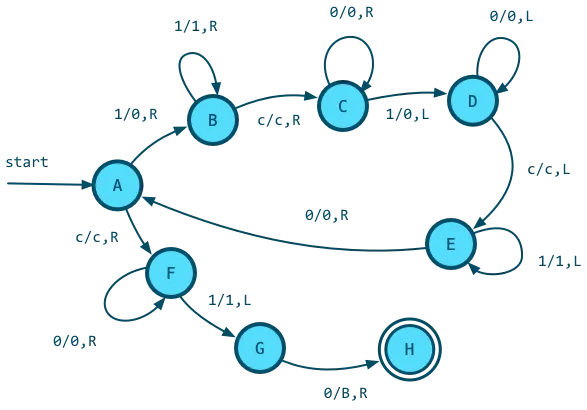
Diagram of a Turing Machine
(Credit: Diagram of a Turing Machine)

Before the digital age, computation was mechanical and limited. It consisted of punch cards, analog devices, and human “computers”, all of which performed calculations slowly. Knowledge was siloed in libraries and institutions, accessible only to the privileged few, while understanding the brain relied on crude observations rather than precise mapping.

Alan Turing, a British mathematician born in 1912, provided the conceptual breakthrough. In his 1936 paper he described a hypothetical “universal machine” capable of simulating any algorithm through a simple tape, read-write head, and instruction table. This became known as the Turing machine, a model that formalized computation as the manipulation of symbols, revealed fundamental limits such as the halting problem, and laid the foundation for computability theory.

During World War II, Turing applied these ideas to crack Enigma codes, hastening victory. His 1950 paper “Computing Machinery and Intelligence” introduced the Turing Test, probing machine intelligence and sparking AI. Postwar designs like the ACE computer realized programmable digital machines.

Breaking the Information Open

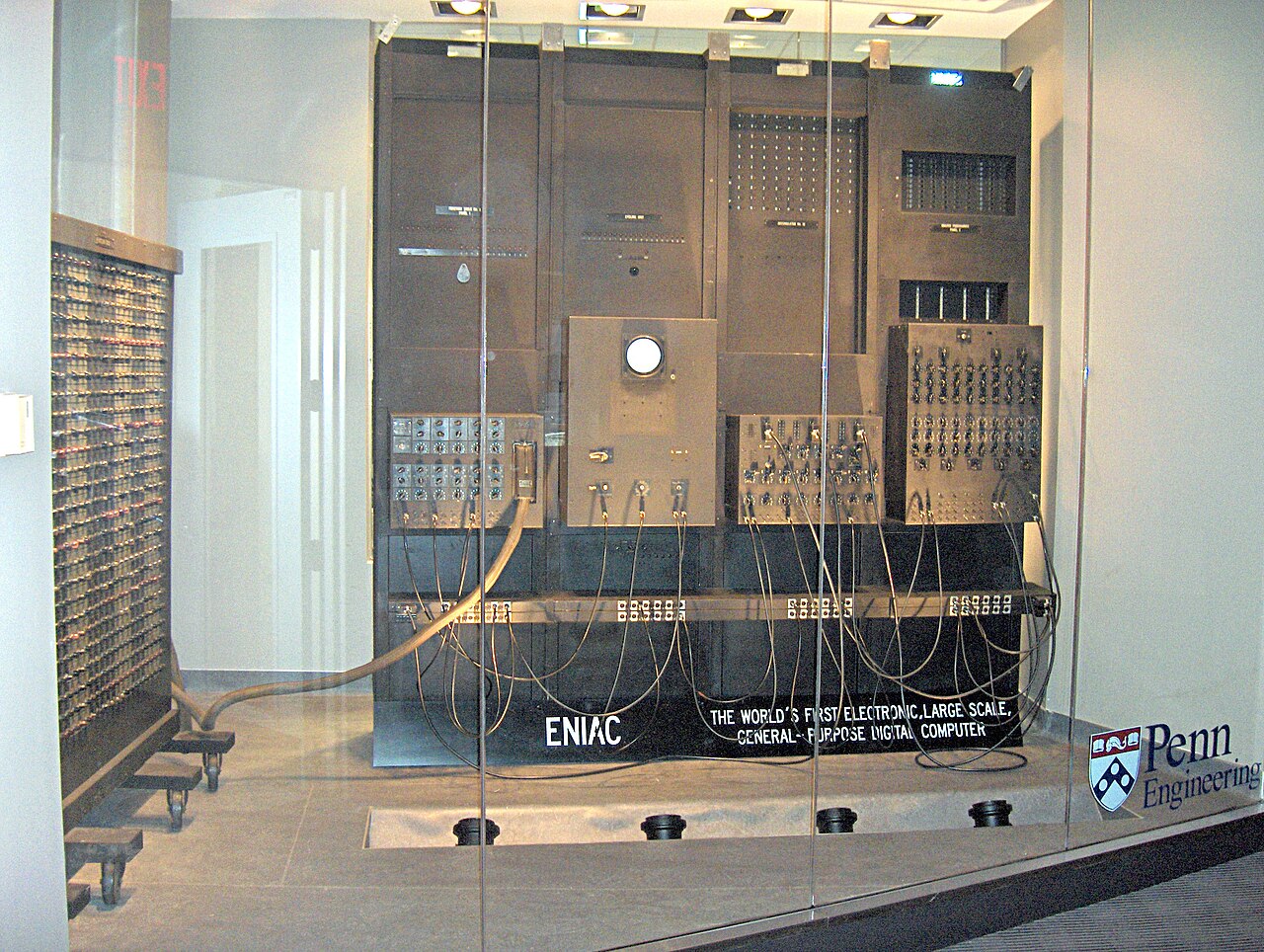
The physical manifestation came swiftly. ENIAC, unveiled in 1946 by Americans John Presper Eckert and John Mauchly, was the first general-purpose electronic computer—programmable, electronic, and vastly faster than predecessors, though room-sized and vacuum-tube based. Transistors and integrated circuits miniaturized computing, leading to personal computers by the 1970s–1980s.

Historical photograph of ENIAC computer.

Tim Berners-Lee, a British computer scientist born in 1955, connected it all. Working at CERN in 1989, he proposed a hypertext system for sharing documents over networks. By 1990–1991, on a NeXT computer, he created HTTP, HTML, URLs, and the first web browser/editor. Releasing it freely in 1993, the Web exploded, turning the Internet into a global repository of knowledge. The power of the internet empowered education, business collaboration, and innovation worldwide.

Parallel progress in mind sciences augmented human cognition. Functional MRI (fMRI) in the 1990s allowed real-time brain activity imaging, revealing neural correlates of thought and emotion. Artificial neural networks, inspired by biology, revived in the 1980s–2010s with deep learning, enabling machines to learn patterns, powering image recognition, translation, and AI like modern language models.

Turing theorized universal computation, early computers and the Web realized interconnected information, while neuroscience and AI extended mental capabilities. Their legacies are rooted in logic, engineering, and biology. It created an information ecosystem that accelerates all sciences, fosters global progress, and redefines human potential.

As we conclude this series in Part 10, Frontiers Ahead, we reflect on science’s ongoing trajectory and future promises. From quantum computing to gene editing and sustainable energy, the method of evidence-based inquiry continues to drive humanity forward, building on centuries of relentless curiosity.

Continue reading Part 10 of Science as a Force for Progress.
Science as a Force for Progress Part 8: Codes of Life and Cosmic Origins

In the seventh part of this series, we witnessed how Curie, Einstein, and Bohr unraveled the atom and spacetime, introducing revolutions in energy, matter, and reality that powered modern technology. In Part 8, we explore mid-20th-century breakthroughs that decoded the blueprint of life and traced the universe’s birth. Rosalind Franklin’s pivotal imaging, followed by James Watson and Francis Crick’s model of DNA, unveiled heredity’s mechanism, while Edwin Hubble’s observations and George Gamow’s theories established the expanding universe and Big Bang. These discoveries bridged biology and cosmology, replacing static or divinely fixed views with dynamic, evidence-based narratives of evolution.

The Codes of Life and Origins of the Universe Locked in Mystery

For centuries, both the diversity of life and the origins of the universe itself were shrouded in myth and religious doctrine rather than empirical inquiry. Heredity was speculated upon through ideas like “bloodlines” or blending inheritance, with no grasp of its material foundation. Similarly, the cosmos was often regarded as eternal and unchanging, or created in a finite act of divine will.

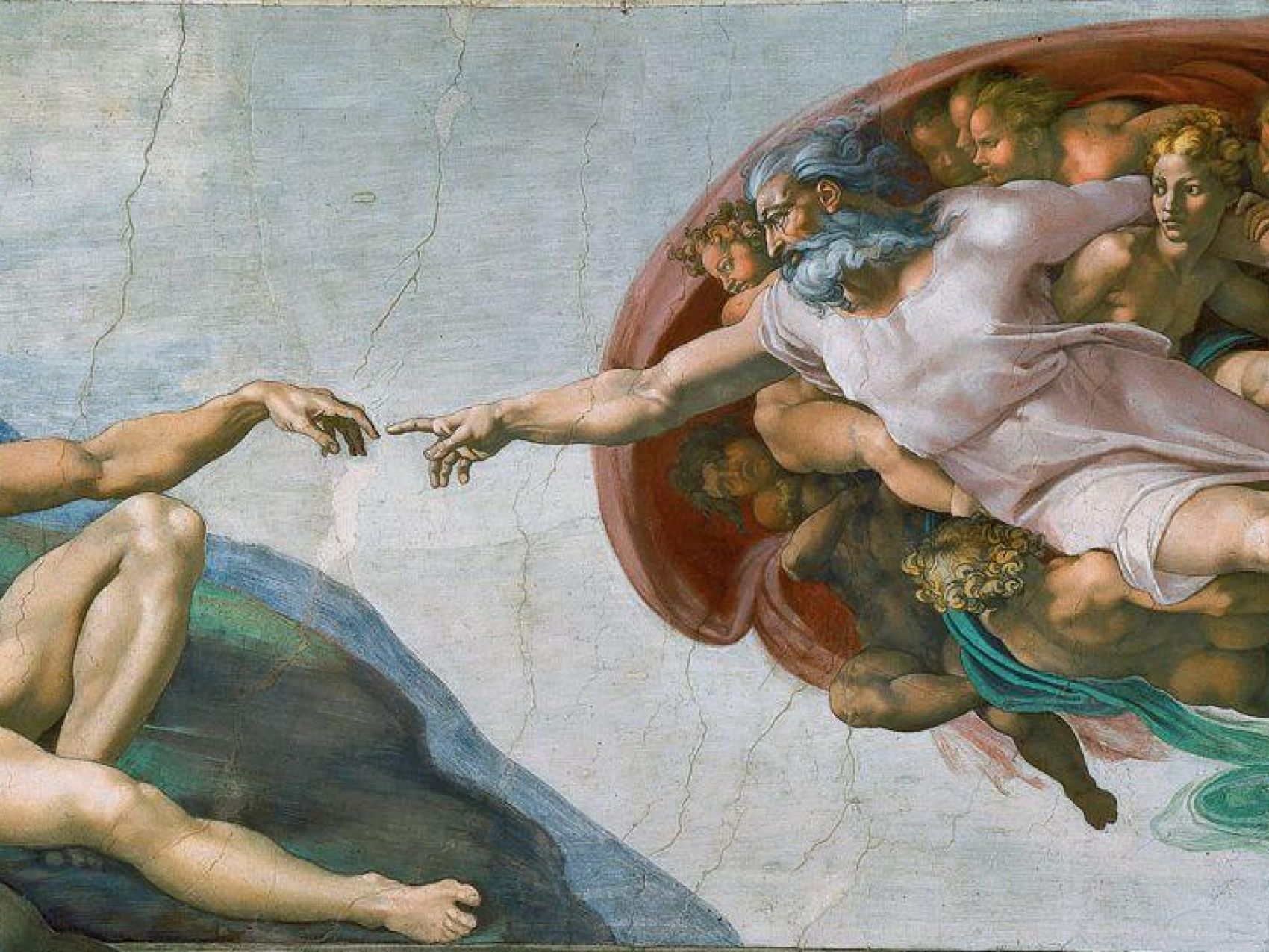
Illustration depicting the biblical Creation story from Genesis.

Many cultures explained universal origins through creation myths: ancient Egyptians envisioned the god Atum emerging from primordial waters to create the world, while Norse mythology described a void giving rise to ice and fire forming the first beings. Abrahamic traditions, influential in Western thought, held to a literal six-day creation as described in Genesis, with the universe and all life formed ex nihilo by divine command – a static, young cosmos centered on humanity. Even into the 20th century, some scientific models like the steady-state theory proposed an infinite, eternal universe in perfect balance, continuously creating matter to maintain density amid expansion—avoiding a beginning that might imply a creator. These views, whether mythological or theoretical, lacked testable mechanisms and often aligned with philosophical or theological preferences for an unchanging or purposefully designed reality.

The molecular era began with Rosalind Franklin, a British crystallographer born in 1920. At King’s College London in the early 1950s, Franklin perfected X-ray diffraction techniques on DNA fibers. Her famous Photograph 51 revealed a clear X-pattern, indicating a helical structure with precise dimensions. This was crucial evidence that DNA was not a random coil but an ordered double helix. Though her contributions were underrecognized in her lifetime (she died in 1958), Franklin’s data provided the empirical foundation for decoding life’s code.

Breaking Open the Codes of Life and the Origins of the Universe

James Watson, an American biologist born in 1928, and Francis Crick, a British physicist born in 1916, at Cambridge University, built directly on this. Using Franklin’s measurements and Chargaff’s base-pairing rules, they constructed a physical model in 1953: DNA as a double helix of sugar-phosphate backbones with complementary base pairs (A-T, G-C) connected by hydrogen bonds.

This elegant structure explained replication (helices unzip, each strand templates a new partner) and mutation, unifying genetics with chemistry. Their 1953 paper revolutionized biology, enabling the genetic code’s cracking, biotechnology, and medicine—from CRISPR to personalized treatments.

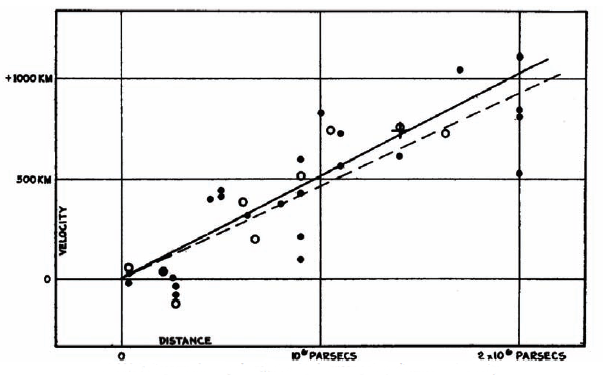
In cosmology, Edwin Hubble, an American astronomer born in 1889, transformed our view using the 100-inch Hooker Telescope at Mount Wilson. In the 1920s, he measured galaxies’ distances via Cepheid variables and their redshifts—light stretched by motion away from us. His 1929 plot showed velocity proportional to distance: the farther the galaxy, the faster it recedes.

Hubble's original diagram showing the velocity-distance relation (redshift).
Hubble’s original diagram showing the velocity-distance relation (redshift).
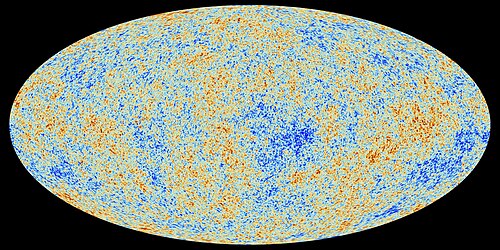
Map of the cosmic microwave background radiation.
(Credit: Wikipedia)

George Gamow, a Ukrainian-American physicist born in 1904, formalized this in the 1940s as the Big Bang theory: the universe began approximately 13.8 billion years ago in a primordial explosion, cooling to form matter. With Ralph Alpher and Robert Herman, he predicted “relic radiation” – the cosmic microwave background (CMB), discovered in 1965 by Penzias and Wilson.

Franklin, Watson, Crick, Hubble, and Gamow decoded profound mysteries. The DNA trio revealed heredity’s mechanism, while Hubble and Gamow traced cosmic origins. Their work, rooted in observation, data, and theory, fueled genetics revolutions and modern astronomy, linking life’s evolution to the universe’s.

As we approach Part 9 of this series, Digital Dawn and Connected Minds, we turn to the late 20th and early 21st centuries, where computing and networks amplified science’s reach. Just as Watson and Crick modeled DNA, pioneers like Alan Turing and Tim Berners-Lee built information systems, while neuroscience and AI began decoding consciousness and extending human intellect.

Continue reading Part 9 of Science as a Force for Progress.
Science as a Force for Progress Part 7: Atoms, Quanta, and the Fabric of Reality

In the sixth part of this series, we explored how Darwin, Pasteur, Koch, and Maxwell revealed hidden mechanisms of life and electromagnetism, extending science’s explanatory power into biology and physics. In Part 7, we enter the early 20th century, a period of profound upheaval that dismantled classical views of matter, energy, and reality itself. Pioneers like Marie Curie, Albert Einstein, and Niels Bohr (along with contemporaries in quantum theory) probed the subatomic world and spacetime, introducing radioactivity, relativity, and quantum mechanics. These revolutions challenged deterministic certainty, unlocked immense energy, and reshaped technology, medicine, and philosophy.

The Classical World Locked in Stability

At the dawn of the 20th century, physics seemed nearly complete. Matter was thought to consist of indivisible atoms in a continuous, predictable universe governed by Newton’s laws. Energy flowed smoothly, and light was a wave in an ethereal medium. Yet anomalies such as blackbody radiation and the photoelectric effect defied explanation, hinting at deeper mysteries.

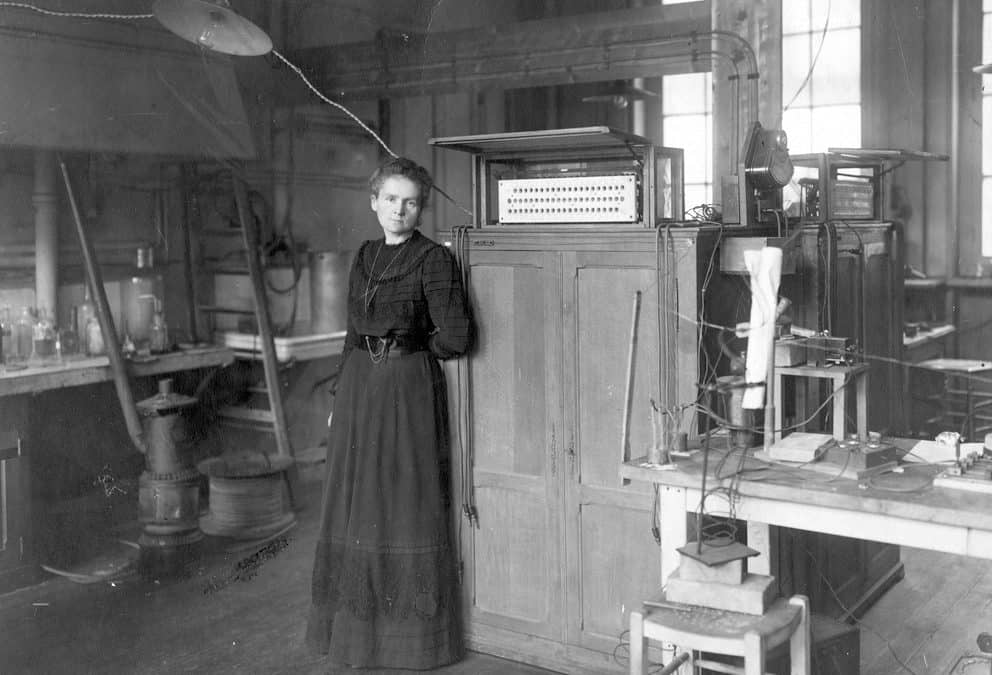
Marie Curie in her laboratory in Paris.

Marie Curie, a Polish-born physicist born in 1867, ignited the atomic era with her groundbreaking work on radioactivity. Building on Henri Becquerel’s discovery of uranium rays, Curie and her husband Pierre isolated radium and polonium from pitchblende ore through painstaking chemical separations. Her 1903 thesis and dual Nobel Prizes (Physics in 1903, Chemistry in 1911) established radioactivity as the spontaneous emission of particles and energy from atomic nuclei.

Curie’s discoveries not only revealed atomic instability but enabled practical applications, from cancer treatments (radium therapy) to X-ray technology in World War I. Though she succumbed to radiation exposure, her work dismantled the notion of inert atoms, opening the door to nuclear physics and energy.

Breaking Open the Secrets of the Atom

Albert Einstein, a German-born theorist born in 1879, shattered classical intuitions in 1905 – his “miracle year.” In special relativity, he showed that space and time are intertwined, varying with velocity, and that nothing exceeds light speed. His iconic equation, E=mc², demonstrated mass-energy equivalence, implying vast energy locked in matter.

In general relativity (1915), Einstein redefined gravity as spacetime curvature caused by mass, predicting phenomena like light bending and confirmed in 1919. His explanations of the photoelectric effect (earning the 1921 Nobel) introduced light quanta (photons), bridging to quantum theory and enabling solar cells and electronics.

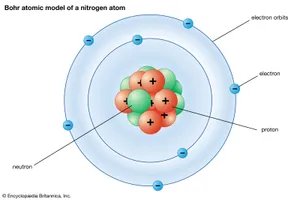
Diagraph of Bohr's Model of the Atom.
Diagraph of Bohr’s Model of the Atom.
{Credit: Britannica Encyclopedia)

The quantum revolution culminated with Niels Bohr, a Danish physicist born in 1885. In 1913, Bohr refined Rutherford’s nuclear atom model by quantizing electron orbits: electrons jump discrete energy levels, emitting or absorbing specific light wavelengths. This explained atomic spectra that classical physics could not. Though later superseded, Bohr’s model incorporated Planck’s quanta and paved the way for full quantum mechanics in the 1920s by Heisenberg, Schrödinger, and others, revealing probabilistic reality at small scales.

Curie, Einstein, and Bohr (with quantum pioneers) unraveled the fabric of reality. Curie exposed atomic power, Einstein unified space, time, and energy, and Bohr quantized the atom. Their theories, grounded in experiment and mathematics, enabled nuclear power, GPS, semiconductors, and lasers, while humbling humanity’s classical worldview.

As we move to Part 8 of this series, Codes of Life and Cosmic Origins, we examine mid-20th-century triumphs that decoded heredity and the universe’s birth. Just as Einstein curved spacetime, scientists like Rosalind Franklin, James Watson, and Francis Crick unveiled DNA’s double helix, while Edwin Hubble and George Gamow traced the Big Bang. Science’s quest continued, merging micro and macro scales to illuminate life’s blueprint and cosmic evolution.

Continue reading Part 8 of Science as a Force for Progress.
Science as a Force for Progress Part 6: Unseen Worlds and Hidden Forces

In the fifth part of this series, we examined how Watt, Davy, and Faraday harnessed energy through steam and electromagnetism, propelling the Industrial Revolution and transforming human capability. In Part 6, we delve into the mid-to-late 19th century, when science uncovered invisible realms within biology and physics. Charles Darwin revealed life’s evolutionary mechanisms, Louis Pasteur and Robert Koch established the germ theory of disease, and James Clerk Maxwell unified electromagnetism into a predictive framework. These breakthroughs dismantled myths of creation and spontaneous life, replacing them with evidence-based explanations that revolutionized health, agriculture, and technology.

The Diversity of Life Locked in Mystery

For millennia, the diversity of life was attributed to divine creation, with species seen as fixed and unchanging since their origin. Similarly, diseases were blamed on miasmas (bad air) or imbalances, while many believed life could arise spontaneously from non-living matter, as maggots seemed to emerge from decaying meat.

Charles Darwin, an English naturalist born in 1809, shattered these views with evidence gathered during his five-year voyage on HMS Beagle (1831–1836). Observing variations in species across continents and islands – particularly the Galápagos finches, whose beaks adapted to different food sources – Darwin developed the theory of evolution by natural selection.

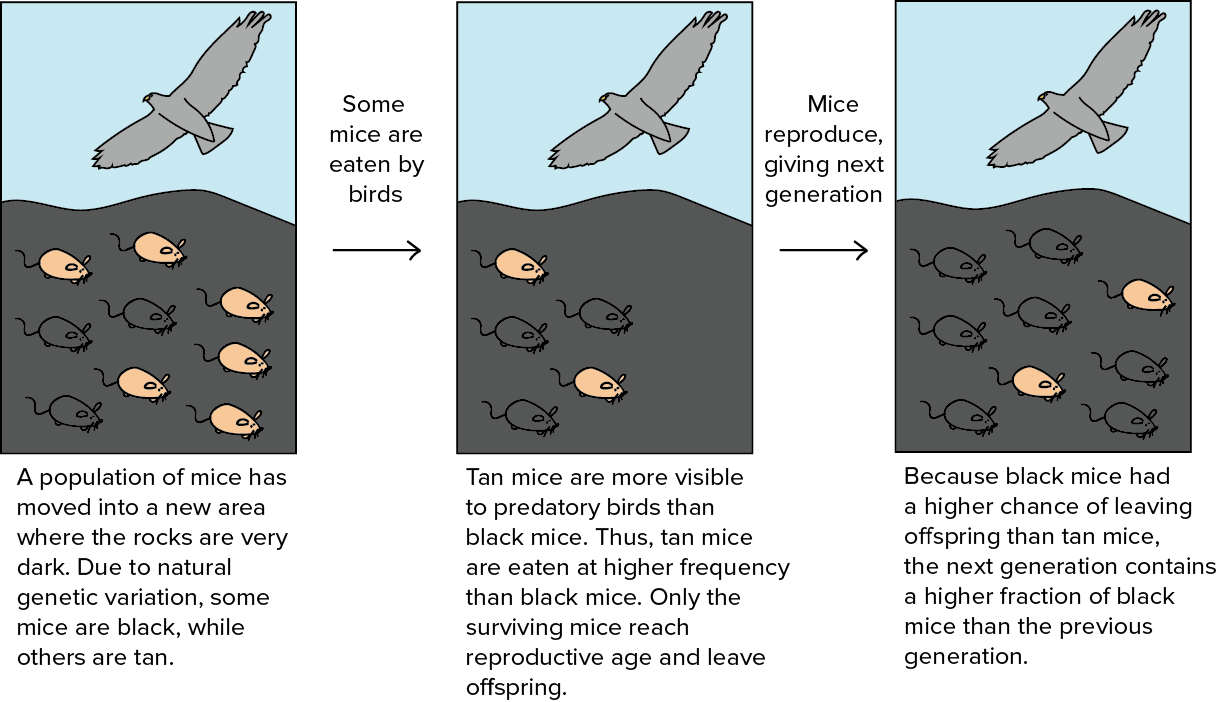
Illustration of Darwin's finches demonstrating natural selection.
Illustration of Darwin’s finches demonstrating natural selection.
(Credit: Kahn Academy)

Published in 1859 as On the Origin of Species, Darwin’s work proposed that species evolve over generations through variation, inheritance, and the survival of the fittest in competitive environments. Though initially controversial because it challenged religious literalism, his theory is supported by fossils, geography, and breeding evidence. It unified biology and explained life’s diversity without supernatural intervention.

Breaking the Living World Open

In medicine, the germ theory overturned spontaneous generation and miasma ideas. Louis Pasteur, a French chemist born in 1822, disproved spontaneous generation in the 1860s with elegant swan-neck flask experiments: broth in curved-neck flasks stayed sterile despite air access, as dust-borne microbes were trapped; breaking the neck allowed contamination. Pasteur extended this to fermentation and disease, showing microbes caused spoilage and infection. His work led to pasteurization that resulted in saving industries like wine and milk, and vaccines, including for rabies.

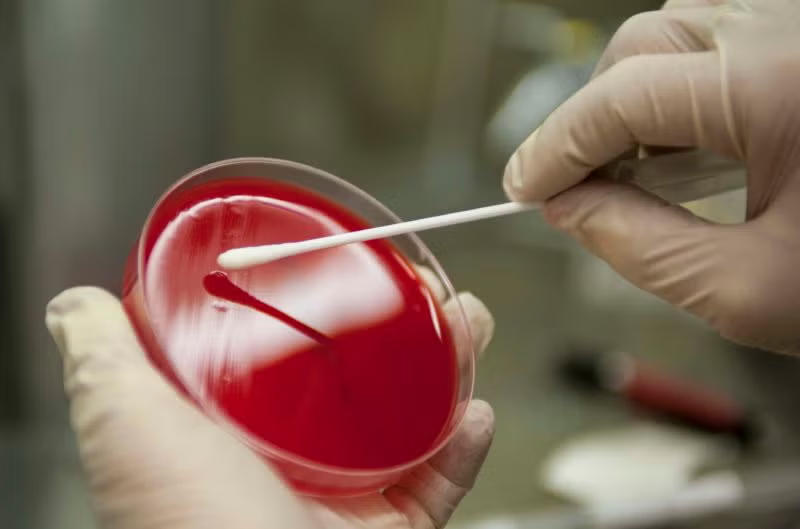
A petri dishes with bacterial cultures, foundational to Robert Koch's work.
A petri dishes with bacterial cultures, foundational to Robert Koch’s work.

Robert Koch, a German physician born in 1843, advanced this with rigorous methods. In the 1870s–1880s, he isolated bacteria like anthrax and tuberculosis using solid cultures on potato slices and later agar in Petri dishes (invented by his assistant). Koch’s postulates – criteria to prove a microbe causes disease – established microbiology as a science, enabling targeted treatments and public health measures that conquered epidemics.

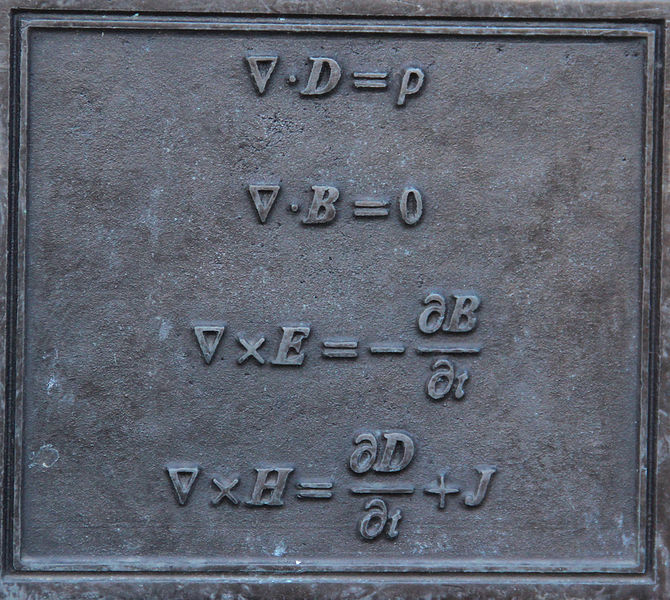
James Clerk Maxwell's electromagnetic equations
James Clerk Maxwell’s electromagnetic equations.

In physics, James Clerk Maxwell, a Scottish theorist born in 1831, synthesized electricity and magnetism. In his 1865 treatise, he formulated four equations showing electric and magnetic fields as intertwined and propagating as waves at the speed of light. It predicted other forms of electromagnetic radiation like radio waves. Maxwell’s work unified phenomena from Faraday’s induction to light itself, providing the theoretical foundation for wireless communication and modern physics.

Darwin, Pasteur, Koch, and Maxwell illuminated hidden forces of life and nature. Darwin explained biological change, Pasteur and Koch conquered invisible pathogens, and Maxwell revealed electromagnetism’s unity. Their evidence-driven methods extended science’s reach, improving health, food security, and technology while deepening our understanding of existence.

As we advance to Part 7 of this series, Atoms, Quanta, and the Fabric of Reality, we explore the early 20th-century revolutions that probed the subatomic world and spacetime itself. Just as Darwin traced life’s descent, scientists like Marie Curie unlocked radioactivity, Albert Einstein redefined gravity and energy, and Niels Bohr and others unveiled quantum mechanics. Science, undeterred by the unseen, continued to reshape our cosmic and material worldview.

Continue reading Part 7 of Science as a Force for Progress.
Science as a Force for Progress Part 5: Steam and Revolution

In the fourth part of this series, we saw how Enlightenment thinkers like Lavoisier, Priestley, and Franklin dismantled ancient mysteries of chemistry and electricity through precise experimentation and measurement. In Part 5, we explore how these insights fueled the Industrial Revolution from the late 18th to the mid-19th century. Innovators such as James Watt, Humphry Davy, and Michael Faraday harnessed energy on an unprecedented scale, perfecting steam power and unlocking electromagnetism. Their achievements transformed economies, transportation, and daily life, proving science’s power to drive material progress and elevate human productivity beyond imagination.

The Ancient Power Locked in Inefficiency

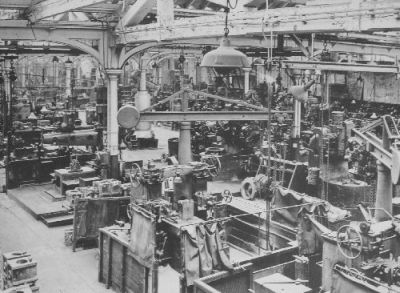
Early Industrial Revolution factory powered by steam engines

Early steam engines, like Thomas Newcomen’s atmospheric engine from 1712, were revolutionary machines but woefully inefficient. Their initial use was primarily to pump water from coal mines, where their source of fuel was already located. They wasted vast amounts of heat and fuel, limiting their application outside these mines. Up to this time, the world relied on human, animal, water, and wind power – much more reliable but constrained by nature’s whims and human limits.

James Watt, a Scottish instrument maker born in 1736, changed everything. In the 1760s, while repairing a Newcomen engine, Watt realized the key flaw: alternating heating and cooling of the cylinder wasted energy. His breakthrough was the separate condenser, allowing the cylinder to remain hot while condensation occurred elsewhere. Patented in 1769 and refined with partner Matthew Boulton, Watt’s engine also added rotary motion, turning pistons into reliable power for machinery.

By the 1780s, Watt’s engines powered textile mills, ironworks, and factories, dramatically increasing output. His additions, like the governor for speed control and double-acting cylinder, made steam power efficient and versatile. Factories no longer needed rivers for water wheels; they could cluster in cities, drawing coal-fueled steam to drive mechanized production. This sparked explosive economic growth, urbanization, and the factory system, ushering in a new era known as the Industrial Revolution.

Breaking the Energy Open

Advancements in electrochemistry and electromagnetism further amplified this era’s progress. Humphry Davy, an English chemist born in 1778, built on Volta’s battery to perform large-scale electrolysis. In 1807–1808, using powerful voltaic piles, he isolated elements like potassium and sodium for the first time, revealing electricity’s chemical power.

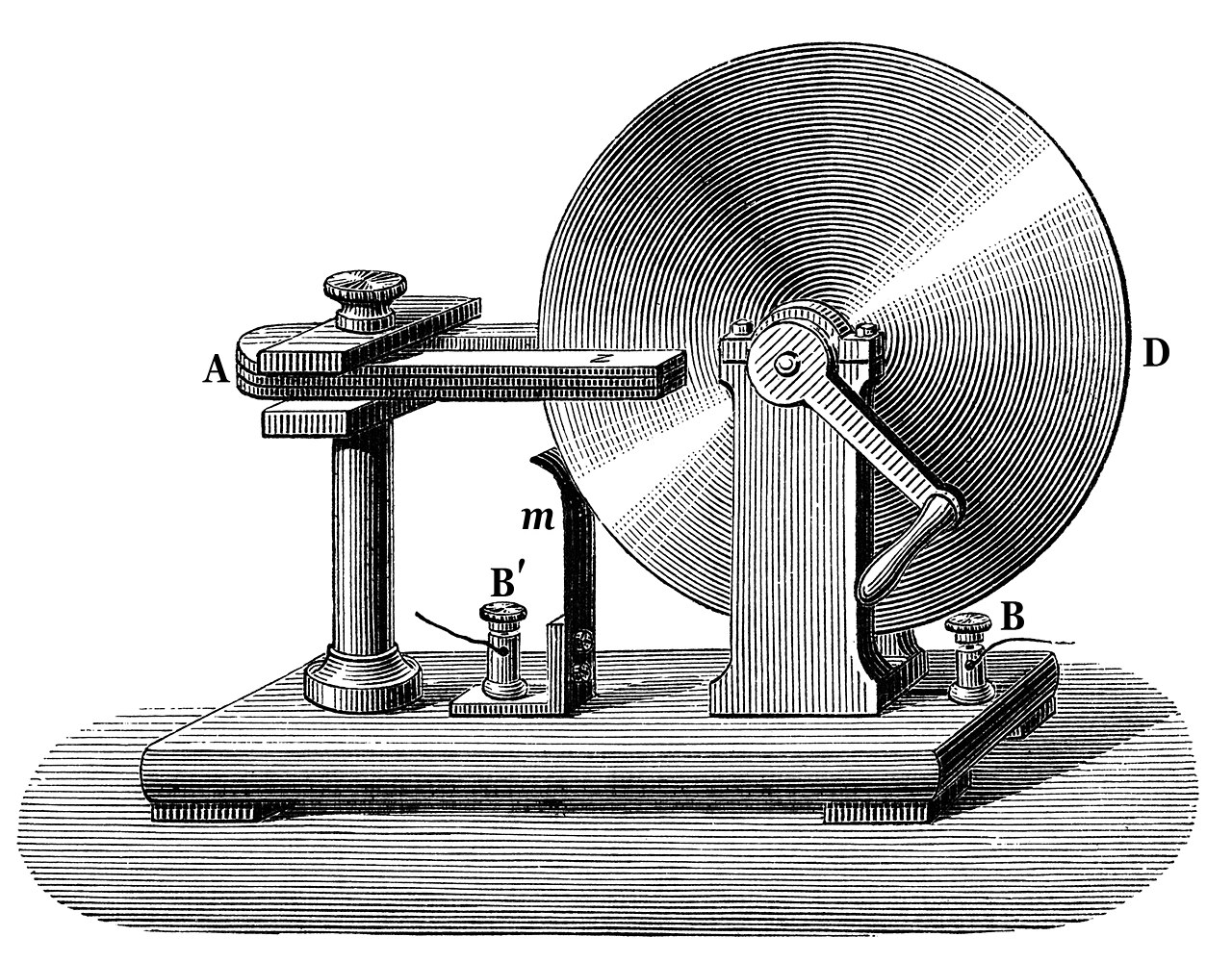
Davys work not only expanded the periodic table but demonstrated electricity’s practical potential, from mining safety lamps (his famous Davy lamp prevented explosions) to industrial processes. The pinnacle came with Michael Faraday, Davy’s protege, born in 1791. A self-taught genius, Faraday discovered electromagnetic induction in 1831: moving a magnet near a coil induced electric current. His simple experiments, including the homopolar generator (Faraday disk), laid the foundation for electric generators and electric motors.

Michael Faraday's electromagnetic induction experiment with the Faraday disk.
Michael Faraday’s electromagnetic induction experiment with the Faraday disk.

Faraday’s insights into electromagnetic fields unified electricity and magnetism, enabling the dynamo and transformer. Combined with steam power driving factories and railways (George Stephenson’s Rocket in 1829 exemplified steam locomotion), these discoveries heralded an age of abundant energy.

Watt, Davy, and Faraday embodied science’s transformative force in industry. Watt unleashed steam’s potential for mechanical work, Davy bridged chemistry and electricity, and Faraday generated electricity from motion. Their inventions powered factories, illuminated cities, and connected continents, lifting standards of living and accelerating innovation at a rapid pace.

As we proceed to Part 6 of this series, Unseen Worlds and Hidden Forces, we delve into the 19th-century discoveries that revealed life’s deepest mechanisms and nature’s invisible realms. Just as Watt harnessed steam, scientists like Charles Darwin explained evolution by natural selection, while Louis Pasteur and Robert Koch conquered germs, and James Clerk Maxwell unified light and electromagnetism. Science continued its march, illuminating biology and physics with profound implications for health, society, and our place in the universe.

Continue reading Part 6 of Science as a Force for Progress.
Science as a Force for Progress 4: Sparks of Enlightenment

In the third part of this series, we explored how Vesalius, Harvey, and Van Leeuwenhoek revolutionized medicine by dismantling the ancient humoral theory and revealing the body’s inner workings through dissection, experimentation, and microscopic observation. In Part 4, we enter the 18th-century Enlightenment, an era when reason and empirical inquiry accelerated scientific progress across multiple fields. Pioneers like Antoine Lavoisier, Benjamin Franklin, and Joseph Priestley overthrew outdated theories in chemistry and electricity, transforming vague speculations into precise, predictive sciences. Their work not only illuminated natural phenomena but also fueled technological and industrial advancements, demonstrating science’s growing role in reshaping society.

The Ancient Elements Locked in Mystery

For centuries, chemistry was shackled to ancient ideas of matter, rooted in Aristotle’s four elements—earth, air, fire, and water—and the elusive phlogiston theory. Proposed in the late 17th century, phlogiston was imagined as a weightless substance released during combustion, explaining why materials like wood seemed to lose something when burned (though ashes weighed less). This theory, while intuitively appealing, failed to account for observed weight gains in some reactions and hindered true understanding.

The Enlightenment brought a demand for quantitative precision. Antoine Lavoisier, a French polymath born in 1743, revolutionized chemistry by insisting on meticulous measurement. Known as the “father of modern chemistry,” Lavoisier disproved phlogiston through careful experiments with balances and closed systems. He showed that combustion involved combining with a component of air—what we now call oxygen—rather than releasing a mysterious substance. In one famous experiment, he heated mercury in a sealed vessel, observing weight gain as it formed a red calx, and then reversed the process, proving mass conservation.

Antonine Lavoisier in his Laboratory

Lavoisier’s 1789 treatise, Elements of Chemistry, established the law of conservation of mass and a new system of nomenclature, replacing alchemical obscurity with clear, rational naming. His work laid the foundation for chemistry as a rigorous science, enabling future discoveries in industry and medicine.

Breaking the Sparks Open

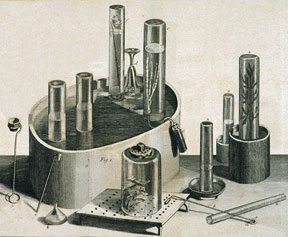
Joseph Priestly's experiments with a mouse and oxygen
Joseph Priestly’s experiments with a mouse and oxygen

Parallel advances occurred in understanding electricity and gases. Joseph Priestley, an English theologian and scientist born in 1733, isolated oxygen in 1774 by heating mercuric oxide, calling it “dephlogisticated air” under the old theory. His experiments with gases, including placing a mouse under a bell jar to observe its survival in oxygen-rich air, highlighted air’s role in respiration and combustion – insights that bridged chemistry and biology.

Meanwhile, Benjamin Franklin, the American polymath born in 1706, demystified electricity. In his famous 1752 kite experiment, he flew a kite in a thunderstorm, drawing sparks from a key to prove lightning was electrical discharge, not divine wrath. This led to the invention of the lightning rod, protecting buildings and lives. Franklin’s work unified atmospheric and laboratory electricity, promoting the idea of positive and negative charges. Together with Priestley’s gases and Lavoisier’s precision, these breakthroughs dismantled mystical views of fire, air, and lightning, replacing them with mechanistic explanations grounded in experiment.

Lavoisier, Priestley, and Franklin exemplified the Enlightenment’s scientific ethos: rigorous testing, collaboration (despite rivalries), and application for human benefit. Lavoisier modernized chemistry, Priestley unveiled vital gases, and Franklin harnessed electricity’s power. Their collective efforts sparked the Chemical Revolution and laid groundwork for electrical engineering, propelling humanity toward industrialization.

As we advance to Part 5 of this series, Steam and Revolution, we examine how these Enlightenment insights ignited the Industrial Revolution in the late 18th and 19th centuries. Innovators like James Watt perfected the steam engine, while Humphry Davy and Michael Faraday unlocked electrochemistry and electromagnetism. Just as Lavoisier quantified reactions, these advances harnessed energy on a massive scale, transforming economies and daily life through factories, railways, and electric power.

Continue reading Part 5 of Science as a Force for Progress.
Science as a Force for Progress 3: From Humors to Heartbeats

In the second part of this series, we witnessed how Copernicus, Galileo, and Newton shattered the geocentric worldview, replacing dogma with evidence-based understanding of the cosmos. In Part 3, we shift our focus inward to the human body, tracing the scientific revolution in medicine during the same transformative era. Pioneers like Andreas Vesalius, William Harvey, and Antonie van Leeuwenhoek challenged ancient theories of health and disease, dismantling the long-held doctrine of the four humors and establishing a foundation for modern physiology and microbiology. Their work demonstrated science’s capacity to conquer ignorance about our own bodies, paving the way for treatments that would dramatically extend and improve human life.

The Ancient Body Locked in Imbalance

For over a millennium, medicine was dominated by the theory of the four humors, originating with Hippocrates and Galen in ancient Greece and Rome. This framework posited that health depended on the balance of four bodily fluids: blood, phlegm, yellow bile, and black bile. Imbalances were thought to cause disease, and treatments like bloodletting or purging aimed to restore equilibrium. Endorsed by religious and scholarly authorities, this model aligned with intuitive observations of the body but lacked empirical verification. It persisted through the Middle Ages, often intertwined with superstition, hindering genuine progress in understanding anatomy and physiology.

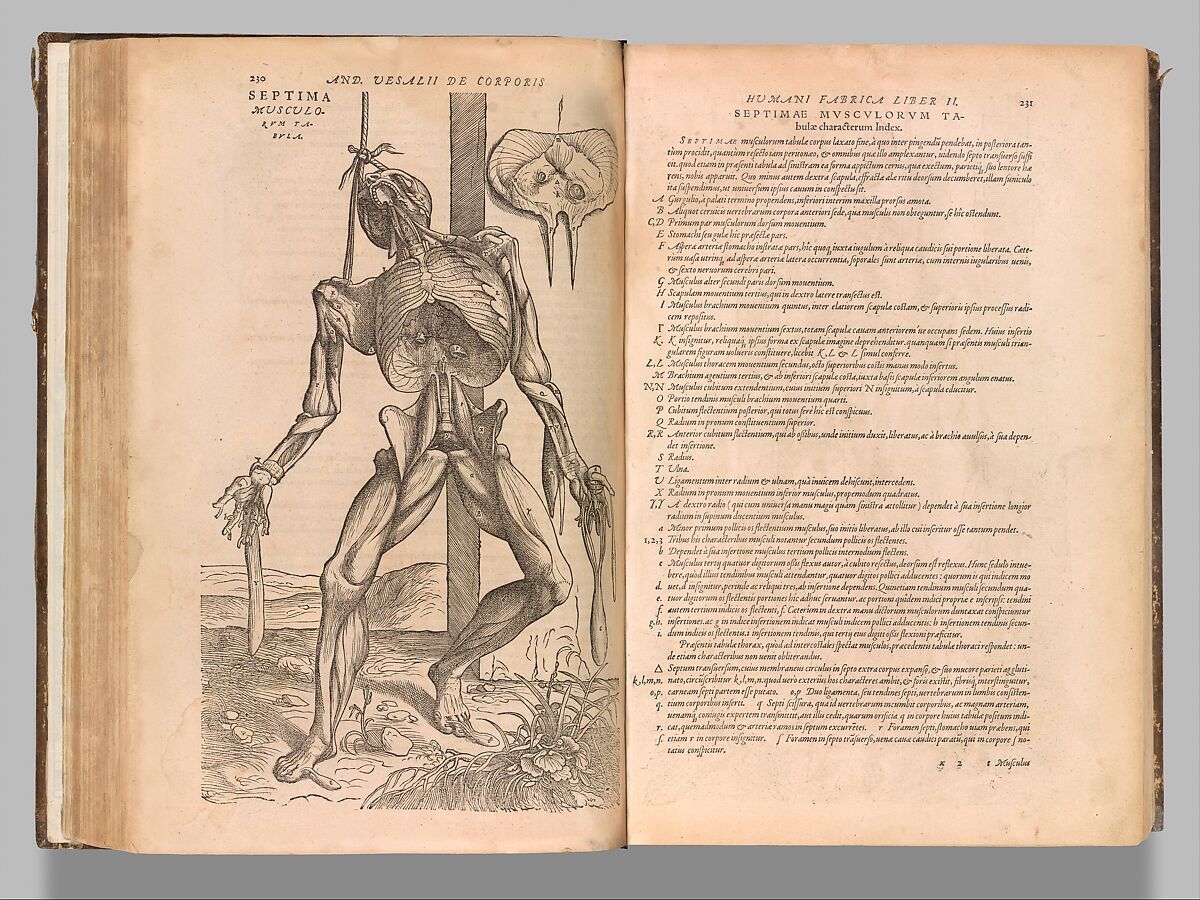
The revolution began with Andreas Vesalius, a Belgian anatomist born in 1514, who dared to question Galen’s teachings through direct observation. Galen had based much of his anatomy on animal dissections, as human dissection was taboo in ancient Rome. By the 16th century, attitudes had shifted slightly, allowing limited human autopsies. Vesalius seized this opportunity, performing dissections himself and correcting hundreds of Galen’s errors. His masterpiece, De humani corporis fabrica (On the Fabric of the Human Body), published in 1543—the same year as Copernicus’s heliocentric work—featured exquisitely detailed illustrations of muscles, bones, nerves, and organs derived from actual human cadavers.

Illustration from De humani corporis fabrica

Vesalius’s approach was revolutionary: he prioritized hands-on evidence over ancient texts, encouraging students to dissect and see for themselves. His work exposed inaccuracies, such as Galen’s claim of pores in the heart’s septum allowing blood to pass between chambers—a notion that persisted despite contradicting reality. Though Vesalius faced backlash from traditionalists who accused him of heresy, his accurate depictions laid the groundwork for modern anatomy. By insisting on empirical validation, Vesalius exemplified science’s power to liberate knowledge from outdated authority.

Breaking the Body Open

Vesalius’s approach was revolutionary: he prioritized hands-on evidence over ancient texts, encouraging students to dissect and see for themselves. His work exposed inaccuracies, such as Galen’s claim of pores in the heart’s septum allowing blood to pass between chambers—a notion that persisted despite contradicting reality. Though Vesalius faced backlash from traditionalists who accused him of heresy, his accurate depictions laid the groundwork for modern anatomy. By insisting on empirical validation, Vesalius exemplified science’s power to liberate knowledge from outdated authority.

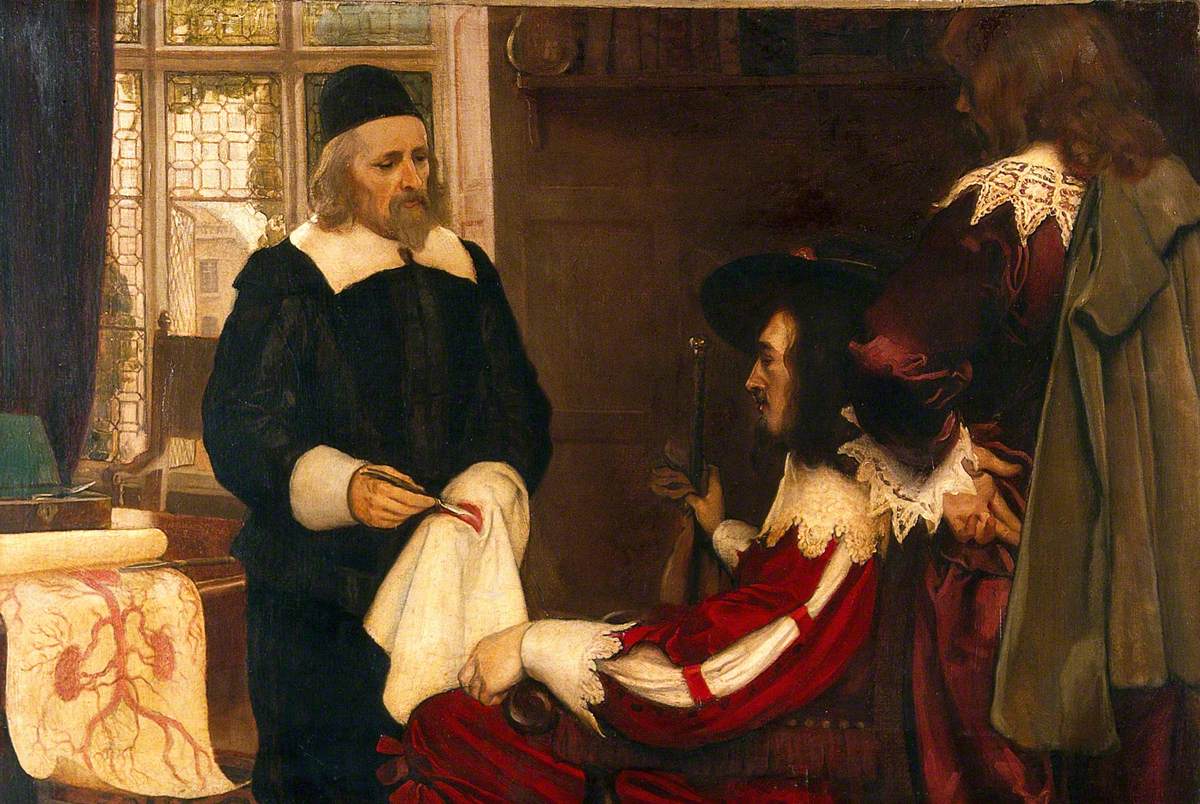
William Harvey Demonstrating His Theory of Circulation of Blood before Charles I

Published in 1628 as De motu cordis (On the Motion of the Heart and Blood), Harvey’s discovery was a triumph of quantitative reasoning and experimentation. He calculated that the heart pumped far more blood than the body could consume or the liver produce, necessitating recirculation. Though initially met with skepticism – some called it impossible – his ideas gained acceptance, especially as they aligned with emerging mechanical views of the body inspired by the Scientific Revolution. Harvey’s work transformed medicine from speculative philosophy into a science grounded in observable mechanisms, enabling future advances in surgery, cardiology, and beyond.

The era’s microscopic explorations further expanded this progress. Antonie van Leeuwenhoek, a Dutch draper and self-taught scientist born in 1632, crafted powerful single-lens microscopes far superior to contemporaries’. Peering into rainwater, saliva, and scrapings from his teeth, he discovered a hidden world of “animalcules”- what we now know as bacteria, protozoa, and spermatozoa. His detailed drawings and reports to the Royal Society in London, starting in the 1670s, revealed life invisible to the naked eye, challenging the notion of spontaneous generation and hinting at microbial causes of disease. Leeuwenhoek’s observations, though not immediately applied to medicine, opened the door to microbiology. Combined with Harvey’s circulation and Vesalius’s anatomy, they dismantled humoral theory’s grip, replacing it with a dynamic, evidence-based understanding of the body

Together, Vesalius, Harvey, and Leeuwenhoek forged a new era in medicine. Vesalius provided the accurate map of the body, Harvey explained its vital engine, and Leeuwenhoek unveiled its tiniest inhabitants. Their reliance on dissection, experimentation, and observation over tradition mirrored the astronomical breakthroughs, proving science’s universal method could heal as profoundly as it enlightened.

As we move to Part 4 of this series, Sparks of Enlightenment, we explore how these foundational shifts ignited the 18th-century Enlightenment, where reason and experimentation accelerated progress across chemistry, electricity, and biology. Figures like Antoine Lavoisier would overthrow ancient elements with modern chemistry, just as Benjamin Franklin tamed lightning and Joseph Priestley uncovered oxygen’s role in life. Science, now a disciplined force, was poised to reshape industry, society, and human potential.

Continue reading Part 4 of Science as a Force for Progress.

Science as a Force for Progress Part 2: Copernicus and the Sky’s Truth

In the first part of this series, we explored how humanity’s journey from myth to reason laid the groundwork for science as a disciplined pursuit of truth. In part 2 we delve into the dawn of modern science, beginning with Nicolaus Copernicus, whose revolutionary ideas reshaped our understanding of the cosmos. His work is followed by the advancements of Galileo Galilei and the monumental discoveries of Isaac Newton. These discoveries mark a pivotal era where science emerged as a relentless force for progress, challenging the established Christian Church dogma and illuminating the universe’s mechanics.

The Church’s Locked Sky

Nicolaus Copernicus, a Polish astronomer born in 1473, sparked a scientific revolution with a radical idea: the Earth was not the center of the universe. For centuries the geocentric model, championed by Ptolemy and endorsed by the Church, placed Earth at the cosmic core with the Sun, planets, and stars revolving around it. This view aligned with religious doctrine and human intuition. After all, the Sun appeared to move across the sky. But Copernicus, through meticulous observation and mathematical reasoning, proposed a heliocentric model in his seminal work written in 1543, On the Revolution of Celestial Spheres. In this model the Earth and other planets orbited the Sun. It was a simpler and more elegant explanation for the observed motions of celestial bodies.

Image of heliocentric model from Nicolaus Copernicus' De revolutionibus orbium coelestium.
Image of heliocentric model from Nicolaus Copernicus’ De revolutionibus orbium coelestium.

Copernicus’s heliocentrism was not just a new astronomical theory; it was a bold challenge to entrenched authority. The Church was dominant force in medieval Europe, and it viewed the geocentric model as a reflection of divine order. To suggest otherwise risked heresy and death, as Giordano Bruno discovered in 1600. Copernicus was more cautious than Bruno and he published his work late in life, aware of its potential to upend both science and society. His model wasn’t perfect, it still relied on circular orbits and epicycles, but it laid a foundation for future astronomers to build upon. By prioritizing evidence over tradition, Copernicus exemplified science’s power to question assumptions and seek truth, setting the stage for progress that would transform human understanding.

Galileo Galilei, born in 1564, took Copernicus’s ideas and propelled them forward with empirical rigor. Galileo’s improvements made on the newly invented telescope in 1609 was a game-changer. Peering through his lenses, he observed Jupiter’s moons, the phases of Venus, and the Moon’s cratered surface. This was powerful evidence that supported the heliocentric model. The moons of Jupiter, orbiting their planet, suggested that not everything revolved around Earth. Venus’s phases mirrored those of the Moon, consistent with a Sun-centered system. These observations were detailed in works like The Starry Messenger, written in 1610, and provided concrete data that bolstered Copernicus’s theory.

Breaking the Sky Open


Galileo facing the Roman Inquisition

Galileo’s commitment to observation and experimentation marked a leap in scientific methodology. He didn’t just theorize; he tested and refined. His studies of motion laid the groundwork for understanding acceleration and inertia, concepts later formalized by Newton. But Galileo’s outspoken support for heliocentrism led to conflict with the Church. In 1633 he was tried by the Inquisition, forced to recant, and placed under house arrest. Yet his work endured, a testament to science’s resilience. Galileo’s telescopes and experiments showed that progress often comes at a cost, but the pursuit of truth, grounded in evidence, could not be silenced.

The culmination of this era came with Isaac Newton, born in 1643, whose work synthesized and expanded the discoveries of Copernicus and Galileo. Newton’s Principia, written in 1610, is one of the most influential scientific texts ever written. In it he formulated the laws of motion and universal gravitation, providing a unified framework to explain both terrestrial and celestial phenomena. The same force that caused an apple to fall governed the orbits of planets – a profound insight that tied the cosmos together.

Newton’s genius lay in his ability to blend observation, mathematics, and theory. He built on Galileo’s studies of motion and Kepler’s laws of planetary orbits (which refined Copernicus’s model by introducing elliptical orbits). His law of universal gravitation explained why planets followed their paths around the Sun, confirming heliocentrism with mathematical precision. Newton’s work also introduced calculus (co-developed with Leibniz), giving scientists tools to model dynamic systems. From planetary motion to the tides, Newton’s laws provided a blueprint for understanding the universe’s mechanics, cementing science as a predictive and practical force.

Together, Copernicus, Galileo, and Newton represent a transformative arc in human history. Copernicus dared to challenge the cosmic status quo, Galileo provided the observational backbone, and Newton delivered the mathematical framework that made sense of it all. Their work dismantled a worldview rooted in superstition and authority, replacing it with one grounded in evidence, reason, and reproducibility. This was science as progress: a methodical unraveling of the universe’s secrets, each discovery building on the last.

As we transition to Part 3 of this series, From Humors to Heartbeats, we turn our gaze from the heavens to the human body, exploring how science revolutionized medicine. Just as Copernicus upended cosmic assumptions, physicians began to challenge the ancient system of the four humors – a framework that attributed health and disease to imbalances in blood, phlegm, black bile, and yellow bile. At the forefront of this medical revolution was William Harvey, whose discoveries about blood circulation in the early 17th century dismantled centuries-old beliefs. By applying observation and experimentation, Harvey paved the way for modern physiology, proving that science’s relentless pursuit of truth could heal as well as illuminate.

Continue reading Part 3 of Science as a Force for Progress.
Science as a Force for Progress Part 1: From Superstition to Evidence

This series explores science as humanity’s most reliable and transformative force for progress – a methodical pursuit of truth rooted in observation, experimentation, evidence, and reason. Across ten parts, we trace its remarkable journey from tentative beginnings amid superstition to its commanding role in addressing today’s greatest challenges. We highlight pioneering figures whose evidence-based discoveries repeatedly dismantled entrenched myths, religious dogmas, and authoritative traditions, replacing them with reproducible knowledge that has extended lifespans, conquered diseases, harnessed energy, and expanded our understanding of the universe. In this introductory part, we examine the millennia when myth and superstition dominated human explanations of the world, the arduous emergence of scientific inquiry, the fierce resistance it often faced, and why this transition remains profoundly relevant in our current era.

The Shackles of Superstition

For the vast majority of human history, the mysteries of nature were interpreted through myths, omens, and supernatural forces rather than natural causes and mechanisms. Thunder was the anger of gods like Thor or Zeus, eclipses were celestial battles or divine warnings, and diseases were punishments for sin or imbalances in ethereal humors. In ancient Mesopotamia, priests practiced haruspicy – divining the future by examining the livers of sacrificed animals, using clay models to interpret markings as messages from the gods.

These practices offered psychological comfort and reinforced social hierarchies but yielded no predictive power or effective interventions. During the Black Death of the 14th century, which killed up to half of Europe’s population, many turned to religious rituals: processions of flagellants publicly whipping themselves to atone for humanity’s sins and appease God.

The shackles of religious superstition

Prayers, relics, and scapegoating of minorities provided emotional solace but did nothing to stem the bacterial plague spread by fleas on rats. Similarly, the 1755 Lisbon earthquake, which devastated the city and killed tens of thousands, was widely attributed to divine retribution for moral laxity rather than tectonic plate shifts – a view preached from pulpits even as Enlightenment thinkers began questioning such interpretations.

Religious and cultural authorities often intertwined these supernatural explanations with power structures. Astrology guided kings’ decisions, alchemy promised transmutation through mystical rather than chemical means, and spontaneous generation, the idea that life arose from non-living matter, like maggots from rotting meat, was accepted without rigorous testing. Life expectancy hovered around 30-40 years, infant mortality was rampant, famines were inevitable, and natural disasters struck without warning or remedy. Superstition did not merely fill knowledge gaps; it actively discouraged systematic inquiry, labeling curiosity about forbidden topics as heresy or hubris.

The Fight Begins

The shift toward scientific thinking was neither sudden nor inevitable. Roots can be traced to ancient Greek philosophers like Thales of Miletus (6th century BCE), who proposed water as the fundamental substance based on observation rather than mythology, or Aristotle, whose empirical classifications of animals laid early groundwork. However, these ideas were often subsumed under broader philosophical or religious frameworks and lost momentum in the Middle Ages.

The Renaissance and Scientific Revolution reignited the flame. Scholars rediscovered classical texts, improved instruments like the telescope and microscope, and prioritized direct observation over ancient authority. This era saw fierce clashes: the Church, as a dominant institution, viewed challenges to its cosmology or biology as threats to divine order.

Galileo Galilei’s support for heliocentrism, based on telescopic evidence of Jupiter’s moons and Venus’s phases, led to his 1633 trial by the Roman Inquisition. Forced to recant under threat of torture, he reportedly muttered “Eppur si muove” (“And yet it moves”), symbolizing science’s quiet resilience. Subsequent breakthroughs followed despite opposition. William Harvey’s 1628 demonstration of blood circulation through dissection and vivisection overturned Galen’s ancient theories. Edward Jenner’s 1796 smallpox vaccine, derived from cowpox observations, saved millions. Charles Darwin’s 1859 theory of evolution by natural selection, built on decades of evidence from fossils, geography, and breeding, explained life’s diversity without invoking special creation. Louis Pasteur’s 1860s experiments disproved spontaneous generation and established germ theory, enabling antiseptics and vaccines that dramatically reduced mortality.

Galileo Galilei explaining his revolutionary astronomical theories, particularly his support for the heliocentric model, to a friar at the University of Padua

These advances shared a common method: hypothesis, observation, experimentation, and revision based on evidence. Each built incrementally, often facing ridicule or persecution, yet cumulatively eroding superstition’s grip and delivering tangible progress—longer lives, fewer epidemics, greater control over nature.

Why It Matters in 2025

science as a force for progress

As of late 2025, science’s legacy is more vital than ever amid existential challenges like climate change, biodiversity loss, emerging diseases, and resource constraints. Renewable energy technologies, solar panels, wind turbines, and advanced batteries, stem from understanding electromagnetism and materials science, offering paths to decarbonization. Gene-editing tools like CRISPR-Cas9, building on molecular biology from Watson, Crick, and beyond, are yielding climate-resilient crops, potential cures for genetic diseases, and innovative therapies.

Satellite monitoring, climate modeling, and carbon capture technologies provide evidence-based strategies to mitigate global warming, not appeals to divine intervention. mRNA vaccines, accelerated by decades of virology and genetics, exemplified rapid response to pandemics.

Yet echoes of superstition persist, misinformation, denialism, or reliance on untested remedies, highlighting the ongoing need for scientific literacy. Science is not infallible; it self-corrects through peer review and replication. But its track record, from eradicating smallpox to landing rovers on Mars, demonstrates unparalleled progress when guided by evidence over dogma.

As we begin this series in Part 2, Copernicus and the Sky’s Truth, we turn to the dawn of modern science with Nicolaus Copernicus, whose heliocentric model challenged cosmic dogma, followed by Galileo and Newton. Their work marked science’s emergence as a relentless pursuit of truth over tradition.

Continue reading Part 2 of Science as a Force for Progress.