In the fifth part of this series, we examined how Watt, Davy, and Faraday harnessed energy through steam and electromagnetism, propelling the Industrial Revolution and transforming human capability. In Part 6, we delve into the mid-to-late 19th century, when science uncovered invisible realms within biology and physics. Charles Darwin revealed life’s evolutionary mechanisms, Louis Pasteur and Robert Koch established the germ theory of disease, and James Clerk Maxwell unified electromagnetism into a predictive framework. These breakthroughs dismantled myths of creation and spontaneous life, replacing them with evidence-based explanations that revolutionized health, agriculture, and technology.
The Diversity of Life Locked in Mystery
For millennia, the diversity of life was attributed to divine creation, with species seen as fixed and unchanging since their origin. Similarly, diseases were blamed on miasmas (bad air) or imbalances, while many believed life could arise spontaneously from non-living matter, as maggots seemed to emerge from decaying meat.
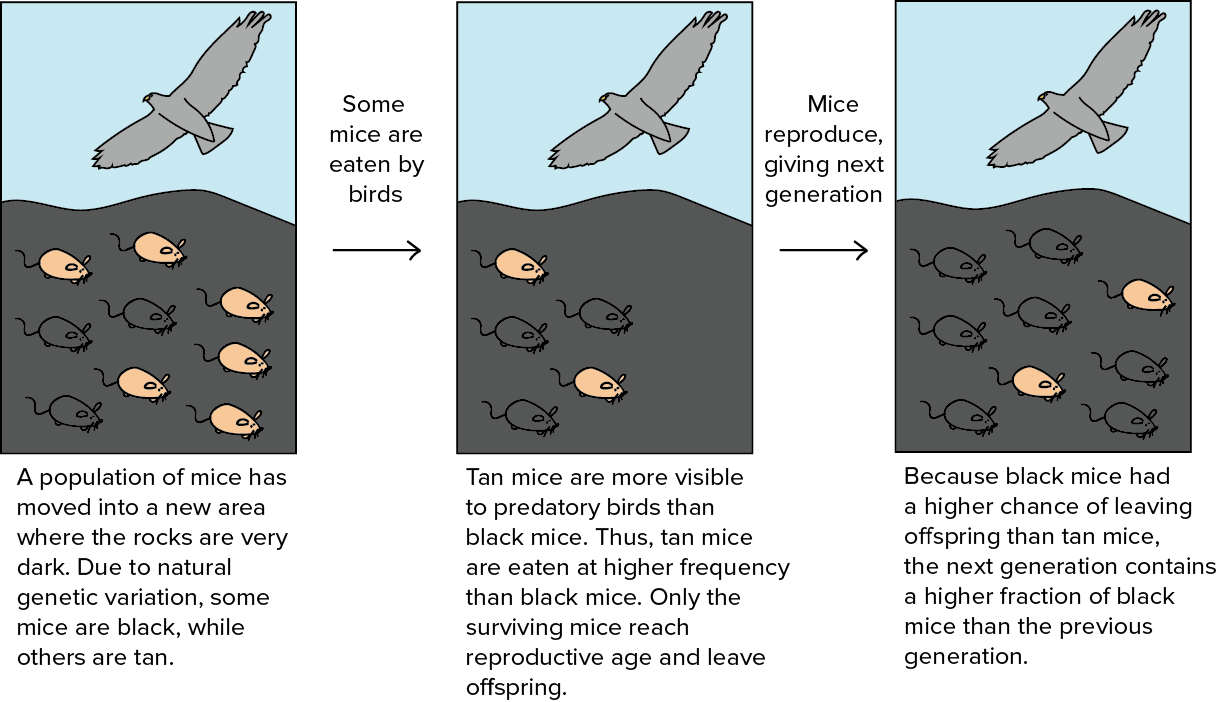
Charles Darwin, an English naturalist born in 1809, shattered these views with evidence gathered during his five-year voyage on HMS Beagle (1831–1836). Observing variations in species across continents and islands – particularly the Galápagos finches, whose beaks adapted to different food sources – Darwin developed the theory of evolution by natural selection.
(Credit: Kahn Academy)
Published in 1859 as On the Origin of Species, Darwin’s work proposed that species evolve over generations through variation, inheritance, and the survival of the fittest in competitive environments. Though initially controversial because it challenged religious literalism, his theory is supported by fossils, geography, and breeding evidence. It unified biology and explained life’s diversity without supernatural intervention.
Breaking the Living World Open
In medicine, the germ theory overturned spontaneous generation and miasma ideas. Louis Pasteur, a French chemist born in 1822, disproved spontaneous generation in the 1860s with elegant swan-neck flask experiments: broth in curved-neck flasks stayed sterile despite air access, as dust-borne microbes were trapped; breaking the neck allowed contamination. Pasteur extended this to fermentation and disease, showing microbes caused spoilage and infection. His work led to pasteurization that resulted in saving industries like wine and milk, and vaccines, including for rabies.
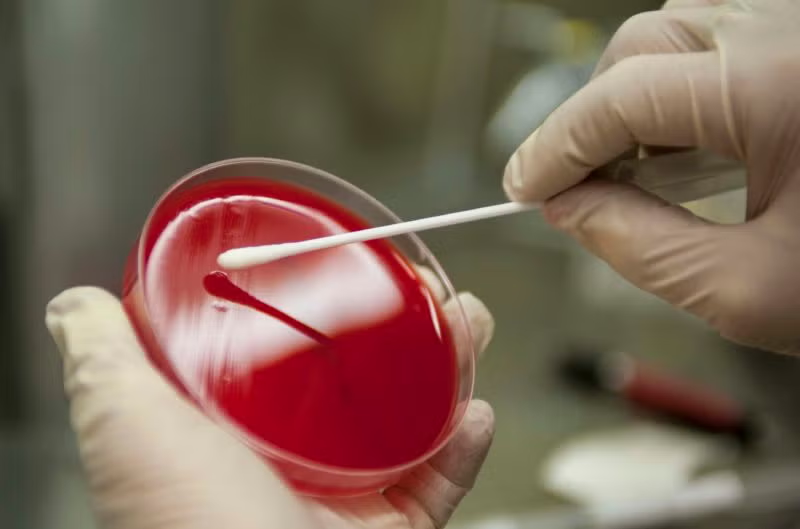
Robert Koch, a German physician born in 1843, advanced this with rigorous methods. In the 1870s–1880s, he isolated bacteria like anthrax and tuberculosis using solid cultures on potato slices and later agar in Petri dishes (invented by his assistant). Koch’s postulates – criteria to prove a microbe causes disease – established microbiology as a science, enabling targeted treatments and public health measures that conquered epidemics.
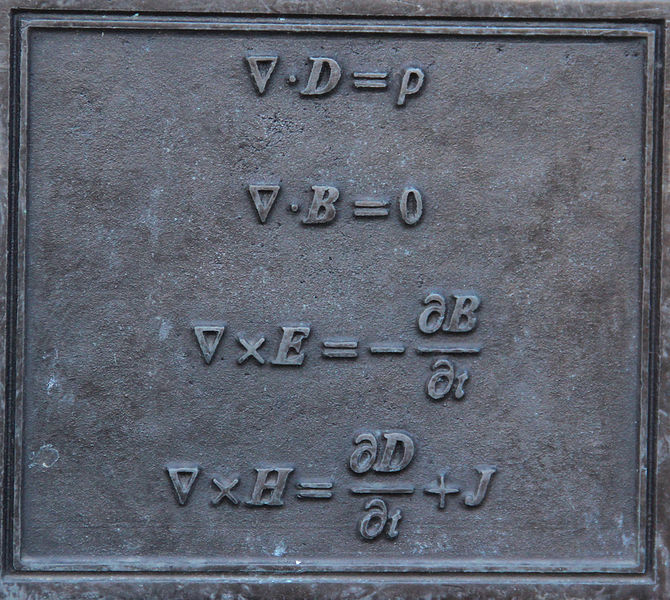
In physics, James Clerk Maxwell, a Scottish theorist born in 1831, synthesized electricity and magnetism. In his 1865 treatise, he formulated four equations showing electric and magnetic fields as intertwined and propagating as waves at the speed of light. It predicted other forms of electromagnetic radiation like radio waves. Maxwell’s work unified phenomena from Faraday’s induction to light itself, providing the theoretical foundation for wireless communication and modern physics.
Darwin, Pasteur, Koch, and Maxwell illuminated hidden forces of life and nature. Darwin explained biological change, Pasteur and Koch conquered invisible pathogens, and Maxwell revealed electromagnetism’s unity. Their evidence-driven methods extended science’s reach, improving health, food security, and technology while deepening our understanding of existence.
As we advance to Part 7 of this series, Atoms, Quanta, and the Fabric of Reality, we explore the early 20th-century revolutions that probed the subatomic world and spacetime itself. Just as Darwin traced life’s descent, scientists like Marie Curie unlocked radioactivity, Albert Einstein redefined gravity and energy, and Niels Bohr and others unveiled quantum mechanics. Science, undeterred by the unseen, continued to reshape our cosmic and material worldview.