The observation by Robert Hooke in 1665 of what became coined the cell provided the starting point for a sequence of discoveries at the microscopic level. A rapid pace of discoveries quickly followed and has continued into our present time. From this moment onward our view of life has been revolutionized. But while it was Hooke who observed the cell by viewing thin layers of cork, it was Antony Van Leeuwenhoek who can be considered as the first microbiologist and dramatically expended our view of cellular life.
The Discovery of the Cell
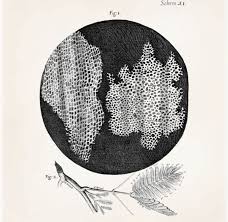
Rendering of a Cork Cell as seen by Robert Hooke (Credit: Micrographia, 1665)
The invention of the microscope in 1608 allowed for the discovery of the cell. Microscopes had been around for about a generation or so before Hooke began making and using his own instruments. By this time microscopes were very rudimentary, but Hooke’s had a technical supremacy in that it could magnify by up to 40x to 50x making it the best of its time. In 1663 and the following year Hook began making his microscopic observations. In 1665 he published his work in a book titled Micrographia. It was the first major publication of the Royal Society.
Meanwhile in Antony Van Leeuwenhoek was living in the Dutch Republic working as a textile worker. He was not a formally trained scientist at the time and was largely a self-taught man. He came across Micrographia and was fascinated by what he read and saw in it. He was already proficient in lens making and in the 1670s he started observing microbial world. He developed terrifically powerful microscope – ones that could magnify up to 270x. To the dismay of many was highly secretive about his techniques. Over the course of Van Leeuwenhoek ‘s career he made almost 200 reports to the Royal Society – offering facts of his findings including drawings. Leeuwenhoek began his work by analyzing drops of pond water. He also went to work on replicating some of Hooke’s earlier observations. In 1676 he to some of this tooth plaque and saw there were thousands of what he called living animalcules because they were moving like little animals. He had discovered bacteria.
A Wondrous Biological Factory
Contained in the cell are the structural and functional operations of a living organism, making it the basic building block of life. All cells follow a similar basic plan. The cell membrane is the outer most layer of the cell and is composed of a mixture of lipids and proteins. Inside the cell is whats called the cytoplasm, which is a complex mixture of water, salts, enzymes, and other organic molecules or organelles. The cytoplasm includes the cell nucleus which contains the cells genetic material.
The inside of a cell is a busy place. That activity that happens there can be mind boggling. A cell is made up of millions of objects performing a multitude of tasks. Millions of chemical reactions are taking place inside each cell. Enzymes, which are a specific type of protein, perform up to a thousand tasks per second. Some proteins exist for a short of thirty minutes, others for up to weeks. Each cell contains up to 20,000 different proteins. These proteins can be made up of up to 50,000 molecules. This means each cell can be made up of hundreds of millions of chemical molecules, a staggering amount of chemical activity.
Most of the food we eat and oxygen we breath are taken to the mitochondria, where it is converted into a form of energy called ATP. A typical cell in each human body will contain about a billion ATP molecules. In a matter of minutes all of these molecules will be used up, and another billion will have replaced them. Each day every person produces about half of their weight in ATP. This weight mostly comes from the air that we breath.
From Cell Discovery to Cell Theory
The discovery of the cell lead to the elucidation of a core theory in biology called cell theory, which roughly states that all living organisms are made from basic units called cells that continually reproduce. It would take another 150 years after the discovery of the cell for cell theory to become established.
Critical work in advancing cell theory began in the early 19th century. In 1838 Matthias Jakob Schleiden was working with plants and concluded that all plants are made up as cells. This influenced the German physiologist Theodor Schwann and the next year he published Microscopical Researches into the Accordance in the Structure and Growth of Animals and Plants, a landmark work where he proposed his own Cell Theory.
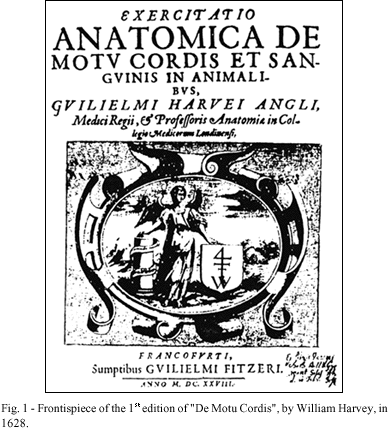
After thirty years of research, William Harvey’s landmark book On the Motion of the Heart and Blood in Animals established once and for all that blood flow was entirely circular and that the heart was a pump. The discovery of blood circulation was transitory for a few important reasons. It established the principle of experimentation in medicine. It helped to create the new field of physiology. Lastly, it marked the beginning of the true understanding of our circulatory system with additional details to emerge later on.
A Brief History of the Cardiovascular System up to Harvey
On the Motion of the Heart and Blood in Animals (Credit: Wikimedia Commons)
The ancient Greeks, those pioneers of scientific discoveries, once again lead the way in the fields of medicine and physiology in antiquity. It was understood by the Geeks that the peripheral parts of the body required nourishment. The mystery was how this was accomplished. The first detailed attempt at this explanation (that rejected divine causes) was put forth by Hippocrates of Cos and his pupils. It was grounded in humorism, a doctrine declaring that health was maintained by a balance in humors (bodily liquids). Disease was caused by an imbalance in these humors. Various Greek thinkers, including Praxagoras, Erasistratus, and Aristotle, identified the heart, veins, and arteries and theorized about their role in the blood system.
The next notable advancements came from Galen. Born during the second century AD at the height of the Roman Empire, he built on the systems he inherited from the Greeks while adding new information along the way. He carried out many experiments on animals, however none on humans. He was accumulated an array of facts and inherited ideas from which he attempted to deduce how the entire system worked. He differentiated between arteries and veins and proved that they both contain blood. This differed from Erasistratus’ view that arteries only contained air. He noted that the heart pulsated, that everything breathes, and made connections between the liver, heart, and lungs. While his system was complicated it was nowhere near as complicated as the human body’s system actually is. It can be summarized as the liver, veins, and the right side of the heart were to deliver nourishment to the peripheral parts of the body. Blood was thought to be manufactured in the liver, traveled to the peripheral parts of the body through the veins where the tissues take up its nourishment. The lungs, arteries, and the left side of the heart were to deliver fresh air and to cool the body.
The middle ages in Europe provided little advancement in knowledge. During this time the Catholic Church rose to power and suppressed any idea’s conflicting with Christian doctrine. Experimentation was discouraged and any new discoveries, such as Andreas Vesalius’s dissections or Realdo Colombo’s of pulmonary circuit, were made to fit in with Galen’s previously existing ideas, or ignored. This void of progress lasted about a thousand years, up to the time of the Renaissance.
William Harvey’s Contributions
The man who finally solved the riddle of the pathway of blood in the body was William Harvey. Born in 1578 during the Scientific Revolution, Harvey attended the University of Padua, the greatest medical school of its time. There he learned Galen’s physiology and throughout his life he still held on to some notions of ancient doctrine. However like many of the famous early scientists of his era he was not afraid to challenge it. He was very interested in academics and in his late 30s he decided to tackle the problem of how the heart works.
First, Harvey worked with animals to make his observations, sometimes cutting the chest of the animal open to watch what happens to the heart as the animal dies. Through his dissections, he was able to identify a thrusting motion which we now call systole, where the blood is moved out through the body. More specifically, he noticed that blood returns to the heart and fills up the atrium, the two chambers above the heart. When the atrium becomes full, the blood empties into the ventricles below, which then pump the blood out to the lungs and rest of the body. These studies become to topic of his lectures as the Lumleian Lecturer at the Royal College of Physician’s, and became the raw material for the first seven chapters of his later book On the Motion of the Heart and Blood in Animals. Additionally, his experiments with animals showed that that blood flows away from the heart in arteries and towards the heart in veins.
It had also made little sense to Harvey that so much blood should be going out to nourish the body with so little of it returning. Was it really possible that the liver could really make so much blood? He decided to make some rough estimates of the volume of blood passing through the heart. First, he noted that a human heart could hold about two ounces of water. He multiplied that by an average number of beats per minute, and took that figure times sixty for each minute in an hour. This lead to a conservative estimation showing that about at least hundreds of pounds of blood must flow through the heart in an hour. Clearly there was no way the body could produce this amount of blood each day. By simple deduction this proved that blood flow must be circular. The question became how did the blood come back?
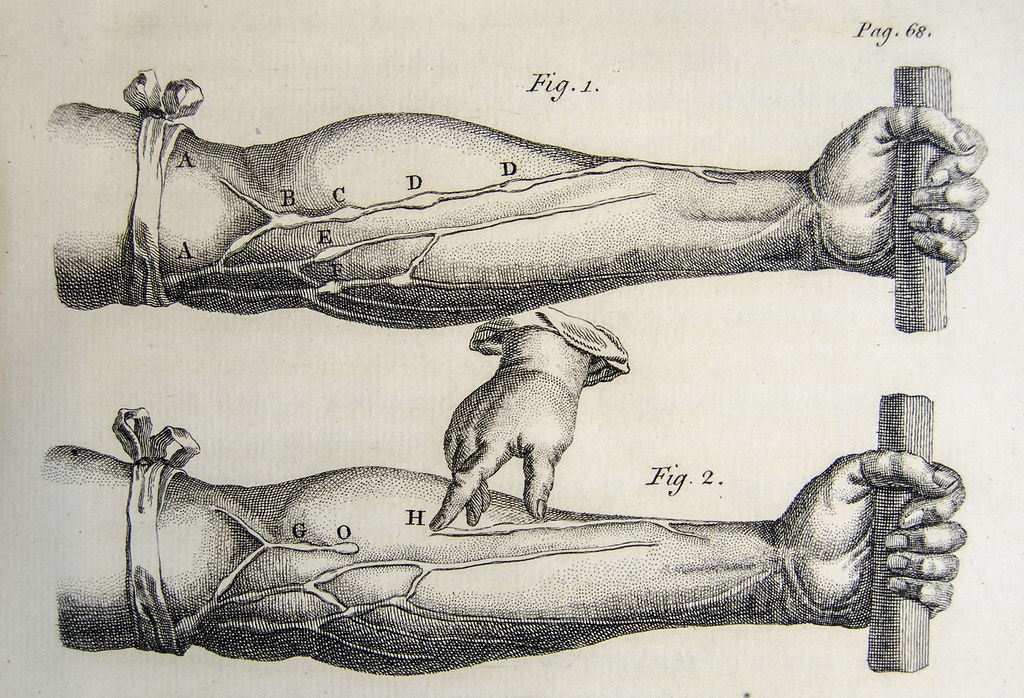
Veins of the Arm, On the Motion of the Heart and Blood in Animals (Credit: Creative Commons)
His teacher at the University of Padua was a man named Fabricius who discovered the values in the veins but could not explain their function. By compressing veins at various places of the body, Harvey showed that blood flows from the periphery to the center of the body and that blood flows in one direction. The valves keep the blood from reversing direction.
Although Harvey proved blood circulation, he work had little immediate effect. Blood letting continued for some time and the clinical value of understanding blood circulation seems of little importance. In the long run, it marked the end of the Galenic theory and marked an important turning point for modern medicine.
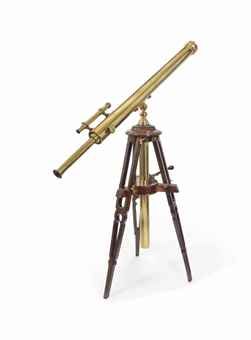
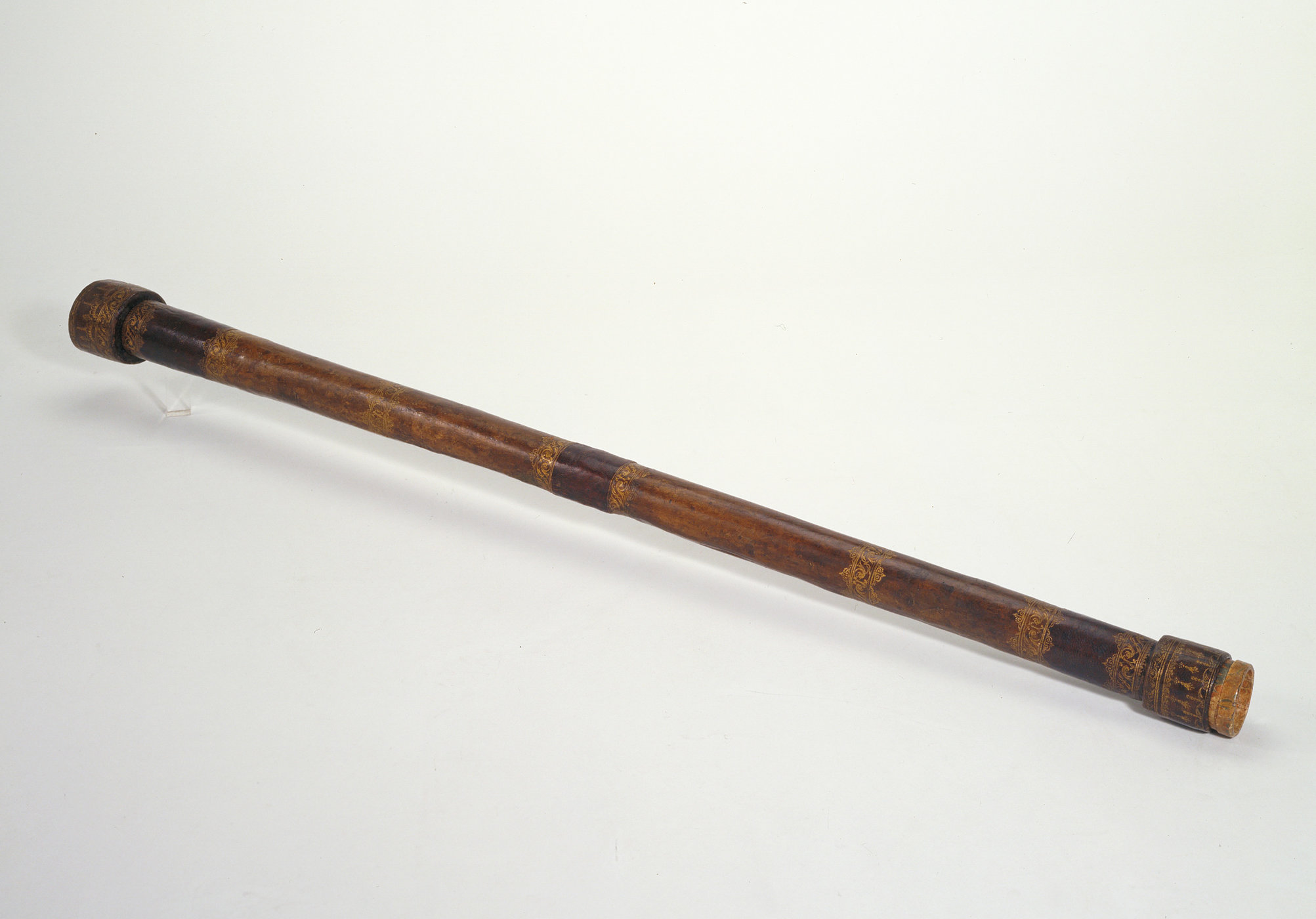
A Refracting Telescope (Credit: Wikimedia Commons)
One of the most remarkable phenomenon to ever capture the imagination of the human mind over the course of history are those tiny, visible glimmers of light that appear in the night sky. As we know and did our distant ancestors, those lights appear static each night but will rotate around the Earth. Except a few of them, the planets – from the Greek word meaning wanderer – and the Moon moved about more quickly. People wondered: what exactly were these lights up there and what were they doing? Early astronomers grouped them as constellations. Early religious leaders evoked them as Gods. They did, after all, seem to possess special powers as their positions could predict certain times of the year, such as a harvest. Their ultimate mystery was shrouded in the fact that they seemed to be too far away. An instrument needed to bring them into sharper focus was needed explain them. In the early 17th century that instrument came into existence and changed forever how humans viewed their place in the universe.
A Convergence of Lenses and Optics
The optical effects of lens were known about in antiquity. Archeological evidence suggests that their use was abundant and spanned large geographical areas over several millennia. They were used for a variety of situations: reflect and refract light, for simple magnification, and even as optical illusions. Simultaneously characteristics of light were slowly being illuminated in antiquity. In the 2nd century the Greek scientist Ptolemy wrote about the properties of light in his treatise called Optics. The convergence in the knowledge of optics and lens would lead to the invention of the refracting telescope.
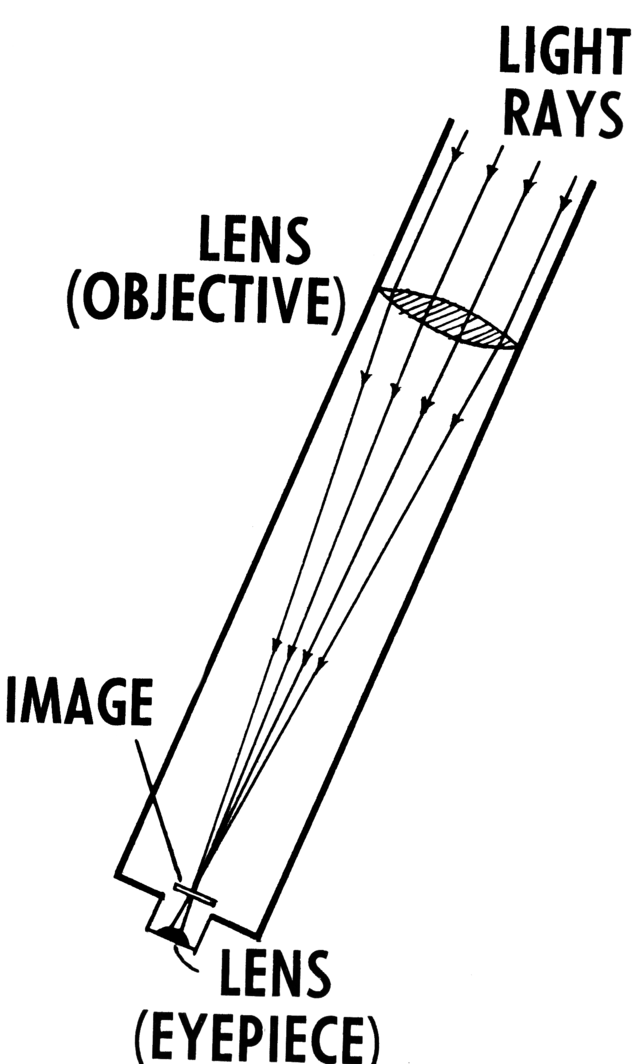
Diagram of a Refracting Telescope (Credit: Wikimedia Commons)
The first evidence for what later was to be called the telescope was the submission of a patent to the Dutch government in 1608 by Hans Lippershey, although it is likely that the idea was hit upon earlier by other lens makers. In any case, word of this new invention spread rapidly across Europe. One year following Lippershey’s patent Galileo Galilei improved on Lippershey’s design. He used it to make his momentous astronomical discoveries that he published in a short book called The Starry Messenger in 1610. Galileo’s observations through his telescope forever changed our view of the solar system.
Lippershey’s and Galileo’s telescope is called a refracting telescope since its lenses bend light rather than reflect it. A refracting telescope is constructed by using two convex lenses to bend light and form the image. It works by having what’s called an objective lens at one end of a long tube to gather light. The light is focused through the tube towards the lens at other end called an eyepiece, which magnifies and focuses the image on your eye. Galileo’s initial telescope had a magnification power of around 8x. This model was quickly improved to around 20x for the observations recorded in The Starry Messenger. The most powerful telescope he ever designed totaled a length of 3 feet 3 inches and magnified objects around 30x.
Technological improvements in magnification and clarity continued to accelerate in the decades to come, expanding the boundaries of the visible universe. While Galileo used concave lenses in this telescope, Johannes Kepler designed an improved telescope using two convex lens that allowed for a much larger field of view and caused less eye strain. However this approach inverted the image. Eventually Issac Newton decided it would be better to make a telescope from mirrors rather than lens, thus inventing the reflecting telescope. This type of telescope would prove to be superior to the refracting telescope and is the dominate telescope design in modern astronomy.
Galilean Telescope (Credit: Wikimedia Commons)
The Historic Impacts of the Telescope
The impacts of the telescope were immediate and immense. Observation with a telescope made clear that the universe was far, far larger than anybody had previously imagined. Those tiny, visible glimmers of light in the night sky that were once numbered in the hundreds are today numbered in the trillions. At the same time it removed humanity from its center and made our role in the cosmos feel much smaller. It removed the idea of perfection from the cosmos. Valleys and mountains could now be observed on the moon and planets, which were previously thought to be perfectly spherical.
Modern telescopes have far more capabilities than the telescopes of the 17th and 18th centuries. In addition to superior magnification they can detect heat, x-rays, radio waves and more. One day in this future the telescope maybe finally answer the question of whether or not we are alone in the universe.
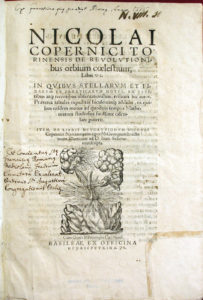
The Earth-centered universe was the prevailing wisdom of Medieval Europe until a Polish scholar named Nicolaus Copernicus suggested otherwise in his 1543 book, On the Revolutions of Celestial Spheres. Copernicus was not the first person to suggest a heliocentric model of the universe; 1800 years prior Aristarkhos of Samos suggested this same idea. However that idea never took hold among most scholars and was never able to compete with the geocentric model championed by Ptolemy and laid out in his popular treatise known as the Algamest. The Algamest was to become the dominate cosmology of Europe for over a millennia.
The 16th century marked a turning point in history where long held beliefs about the universe first seriously began to be questioned. The discovery of the new world at the end of the prior century no doubt had an impact on people questioning the ancient and authoritative accepted wisdom of the time. If the Earth wasn’t like people thought it was, maybe the celestial sphere above us wasn’t either?
A Radical Astronomical Idea Ahead of it’s Time
The fact of the heliocentric solar systems seems common knowledge to everyone today but we must remember the technological limitations of the period in which this writing took place. Prior to the invention of the telescope astronomers had to rely on naked eye observations. This method was very imprecise and led many to believe that the sun, moon, and stars revolved around the earth. It took the unique imagination and creative mind of Copernicus to suggest a different model of the solar system.
Copernicus was a student of history. He studied many previous works of astronomy and he even mastered the Greek language to read parts of Ptolemy in Greek. In 1514 he had written a brief outline of his work devoid of any mathematics which he showed to a few close acquaintances. In the proceeding years he continued to gather additional data to support his theory. He did not publish his work for nearly 30 years until two friends encouraged him to finally publish it. His delay in publishing was due to his well founded fears that his work would create a controversy within the Catholic Church.
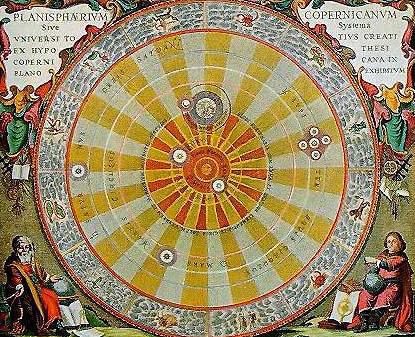
This treatise itself is divided into six sections, closely mirroring Ptolemy’s Algamest. Copernicus made his heliocentric argument from a mathematical perspective rather than as a physical truth. Some of his immediate predecessors such as Tycho Brahe seems to agree. Brahe stated that he believed in the mathematical superiority of the Copernicus model however he doubted its physical truth in reality. Copernicus also relied on the conventional wisdom of the time that all heavenly bodies revolve in perfect circles and so he continued to use the epicycles, additional series of circles, also used in the Ptolemaic system.
The Heliocentric Solar System
On the Revolutions of Celestial Spheres is treatise is about astronomy, but it also impacted the philosophical view of humanity. It was a radical break from the traditional thought of the time as Copernicus indicates in the passage below.
I therefore took this opportunity and also began to consider the possibility that the Earth moved. Although it seemed an absurd opinion, nevertheless, because I knew that others before me had been granted the liberty of imagining whatever circles they wished to represent the phenomena of the stars, I thought that I likewise would readily be allowed to test whether, by assuming some motion of the Earth’s, more dependable representations than theirs could be found for the revolutions of the heavenly spheres.
Nicolaus Copernicus
A Prelude to the Scientific Revolution
The book was published in the same year of Copernicus’ death, just before he died. We know that Copernicus had refused to publish his ideas earlier due to fear of persecution from the Catholic Church, and the books dedication to Pope Paul III was in attempt to assuage the church. Sadly, this yet another tragic example of dogmatic religious belief hindering the progress of truth, knowledge and the advancement of science.
Although hindered by the church, Copernicus’ model was later confirmed by Galileo Galilei after he observed the moons revolving around Jupiter and the phases of Venus. Even then it did not become fully accepted by scholars until Isaac Newton formulated his Law of Gravity in 1687. Additionally Copernicus’ book was largely ignored by scholars and by the church in the decades after its publication. It took the church over seven decades before it issued a decree to suspend its publication.
Despite its relatively insignificant influence in the years after its publication it can be said that this now famous work is when the Scientific Revolution in Europe began. It did not spark and immediate change in thinking and the progress in scientific advancement was gradual. Many other scientists amended and improved his ideas. But it challenged people to think differently about the accepted wisdom of the day and paved the way for other scientists to publish and produce their own original work and discoveries.
A vital precursor to the scientific revolution, the invention of the printing press changed the way information spread across the world by in two important ways; by improving its fidelity and by hastening its rate of reproduction. Within years after its invention an increasing numbers of books of increased accuracy quickly spread across Europe and the globe providing the medium for a diffusion of ideas to a growing literate population.
The Print Revolution
The Printing Press
The invention of the printing press is widely regarded as one of the most influential inventions in history. It drastically changed the way information was shared or moved around the world. Prior to the printing press information slowly – it had to either be spoken and memorized or hand-written onto papers and books. The invention of writing in the 4th millennium BCE offered a cleared benefit to our limited and imperfect memory. However up to the middle of the 15th century, very few people could write (and only a few more could read) and the process was long and tedious. Most scribes could only produce several pages of manuscript per day. The process of creating a single book could take months, or even years. Although a copied text is more reliable than memory, errors are still inevitable in the coping process, as is evident in the myriad changes made to the Bible in its millennium long copying process up to the middle of the 15th century.
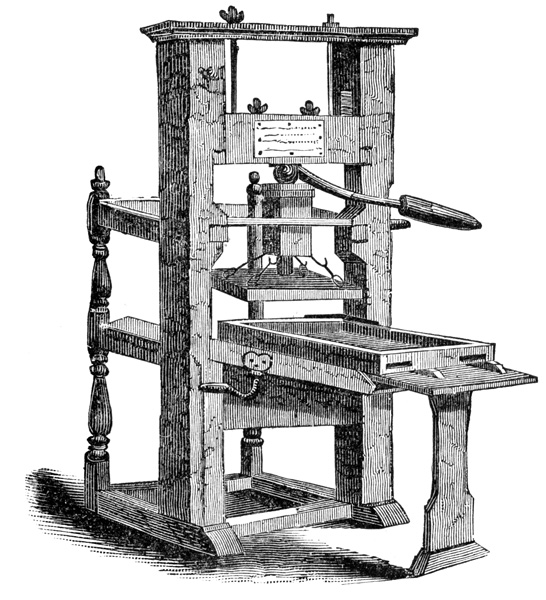
In 1450 a new invention called the printing press offered a new way to create text. The printing press was the creation of the German inventor Johannes Gutenberg, whose creative insight was to combine movable type with a pressing mechanism to create the Gutenberg press. Simple, yet revolutionary. Block printing was not an original idea of Gutenberg. The Chinese used wooden blocks coated in ink to copy religious texts centuries as early as 200 AD. Since the Chinese language contained over 40,000 different characters, movable block printing was not very practical to Chinese printers. It was the idea of block printing and not movable type that was transferred East to West along the Silk Road.
Gutenberg created his movable type casting letters in lead. Once he had an array of letters, he could create a page for printing by arranging them in line on a rack on a wooden tray. In order to print a page, you first line up the metal type, apply ink, place the paper on top then apply the press. Many pages could quickly be printed and then the rack was cleared for the next page to be printed. What once required hours to copy by hand was reduced to minutes with the printing press.
Changes in the Post Printing Press World
The printing press allowed for the mass reproduction of printed material. Printing spread at a remarkable rate, driving up literacy rates with it. Within a few decades hundreds of presses were active in hundreds of cities around Europe, and this basic method of mass production of printing did not change much until the late 18th century.
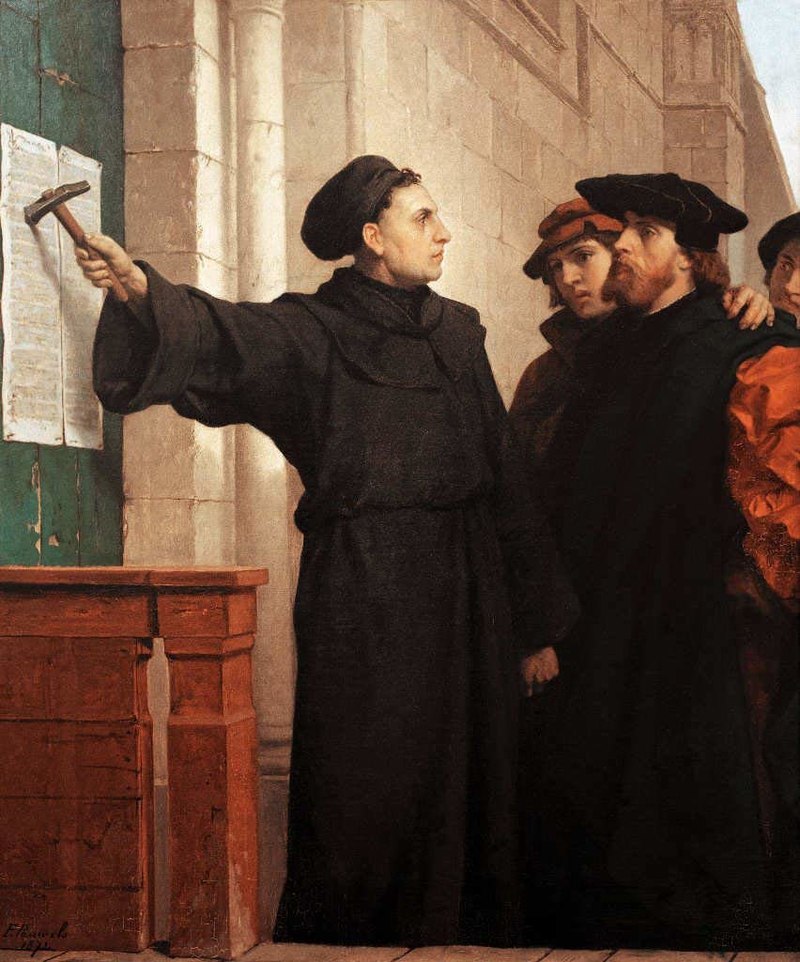
Martin Luther Hammers his 95 Theses to the Church Door (Credit: Wikimedia Commons)
Printings impact was far reaching, influencing religion, science, and government. Early on its most important impact was religious. Gutenberg’s most famous work, the Gutenberg Bible, is considered a triumph of early printing. It was in circulation by around 1455 and allowed for broader access to the Bible than ever before. The emerging middle class – merchants and trade professionals – now had access to the Bible in their vernacular language, rather than in Latin. The rapid reproduction and widespread distribution of religious ideas was not all good news for the church, however. In 1517 Martin Luther famously nailed his 95 theses to the door of All Saints’ Church, and other churches in Wittenberg, Germany. Luther’s 95 theses were a list of propositions criticizing the Catholic Church for the sale of indulgences and other corrupt practices. These ideas were rapidly reprinted and spread like wildfire across the European continent, sparking the Protestant Revolution.
Centuries later the printing press would initiate a new type of revolution known as the scientific revolution. It began simply by helping to revive some of the lost knowledge from antiquity. Rare and long forgotten books of the Greeks and Romans could be copied quickly and distributed to more people. In pursuit of ancient wisdom, new wisdom also began to flourish. Information about the observed and natural world could now be shared me quickly and easily. New ideas began to overthrow old ideas, and soon people began to question everything they they thought they knew about the world, including their form of government. The radical, new ideas of the Enlightenment were critical in forging the French Revolution. Newspapers, books and pamphlets were published in numbers never before seen. The French government censured the printing of many of these books however they were printed outside of the country and smuggled in. An explosion of opinion and debate ensued further resulting in even more printed material. All of this printed material contributed to the spread of the new revolutionary ideas of democracy and republicanism. These ideas moved thorough Paris, into the provinces and inspired the passions of the French people to overthrow their monarch and institute a new form of government.
There is yet one more profound change caused by the invention of the printing press. Since spread information could be shared like never before, it also created a new sense of community by allowing others to read together. Most people preferred to read in their local dialect as opposed to Latin. The natural result was the creation of new languages as certain dialects and regional variations became standardized thanks to the distribution of printed text. A national identity sprang up all across Europe and eventually the rest of the world, creating unified nations. In this sense and many others we can literally say the invention of the printing press created our world as we know it today.
A dazzling display of colorful fireworks can always delight a crowd and put everyone in attendance in good spirits. The shrieking boom of a cannon delivers the opposite reaction. That is the paradox of gunpowder, the invention that is responsible for both of these powerful and spectacular activities.
Discovery and Spread
Gunpowder
Gunpowder was discovered in China around the year 900 during the Tang Dynasty. As with so many civilizations of the time, alchemy was a thriving occupation. The Chinese alchemists were working on an elixir of life when they stumbled upon the formula for an elixir of death. They called their formula fire medicine and soon found a variety of uses for the explosive material such as in fireworks and in military weaponry.
A powerful military technology could not stay isolated for long, but it did take the knowledge of gunpowder around 350 years to spread to the Middle East. Soon after arriving in the Middle East it quickly made its way into Europe by 1300, now nearly 400 years after its invention. William of Rubruck is likely responsible for bringing gunpowder back to Europe after his encounters with the Mongols, although there is little direct evidence for this. The earliest European reference to gunpowder is found in Roger Bacon’s great work Opus Majus (Opus Majus literally means Great Work in Latin) in 1267.
Its impact in warfare was substantial and almost immediately felt on the battlefield through infantry weapons, having a devastating effect on the knightly class. Although this was a setback for the nobility they still had their walled castles. Even those castles would soon succumb to the power of gunpowder.
Impact on Warfare
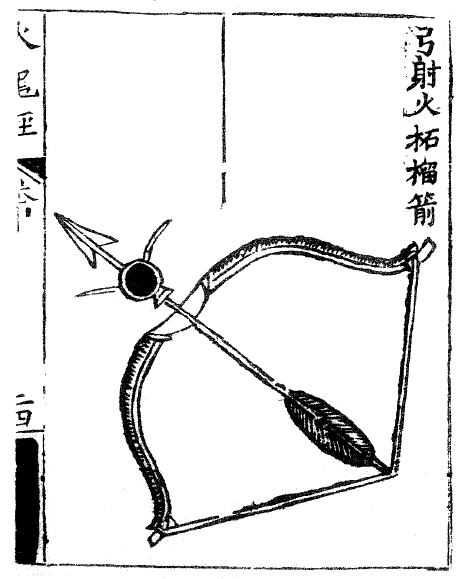
Chinese Fire Arrow (Credit: Wikimedia Commons)
Fire arrows were the initial military weapon for gunpowder. A small pouch of gunpowder was attached the arrow resulting in open fires upon impact. Other incendiary devices such as bombs and fire lances were soon widely deployed. Many proto-gun and proto-cannon designs were experimented with in the 12th and 13th century. During the later part of the 13th century, the Mongols were using a hand cannon, something we can definitively call a firearm. It took until the 1320s for guns to catch on in Europe as a form of weaponry but they soon rapidly spread across the continent. Within twenty years larger artillery weapons were arriving on the battlefield. The strategies of warfare were on the verge of being revised.
Artillery weapons powered by gunpowder, initially unreliable but once perfected, made once impenetrable walled castles vulnerable. Sieging a castle in the Middle Ages was a long and arduous process. Techniques involved tunneling under walls, ramming down walls, starving out the inhabitants, all of which could take weeks or even months. However with the invention of cannons firing their devastating projectiles from a safe distance, a castle could be taken within a single day.
No other example illustrates the power of cannons than the fall of the city of Constantinople to the Ottoman Turks in 1453. Certainly the city’s downfall was the result of many factors – a weakened Byzantine state and Western Europe’s reluctance to provide assistance to name a few. But one undeniable factor was the effective Ottoman use of cannons.
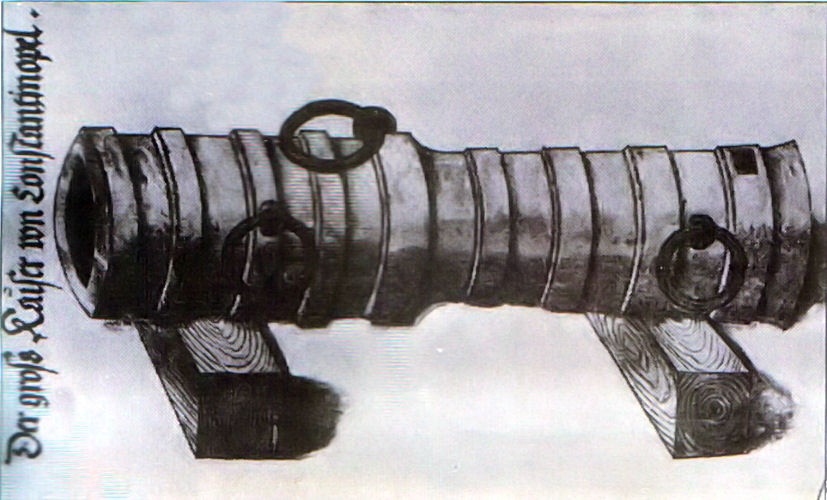
A Cannon Used by the Ottoman Turks to Pummel the Walls of Constantinople (Credit: Wikimedia Commons)
The walls of Constantinople were considered to be impenetrable. Five meters thick and 20 meters high, they stretched over four miles long from the Golden Horn to the Sea of Marmara. Much of it was double walled with some area’s having up to five walls deep. These walls had held off dozens of sieges for over 1,000 years. The Ottomans employed around 60 cannons which battered and weakened the walls for the duration of the siege. The final assault by the Ottoman’s was focused on the section of the wall most damaged by cannon fire and was eventually breached by the invading Turks.
The Chemistry of Gunpowder
Gunpowder consists of a mixture of saltpeter (potassium nitrate), charcoal, and sulfur. Early on this proportion was experimented with until a 75% saltpeter, 15% charcoal, 5% sulfur solution was determined to be most effective. The sulfur and charcoal act as the fuel, with saltpeter acting as an additional oxidizer creating a stable chemical reaction with the rapidly expanding gases resulting in the propelling motion. This was the only known chemical explosive until the middle of the 19th century. Since that time gunpowder has been replaced by other means in military weaponry but it is still used in fireworks today.
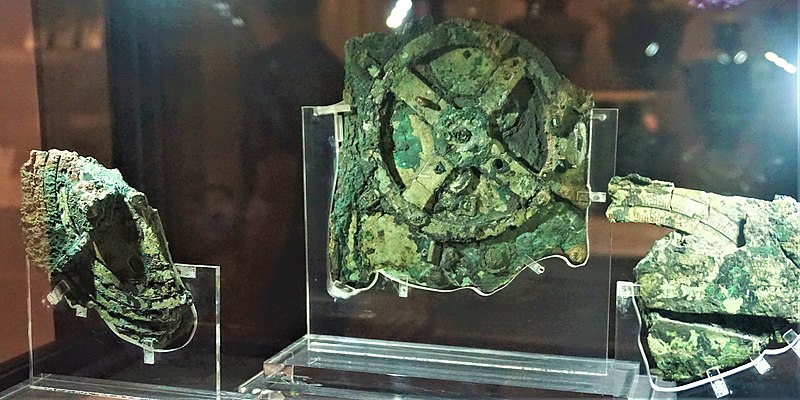
Antikythera Mechanism, National Archaeological Museum, Athens (Credit: Wikimedia Commons)
One valuable technology in assisting people do to work was the invention of gears. Gears consist of a system of cogs that takes energy from an input source, such as flowing water, and convert it to an output source, such as a pump. The oldest archeological evidence for gears dates to about 230 BCE in China, however evidence of geared technology prior to that time is referenced from ancient Imperial Chinese manuscripts.
A Brief History of the Invention of Gears
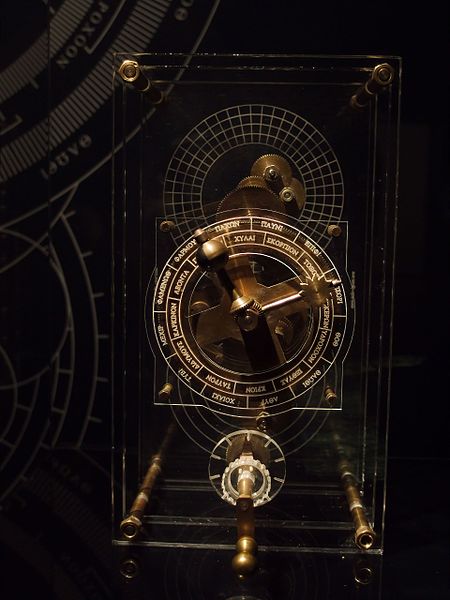
Reconstruction of the Antikythera Mechanism (Credit: Wikimedia Commons)
The invention of gears are a natural extension from the invention of the wheel. They appear to have been invented in China but it was the Greeks who demonstrated their widespread use. Archimedes is believed to have used gears in his constructions and in the 4th century BCE Aristotle provided one of the earliest descriptions of gear-like devices. By 100 BCE they were being used across much of Greek civilization.
The discovery of the Antikythera mechanism, dubbed the worlds first analogue computer, is one of the earliest examples of a complex mechanism using a combination of gears. This device was discovered in 1901 from a shipwreck off the coast of the Greek island Antikythera. The instrument was used to predict astronomical positions. It is a complex, hand-wound device consisting of 30 bronze gears. Like a clock, it had a circular face with several hands that displaced times of celestial objects such as the Sun, Moon, and known planets. Winding the device forward or backward would move the hands at various speeds thought the interconnecting gear train. Not all of the pieces have been fully recovered so the precise mechanisms and exact purpose of the device is not fully understood, but it does unequivocally show that gears were being used in complex devices by 100 BCE.
A Remarkable Level of Flexibility Leads to a Remarkable Level of Functionality
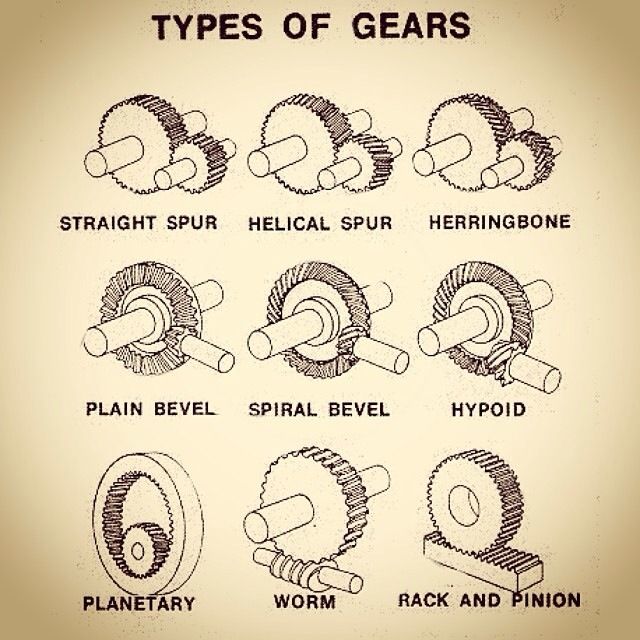
Several Types of Gear Designs
There are many ways to design and combine gears making them extremely versatile. The various different types of gears can be broadly classified by the orientation of their axes. There are other characteristic differences such as gear tooth design and gear shape.
The first category is parallel axes. Spur gears and helical gears have parallel axes. This design is easy to manufacture and produces efficient power and motion transmission. The next category is intersecting axes. Gears such as plain bevel and spiral bevel have intersecting axes. These also have high transmission efficiencies. A final category that is non-parallel and non-intersecting such as worm gears. These typically have lower motion and power efficiencies than the prior two categories. Each type provides a unique set of advantages and disadvantages. Some operate more smoothly and quietly while others provide strength and durability where needed. Ease of manufacturing, which is related to costs, also varies across the different types of gears.
Putting Gears to Use
The earliest gears had a few broad applications. They were used in large machinery such as water mills and irrigation systems where they were needed to transmit considerable power. Water mills were increasingly used from the time of the Romans all the way through the Middle Ages of Europe. A secondary application of gears were also used in small, precise devices usual focused on astronomy and the calendar.
Some gears were constructed of wood and others constructed with various types of metals. The material used depended on its use. As the centuries passed gears continued to find uses in new inventions. The first clocks incorporated very precise systems of gears. During the Industrial Revolution a multitude of machines would not be able to operate with out properly working gears.
Gears feature predominately in today’s world, especially in transportation. One modern transportation invention using gears was the bicycle, whose modern form was developed in 1885. The bicycle caused a bicycle craze in the late 19th century and many people became wealthy manufacturing bicycles. The Wright Brothers constructed their gliders and the first airplane, The Wright Flyer, from the bicycle factory they owned in Ohio. After the widespread use and adoption of the bicycle gears became used in a newer type of transportation, the automobile. The automobile uses a system of gearboxes in the transmission system to transmit power from the engine to the wheels. Today gears are used in nearly all transportation systems including railroads and airplanes, as well as other common appliances and industries such as pumps, power plants, energy systems, lifts, and elevators.
Disease is humanity’s oldest and most feared enemy. It harasses us constantly in a multitude of vicious ways through methods that have only recently been discovered. Medicine is our primary defender against this ever-present, ever-evolving, enemy. It is the science of diagnosis, prevention, and treatment against the oldest and most dangerous threat to our lives.
Early Medical Practices
Rod of Asclepius
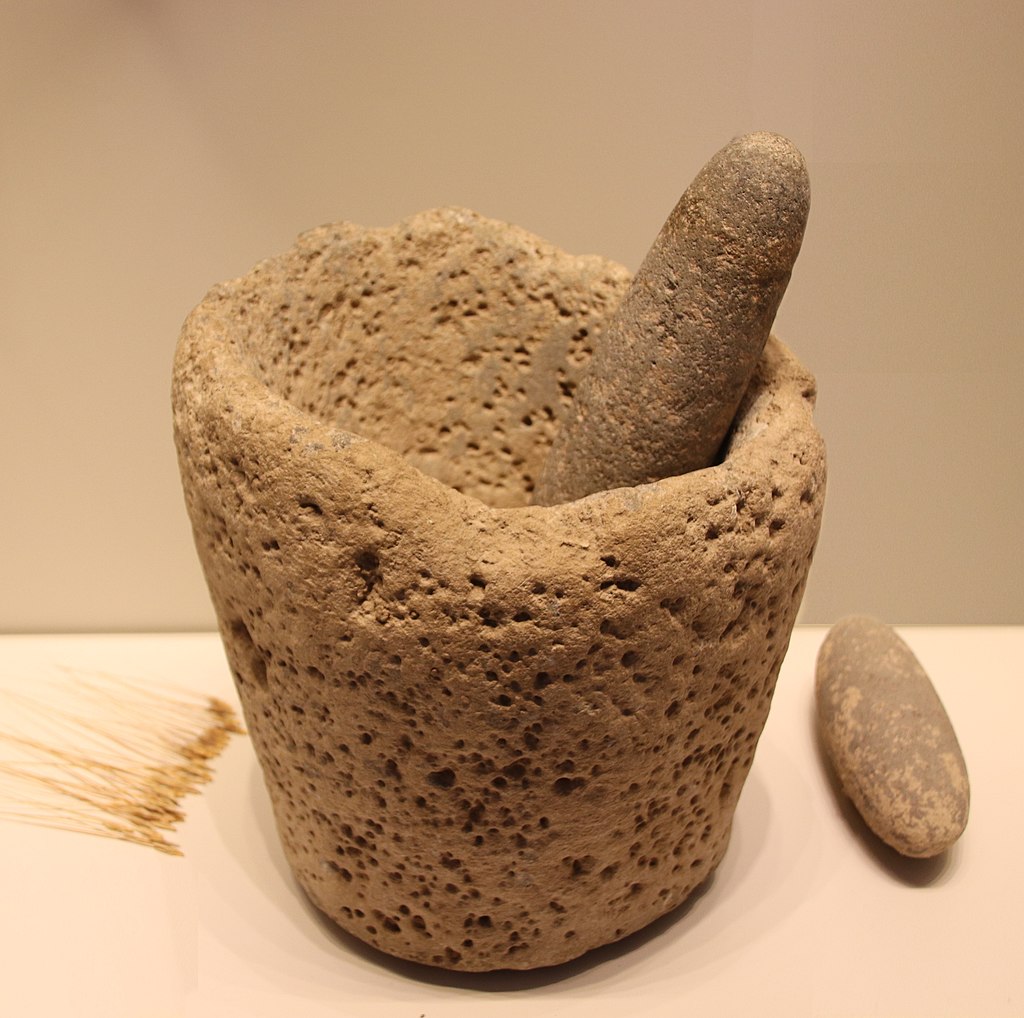
The earliest forms of prehistoric (before the written word) medicines were various herbs used to heal the diseased person. We may think of the tribal medicine man or shaman as an early doctor but it is likely that many prehistoric healers were women. Women were heavily involved in gathering plants for food and cooking meals for the group. This experience provided an opportunity to gain knowledge about the affects of many types of plants, and to apply that knowledge medicinally to their community.
Stone Age Mortar and Pestle (Credit: Wikimedia Commons)
Plants were not the only treatments available to people living in the prehistoric world and early civilizations. There is evidence of surgical procedures being attempted in the prehistoric ages, Mesopotamia, Indus Valley civilizations, and in Ancient Egypt. The code of Hammurabi, written in 1754 BCE, sets out guidelines for surgical fees and physician malpractice. Fire was likely used for sterilizing and closing wounds.
Some of the earliest known medical texts date are from China, India and Egypt around 3000 BCE. The texts from Egypt, for instance, focus on a variety of ailments – problems associated with the hair, blood, digestive system, headaches and toothaches. Many of the remedies for these ailments are grounded in superstition. Evil spirits and gods were thought responsible for them and magical incantations are recorded as being part of, or the whole treatment. Still, it was beneficial for medical advancement to record these treatments and observe which ones worked more consistently that others.
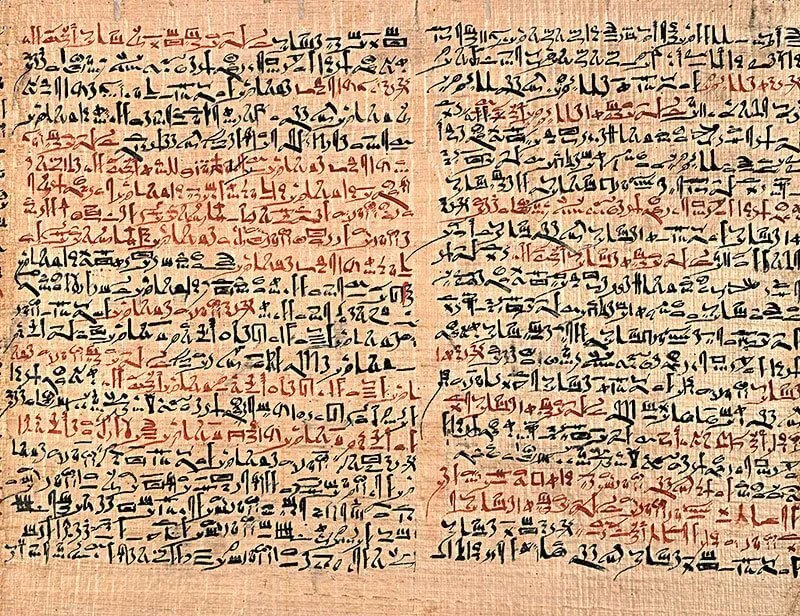
Edwin Smith Papyrus – a medical document from Ancient Egypt
There are however a few notable examples of medical texts grounded in rational observation. One such example is a series of medical texts known as the Edwin Smith Papyrus, named after the dealer who purchased it in 1862. It contains medical observations and advice on 48 different injuries ranging from injuries to various parts of the body to gynecology. The document contains instructions for an appropriate examination of the patient, then provides a diagnosis and prognosis, and potential treatments. This incredible document was written in hieratic script in Ancient Egypt around 1600 BCE and is thought to be a copy of an even older document.
Hippocrates of Cos and the Hippocratic Oath
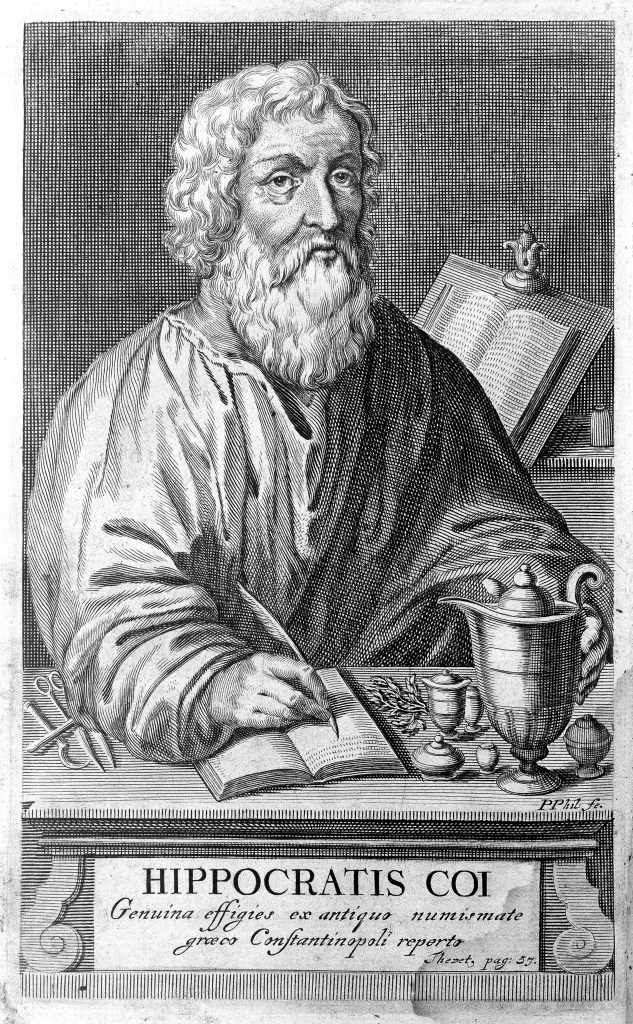
Hippocrates of Cos, The Father of Medicine
In the 8th century BCE the first Greek medical school opened at Cnidus. To their credit the Greeks placed a strong emphasis on diet, lifestyle, and hygiene, continuing the tradition of the Egyptians and Indians. The prevailing Greek medical doctrine was humorism. This holistic approach to medicine declared there were four humors were linked to four bodily fluids, blood, black bile, yellow bile, and phlegm, which were linked to the four elements. Disease was caused by an imbalance of the humors. Treatment was predicated on restoring this balance.
The most famous Greek doctor was Hippocrates of Cos, born in 460 BCE. Hippocrates founded the famous Hippocratic School of Medicine and is largely referred to as the Father of Medicine. He is credited with forming the Hippocratic Oath – a guiding set of duties that is widely taken by physicians to this day. The Hippocratic Corpus is a collection of around 60 medical treatises attributed to Hippocrates, although it is the work of many different authors. The salient point is not who wrote these treaties but that Hippocrates and his students broke with the ancient tradition of ascribing disease to magic or evil deities. They instead focused on discovering the natural processes of disease through experimentation and data collecting.
The Hippocratic Oath, practiced by Hippocrates and his followers and summarized as “Do No Harm”, prescribes more conservative methods for treatment. He urged his citizens to avoid faith healers and quack physicians, recommending instead that they seek out doctors whose practice was grounded in science and observation. A strong emphasis was placed on prevention by encouraging the body to build up resistances to disease. This was accomplished primarily through diet and exercise, and supplemented by techniques such as massages and hot baths. Various foods could treat and cure a whole host of health problems ranging from infections, constipation, and blood clotting. He recognized that heat could reduce pain. He even warned against making any sudden significant lifestyle changes as detrimental to ones health. From Hippocrates through the Middle Ages of European history the influence of Hippocrates reigned supreme on the practice of medicine.
Modern Medicine
The Italian Renaissance marked the period in which the influence of Hippocrates began to wane and new medical developments and insights began to emerge. A renewed emphasis was placed on observation and experimentation leading to discoveries. Andreas Vesalius, deemed the Father of Anatomy, was one such person in the new army of meticulous observers in medicine. In 1543 he published his influential book On the Fabric of the Human Body, a ground breaking work correcting many errors of his predecessors and complete with detailed anatomical illustrations. Soon new discoveries such as the circulation of blood, the presence of biological cells, and vaccines were happening. The pace of discovery soon hastened.
Gene Therapeutic Programs at Sangamo Therapeutics These Programs are Gene Therapy, Gene-Edited Cell Therapy, Genome Editing, and Gene Regulation (Credit: Sangamo Investor Presentation Slidedeck)
In the middle of the 19th century the most important advance towards modern medicine occurred when Louis Pasteur formulated the Germ Theory of Disease. Germ theory states that microorganisms are responsible for certain diseases and this provided tremendous insight into prevention and treatment techniques. Medicine now had a new and more accurate framework from which to build upon. Today, we are making still more incredible advancements in fields such as gene-editing techniques. These new technologies give us the potential power to edit life in whichever way we choose to. Hopefully, we choose wisely.
Wheels appear everywhere in today’s world, a testament to the evolution of the wheel that makes it impossible to imagine civilization as we know it without them. The idea seems quite simple and given the number of wheels we see in the world today, almost obvious. However, wheels emerged as a recent actor to appear on the worlds stage. Whereas many ideas’ stem from things found in nature, there are no wheels in the natural world. Evolution by natural selection would never select for it. The Earth’s natural landscape rigid and rough, not paved and flat.
The idea of the wheel developed in ancient Mesopotamia, which in time proved highly effective and rolled on throughout the Old World. There is no evidence of the wheel being used in the America’s prior to European contact despite the highly advanced civilizations of the Mayans, Aztecs, and Incas.
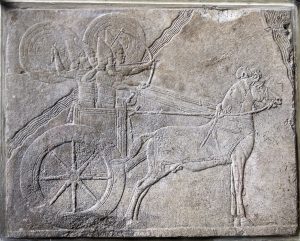
Stone Carving of a Chariot
The Wheel’s Unexpected First Use
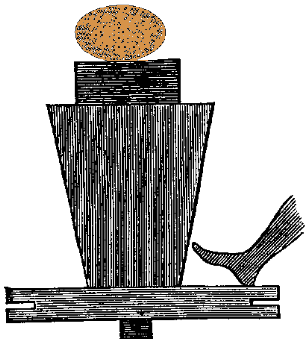
Illustration of a Foot-turned Potters Wheel
Most people think of the wheel as a component in a transportation device, but the evolution of the wheel actually began with pottery, its surprising first use. The wheel was invented and first used by ancient Sumerian potters (the same Sumerians who invented writing) during the late Neolithic period at around 3500 BCE. This exact date of its original use is a little uncertain, as is with many things in ancient history. It’s possible the idea was hit upon centuries earlier, but since nobody was around keeping detailed records we can’t be absolutely sure when it was first invented. However by 3500 BCE it was certainly in use in that region of the world. The device was extremely practical and quickly spread through cultural diffusion, however the Chinese also came across the idea of the wheel around 2800 BCE.
As valuable to civilization as the wheel is, one might think that it was of the first invention of human civilization But this isn’t the case, as this simple invention occurred well into the Bronze age. By this time more complex technologies like metallurgy were already established as an increasingly sophisticated, 2000-year-old science. Even pottery as a craft had been around for tens of thousands of years. So this is where the story of the invention of the wheel begins, as an artifact assisting in making pottery. The potter’s wheel was not a wheel used for rolling or moving things. It laid horizontally on its side while pottery was spun on top of it. The potter’s wheel was typically made from solid wood or stone and attached to a fixed axle, allowing for smooth, slow and controlled rotation.
The potters wheel quickly found new uses and it adapted those used to the urgent needs of civilization. During the late Neolithic period human societies were increasingly settling into agricultural communities and the need for more effective methods of labor and transportation became apparent. After the invention of the potters wheel, it only took another few centuries of innovation before the next generation of people assembled two wheels, rotated 90 degrees and placed an axle through the center of each. This process did not happen overnight, as in one swift stroke of genius. It was a gradual process that began with a rolling log and culminated with a rudimentary wheel and axle device.
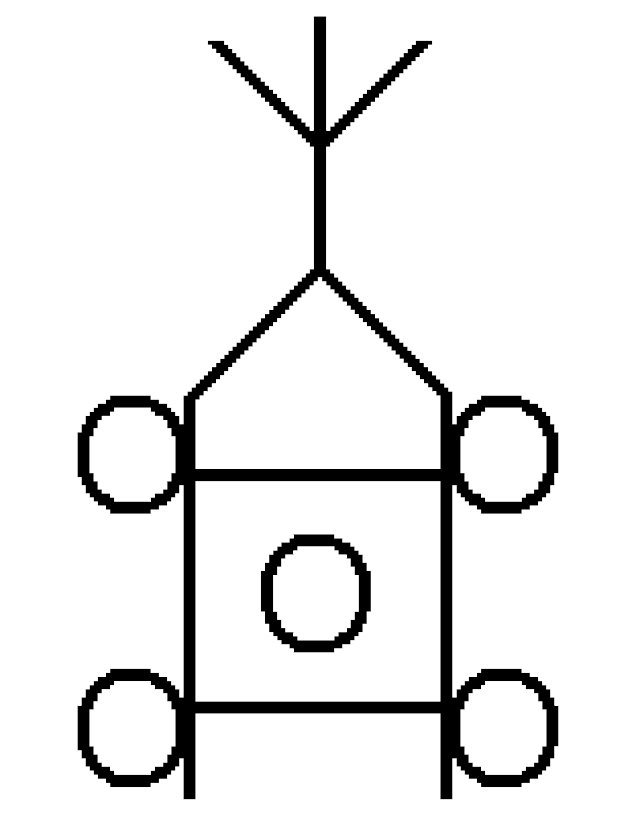
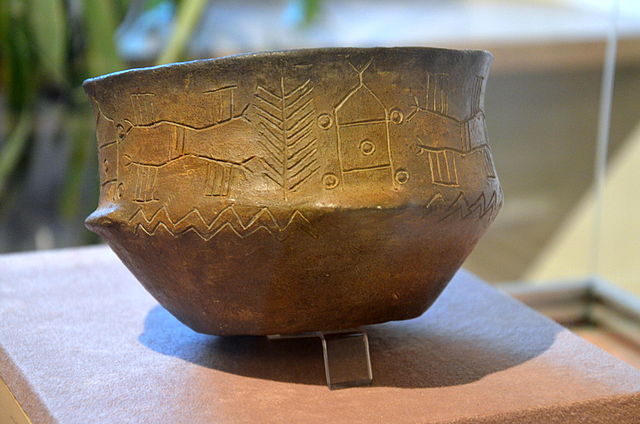
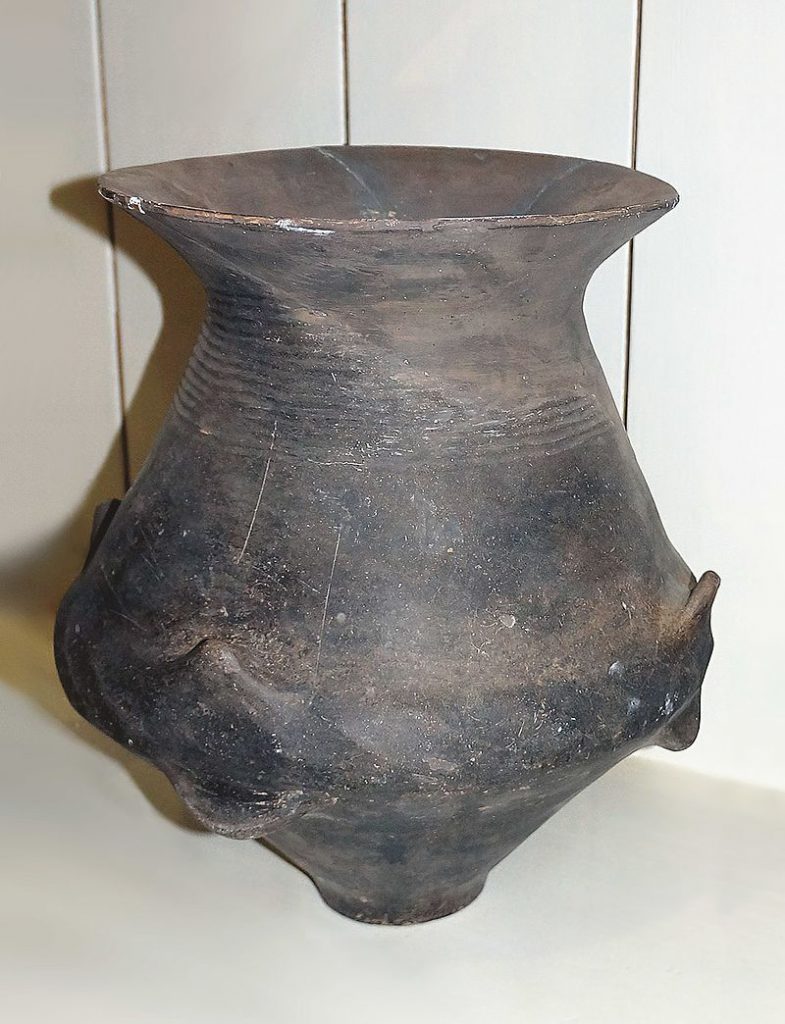
However by around 3400 BCE the wheel was likely being used for transportation, at least in one part of the world. The first depictions of a wheeled vehicle were found in 1974 during an excavation of a neolithic village near the present day village of Bronocice, Poland. Found in a pit among animal bones was an artifact that has come to be known as the bronocice pot. The bronocice pot is a ceramic vase showing what appears to be a wheeled vehicle. The discovery shows that wheeled wagons were in use in Central Europe by this time. They were likely drawn by aurochs, the wild ancestor of domestic cows, as auroch remains were found in the same area. Clay tablets found in around 3200 BCE in Urak – present day Iraq – also show depictions of wheeled vehicles.
A Drawing of the Wheeled Vehicle from the Bronocice PotThe Bronocice Pot Showing the First Known Depiction of a Wheeled Vehicle, a key step in the evolution of the wheel
Once the wheeled vehicle arrived on the scene, the innovations continued. It could be connected to carts and eventually larger transportation vehicles called chariots. The transformation of the potter’s wheel to a transportation device was now complete. The transformation from a solid wooden wheel to today’s rubber tire was just beginning.
The Evolution of the Wheel: From Pottery to Powerhouse
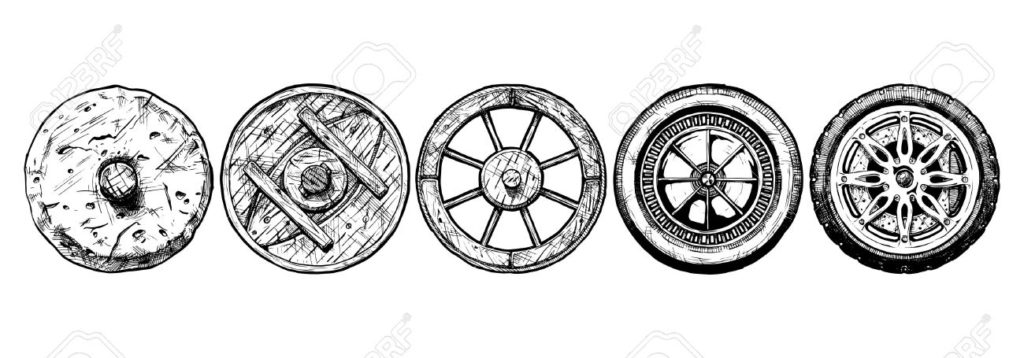
The wheel has evolved substantially over its 5000 year history. It has become thinner and stronger, and has developed into different types. One of the first such evolution’s of the wheel was a plank wheel. The plank wheel is made from wooden planks rather than being one solid log of wood. As societies advanced the wheel continued to evolve to meet the needs and demands of society. Some wheels had parts of it that were able to be removed, making it lighter. The next major steps were hollowing out the center of the wheel and adding spokes radiating from the axle. The use of spokes reinforced the structure of the wheel and reduced its weight. It is believed to have originated in ancient Sumer around 2000 BCE. The spoked wheel eventually became used in chariots.
Additional features of the wheel continued to be modified or added to improve its performance. The concept of the rim, an outer edge of a wheel that holds it in place, dates back to ancient times as well. Rims provide structural support to make the wheels more durable. Early rims were made of wood or metal, and as metal-working become more sophisticated various other materials such as iron and steel were used. The wheel and axle also went through some changes. Originally the two were fixed, meaning that they rotated as a single unite. The design is simple but does not allow for much maneuverability. The fixed axles were modified into pivoting axles where the wheels can move independently of each other, increasing the vehicle’s maneuverability.
The biggest change in the evolution of the wheel came many thousands of years after its first use as a form of transportation, during the Industrial Revolution. The manufacture of wheels improved as cast iron, and later steel wheels greatly enhanced their performance, durability, and load capacity. This era also found many new uses, such as for trains or for components in factory machinery. The modern wheel of the 21st century continued to evolve as manufacturing techniques continue to improve and technology advances at a breakneck pace. Wheels were now mass produced for a variety of new vehicles such as cars and airplanes, and made from a variety of materials such as aluminum and rubber. The digital age has transformed wheeled vehicle technology and features such as traction control, anti-lock breaking systems, and advanced driver-assistance systems are becoming commonplace in vehicles. Currently, we are seeing the concept of “smart wheels” that incorporate electronic systems using sensors that monitor conditions such as tire pressure, tread wear, and temperature. New technologies like robotics are making wheeled robots a common sight in manufacturing plants and warehouses, and even in advanced space agencies such as NASA. As human civilization continues to push the limits of technology, the wheel will undoubtedly continue to be an integral part of that process.
Evolution of the Wheel (Credit: www.123rf.com)
The Power Behind the Wheel
There are two main reasons why wheels make moving loads easier than pushing or pulling loads.
Decreased friction – Only a small part of the wheel is in contact with the ground leading to increased efficiency and reduced wear and tear. Decreased friction also increases maneuverability making it easier to change directions. There are many methods to decrease the friction of the wheel such as optimizing the wheels design and materials used in construction, using lubricants, and minimizing the roughness of the surface that the wheel is being used on.
Increased leverage – Wheels elevate the load reducing the angle at which force is required to move the load. Additionally, the rim of the wheel turns more distance than the axle of the wheel. Turn the wheel at the rim and more force is applied to the axle. Turn the wheel at the axle to create more speed.
The Wheel’s Impact on Early Civilizations
The wheel has played a significant part in shaping history and had a variety of early uses and forms. The first use was for pottery making – the pottery wheel. Although the most important use was for transportation. For thousands of years people dragged heavy things on sledges. Wheels changed this, and subsequently altered our terrain. Wheels work best when they have a smooth surface to roll on. The Romans were the first to institute large scale road construction to connect their large empire. They constructed thousands of miles of straight roads, some of which are still in use today.
The agricultural process also benefited from wheels in the form of improved food production, transportation, and distribution. The invention of wheeled plowing and tilling revolutionized the preparation of soil for planting. Carts and wagons allowed farmers to transport crops, seeds, and other agricultural goods over long distances with ease. With transportation now easier than ever, farmers had access to larger markets and an expansion of trade markets. The significant boost the invention of the wheel gave to agricultural production allowed for larger food surpluses, thus increasing population in urban centers.
People continued to find new and innovative uses for the wheel. They harnessed the energy of water and wind in the form of the waterwheel and the wind turbine. They added teeth to the wheel and created gears, an essential component in many mechanical devices.
A Waterwheel at Babcock State Park in West Virginia (Credit: Jim Vallee)
For such a simple device, the evolution of the wheel keeps on spinning. Bicycles, trains, and automobiles all rely on the wheel for movement. But the wheel can be adapted for uses other than movement. Automobile engines depend on many wheels. One part of the engine is a crankshaft – a wheel with an off-center axle. This is spun to power the engine that spins the road tires. The wheel – found nowhere in nature – is certainly human’s greatest yet simplest innovative achievement.
The importance of metallurgy to human culture is so vital that scholars typically divide ancient time periods by metalworking ages such as the Stone Age, the Bronze Age, and the Iron Age. Metallurgy is the process of extracting metals from their ores and modifying them for human use. These early usages resulted in the production of hardened weapons and armor, tools, utensils, pottery and more. The role of metallurgy is even more important in the industrialized present-day. It has essential uses in machines, buildings, electronics, and in our transportation systems.
The Origination of Metallurgy
Early Metallurgy
Years before metals were valued for their usage they were valued for their natural beauty. In time it was found that metals could be molded into different forms to serve some practical use. The earliest evidence for smelting, the process of extracting an metal by heating an ore, was found in the Balkans and Western Asia around 7500 years ago. The first metals smelted were tin and lead, followed by copper.
Eventually metals were mixed together to create stronger alloys. Alloys are new metals containing greater strength and durability that are made of two more more metals. Combining tin with lead in the right proportions produced bronze which was significantly harder than copper. Exactly how this was discovered is unknown, but happened probably by accident or through trial and error. However it is certain that the intentional mining of tin to produce bronze was happening by around 2000 BCE.
Metallurgy technology provided significant advantages to the peoples who figured it out. Civilizations that mastered this technology obtained a competitive advantage over their neighbors, and created essential industries such as mining and blacksmithing.
The First Metals Used by Humans
There were seven metals used by ancient human civilizations. These were gold, silver, tin, lead, copper, iron, and mercury. Of those seven metals only gold is found in a natural state. There rest were mixed in with ore’s and had to be melted out, a process called smelting. The first metals to be smelted were lead and tin. A simple campfire was hot enough for this to work although neither metal was strong enough to provide much practical usage in buildings or weapons. The same is true for gold and silver which were used for adornment in jewelry and ornaments.
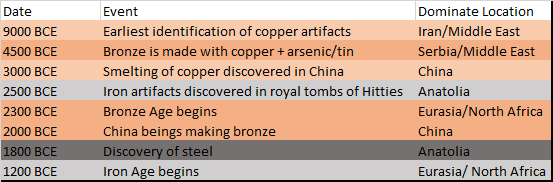
Metallurgy Timeline
Copper is stronger than both tin and lead, but it requires higher temperatures than an open fire to be smelted. The heat needed to be insulated by a kiln, which is basically like an oven. The earliest known discovery of copper smelting occurred around 5500 BCE in the Fertile Crescent. While copper is stronger than tin and lead it still was not very useful in making weapons and structures. Copper weapons were soft and dulled very quickly. Like gold and silvery it was first used for its aesthetic value but later used for pottery to make items such as pots, cups and trays.
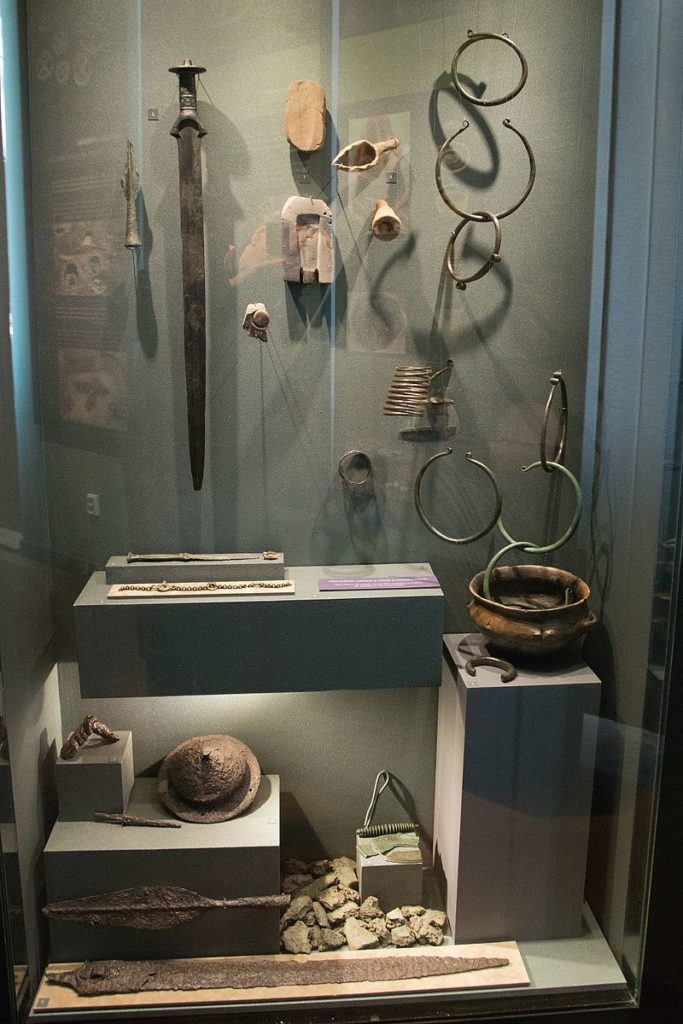
Bronze Age Weapons and Tools (Credit: Wikimedia Commons)
After using copper for about a thousand years early civilizations discovered ways to improve the metal. They created bronze alloys. Bronze made by combining copper other materials, but it was typically arsenic or tin. Bronze alloys of arsenic were used first, followed by a stronger and more durable alloy of tin. The proportions of copper to tin varied but the most common proportion was 8-1, or about 87.5% copper to 12.5% tin. Bring stronger, bronze was quickly used in the creation or improvement of additional tools, weapons, currency, and building structures. It was the dominate metal used during 2300 BCE until 1200 BCE iron became widespread.
Iron was relatively rare until about 1200 BCE when large scale iron production began. The Hittites of Anatolia (present day Turkey) are recognized as being the first civilization to smelt iron, although like most things in ancient history this is debated. After they were conquered the technology quickly spread around the Mediterranean and Northern Africa then into India and Asia. Iron is significantly stronger than bronze however it requires a much higher temperature to melt and mold. Smelting iron therefore required specially designed furnaces to melt and cast the metal. Metallurgy in human culture did not stop with iron and the Iron Age, it was only the beginning.
Metallurgy Today
The improvement of metals for human benefit continues to this day. Steel combines iron with charcoal and is one of the most important material used in the modern worlds large building structures. Many new processes have been invented to cut, mill, grind, and join metals into stronger, lighter and more durable materials.