The Gap Between Jesus and the Gospels

The belief among many Christians is that the Gospels of the New Testament provide an accurate account of the life, ministry, and death of Jesus. But the dating of the actual writings of the four Gospels throws this idea into serious doubt.  The truth is the Gospels were written decades after the death of Jesus that contain historical elements embedded with mythical stories of his life.
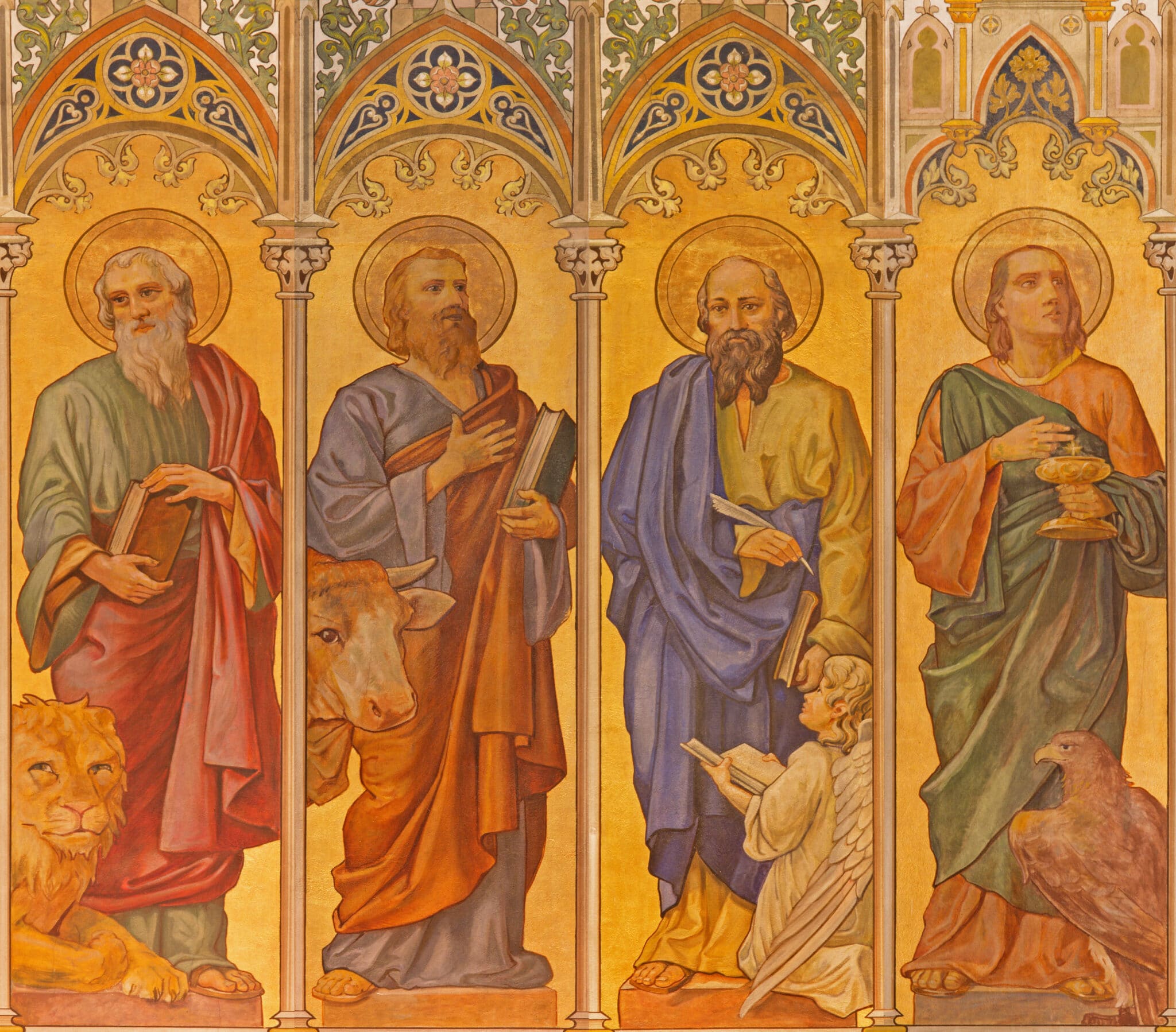
Matthew, Mark, Luke, and John

The Gospel According to Mark

The Gospel of Mark is the earliest written Gospel, and the best estimate is it was written around 70 CE. There are several lines of evidence to suggest this date. To begin with, it contains knowledge of the destruction of the Temple in Jerusalem, which occurred in the summer of 70 CE. The Gospel of Mark represents an early church leadership structure with an under-developed theology compared to that found later Gospel writings. Jesus is primarily depicted as an apocalyptic prophet and a suffering Messiah rather than the fully divine Son of God who is one with the Father.

We also know it was written before Luke and Matthew because each copies a significant amount of their Gospel from Mark. Matthew reproduces roughly 90% of Mark’s verses, while Luke preserves about two-thirds of them. In many cases, the wording is virtually identical. If the three Gospels represented completely independent eyewitness accounts, we would expect them to describe many of the same events but in their own unique language. Instead, entire paragraphs appear nearly word for word. The simplest conclusion is that both authors had a copy of Mark before them and used it as one of their primary written sources. Based on the above evidence, the Gospel of Mark fits in nicely as the earliest written Gospel with a date of about 70 CE – a full 40 years after Jesus’s death.

The Gospel According to Matthew

It’s fairly simple to provide a hard upper and lower limit when dating the Gospel of Matthew. We know it is written after Mark, providing a lower limit of around 70 CE. Ignatius of Antioch seems to be familiar with this Gospel, providing an upper dating limit of around 100-110 CE. The consensus of modern scholars is around 80-90 CE. This places it as written roughly 50 to 60 years after Jesus’s death.

As with the Gospel of Mark, the Gospel of Matthew contains knowledge of the destruction of the Temple in Jerusalem. It represents a more advanced church structure and theology than the Gospel of Mark, adding emphasis on Jesus as a divine authority. Mark was also used as a primary source when writing Matthew.  Approximately 90% of Mark’s verses appear here, many times word for word. The only way to have large sections in word for word agreement is if it was copied. 

The Gospel According to Luke

The Gospel of Luke was written about the same time as the Gospel of Matthew. The lines of evidence used to date it are also similar to Matthew. It contains knowledge of the destruction of the Temple of Jerusalem, it uses Mark as a primary source, and it contains a similarly advanced church structure and theology. Luke also begins by acknowledging that “many have undertaken to compile an account” before him. Rather than claiming to be an eyewitness, the author describes gathering traditions and written sources into an orderly narrative.

The Gospel of Luke is universally acknowledged as written by the same author as the Acts of the Apostles. The Acts describes the rapid expansion of Christianity through the Roman Empire, leading to the conclusion that the two-volume work was composed around 80-90 CE.

The Gospel According to John

The Gospel of John was the latest Gospel to be included in the New Testament, written around 90-100 CE. John’s Gospel is markedly different from the previous three. It includes a far more developed theology, suggesting decades of theological reflection within the early Christian movement. Jesus openly declares his divine identity, a theme that was completely absent in the earliest Gospel of Mark. John also refers to Judaism as “the Jews”, reflecting a sharp distinction between the Jewish and Christian communities. During Jesus’s life and shortly after his death, this distinction did not exist as Jesus and his followers were considered a sect of Judaism. 

The Gospel also presents a highly developed understanding of Jesus as the eternal Logos (“Word”) who existed before creation. This philosophical language shows the influence of decades of theological development and interaction with the wider Greco-Roman world.

Conclusion

Taken together, the four Gospels show a clear historical progression. Mark is the earliest and simplest account. Matthew and Luke build upon Mark while expanding both the narrative and the organization of the early church. John represents an even later stage, presenting a far more developed theology and a Christian community that had become increasingly distinct from Judaism.

The chronological gap between Jesus’s death and the writing of the Gospels is significant. Mark was written roughly forty years later, Matthew and Luke about fifty to sixty years later, and John perhaps sixty to seventy years after the events it describes. During those decades, stories about Jesus circulated primarily through oral tradition before eventually being written down by anonymous authors.

None of this necessarily means that the Gospels contain no authentic historical memories. Ancient traditions often preserve elements of genuine events. However, it also does mean they should not be approached as contemporaneous eyewitness reports. Instead, they are theological narratives produced by later Christian communities for a Christian audience that sought to explain who Jesus was and what his life meant. Understanding when the Gospels were written is therefore essential for distinguishing between the historical Jesus and the beliefs that developed about him over the course of the first century.

Further ReadingMisquoting Jesus by Bart Ehrman, The Gnostic Gospels by Elaine Pagels
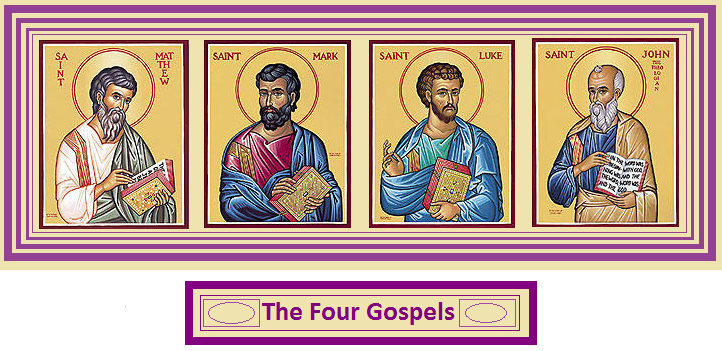
Who Wrote the Gospels?

The Christian Gospels are considered by Christians to be the Word of God; however, this idea breaks down spectacularly once anyone investigates deeply about who wrote them. A lot of Christians believe that the Gospels were written by the authors Matthew, Mark, Luke, and John. But the truth is there were all anonymously written, and it’s uncertain that any were written by the four authors adscripted to them. Let’s see why this is the case.

Matthew, Mark, Luke, and John

The Gospel According to Mark

The Gospel of Mark is the earliest written Gospel, and is attributed to John Mark, a disciple of the Apostle Peter.  The Gospel according to Mark, as with all four Gospels, are written in competent Greek prose by highly educated authors. This powerful theme covering all four Gospel authors strongly suggests they were not written by their traditional attributions. The Apostles and disciples of Jesus spoke Aramaic, were from the lower class, and like all lower-class peasants of the time were most likely illiterate.  While it is possible that Peter was associated with a highly literate Greek, it is highly uncertain and there are better reasons to doubt the claim than to believe it.

Additionally, the Gospel never claims to be written by Mark, never claims to be an eye-witness account, and is written in the third person that reads more like a collection of oral traditions rather than a memoir.  

Could the Gospel of Mark been written by Mark?  It’s possible but we have no way of knowing for sure one way or another.

The Gospel According to Luke

The Gospel of Luke is attributed to Luke, a traveling companion of Paul.  It is the most likely to be written by the author attributed to it, however by saying it is the most likely is not the same as saying that it is likely. As with the other four gospels it’s still anonymous, does not claim to be an eye-witness account, and was written in highly educated Greek prose.  It uses earlier sources such as the Gospel of Mark, many passages which were copied word for word. 

There is a striking curiosity with the Gospel of Luke. Paul’s letters contain very little portrayal of Jesus’s life.  Lukes Gospel is the opposite.  If they were both close companions, why such the stark difference in Information?  One should expect a lot of overlap from two people working closely together. 

The Gospel According to Matthew

The Gospel of Matthew is attributed to the Apostle Matthew, a former tax collector called upon to be a disciple of Jesus. This Gospel is certainly not written by Matthew. Around 90% of Matthew is copied from Mark, many times word for word. Why would Matthew, an eyewitness to the life of Jesus, copy word for word the account of Mark, who was not an eyewitness? Why not rely on your own memories and experiences?

It is also noteworthy that this Gospel refers to Matthew in the third-person. 

“Jesus saw a man called Matthew sitting at the tax booth” – Matthew 9:9

This Gospel reflects an older church structure, which is why scholars date its writing around 80-90 CE.  If Matthew was in his 20s or 30s during Christs ministry that would put his age around 80 of the writing.  Again, this is not entirely impossible, but unlikely. 

Applying Occum’s Razor, it requires a remarkable series of special explanations to believe that Matthew was the author of this Gospel.  Someone throughout the course of his life he would have had to learn Greek prose, a rarity for the lower class in the ancient world.  He would have had to live well into his 80s while maintaining sufficient cognition to write elegant Greek prose, while referring to himself in the third person. Yet this begs the questions, why did he have to rely word for word on a non-eyewitness account for much of his Gospel?

The Gospel According to John

The Gospel of John is attributed to the Apostle John. The Gospel of John is the latest written Gospel, likely around 90-100 CE.  This alone would put John at such an advanced age as to disqualify him as the author.  Could he have written this Gospel at 90 to 100 years of age?  Not impossible.  Could I hit the Powerball 5 times in a row?  This is also not a mathematical impossibility, but it’s also not the same thing as saying it’s probable.

The Acts of the Apostles describes John as “unlettered” meaning illiterate.  The Gospel of John is written in sophisticated Greek prose.  This is a glaring mismatch that would require us to assume, in the absence of evidence or good precedent, that John received a strong Greek education over the course of his adult life.

The Gospel also appears to have been written by a community, as it states, “we know that his testimony is true”. Who is “we”? It is the Johannine community that endorses this writing. The Gospel itself contains passages awkwardly connected and seems to have undergone multiple revisions.

The Anonymous Gospels

In the end, the traditional claim that Matthew, Mark, Luke, and John personally authored the four Gospels rests more on church tradition than on historical evidence. The texts themselves are anonymous, written decades after Jesus’s death, composed in educated Greek, and often rely on earlier written sources rather than firsthand testimony. While it is impossible to rule out the traditional attributions with absolute certainty, the evidence points in a different direction. The most reasonable conclusion is that the Gospels emerged from early Christian communities, preserving beliefs and traditions about Jesus rather than serving as direct eyewitness memoirs from the men whose names they later received.

Further Reading: Misquoting Jesus by Bart Ehrman, The Gnostic Gospels by Elaine Pagels
The Origins of Religion Part 5: The Benefits of Early Religion

We’ve seen that religion provided many beneficial functions for prescientific peoples such as providing a completed – even if inaccurate – a sense of cause and effect for phenomena they did not and at the time could not understand, and by providing moral and social order and stability at the dawn of human civilization. These functions were enabled and reinforced by performing rituals that supposedly evoked the powers of the supernatural.

Early Benefits of Religion to Society

Aside from those main functions religion also provided other supplemental benefits to our ancestors. In hunter-gatherer bands religion provided a rudimentary form of medicine, group identity, and prestige to the shamans and warriors who labored in the name of their gods. Many times religion provided legitimacy to these shamans and warrior rulers, increasing confidence from the group in their abilities and reducing strife within the group. As humans made the transition from hunter-gatherer bands to sedentary tribes, chiefdoms, and eventually city-states, religion provided an increasing role as a source of national identity for the group. The writings of the Ancient Egyptians, Greeks, the Hebrew Bible, and many other early religious sources clearly illustrate this point.

On the level of the individual, religion allowed people to have the perception of a greater sense of control over of their lives. An adequate amount of rainfall is necessary for crops to grow, but the amount of rain in a certain area during a given time is out of people’s control. By performing rituals to their gods, people at least felt like they had a sense of control over the weather, even if they didn’t. The same was true for warfare, diseases, and other things that may have been out of people’s control. In an uncertain and incomprehensible world, this added sense of control provided comfort, hope, and reassurance in many of its beliefs, for instance the comfort gained by the belief in the afterlife.

Religion appears to have been a cultural evolutionary necessity in allowing the transition from hunter-gatherer bands to modern nation states. Unfortunately it is a persistent vestige of the dawn of civilization that now creates more problems in the modern world than the superficial benefits that it currently provides.

Further reading: The World Until Yesterday by Jared Diamond; The Evolution of God by Robert Wright

The Origins of Religion Part 4: Social Order and Stability

The need for social order and stability became an urgent and novel problem for large groups of people after the invention of agriculture. Prior to the invention of agriculture, people lived in bands numbering a few dozen up to no more than a few hundred people, where everybody knew everybody else and decisions could be made collectively as a group. Once agriculture provided for surplus food production bands could increase in size from dozens of people to tens or hundreds of thousands of people. This was the most critical move that humanity has ever undertaken – removing us from our hunter-gather environment which human and prehuman ancestors evolved in for hundreds of thousands of years to placing us in large city-state environments with larger populations, divisions of labor, and everything else that came along with an agricultural society. Once of the most pressing problems then, was how to get people to cooperate with each other; in other words how not to steal possessions and women from people you didn’t know and were never going to see again and not to fight and kill those same people. Religion appears to have provided the earliest solution to this problem by coding for behaviors that their gods either punished or rewarded.

Providing for Social Order

Ten Commandments
The Ten Commandments

The patterns of ancient religions are illuminating. While the god and mythologies are largely random and a product of cultural drift, the practical themes to the functioning of society are more consistent – themes such as obeying the religion, not stealing, and not killing member of one’s own religion. Nearly all ancient religions codified these teachings in one way or another as most are familiar with the Ten Commandments of Judaism and Christianity.

Another way that religion provided social stability is that it worked to reduce anxiety and provided people with comfort in the face of uncertainty. For instance, starvation was serious concern at the dawn of agriculture when crop yields depended on the weather. A hurricane could wipe out most of the crops or a drought could kill most of the crops. When people have done everything in their control, the next step is to turn to religion – to resort to rituals, prayers, sacrifices to the gods, reading and interpreting omens, and so on. Although these actions are scientifically worthless, they at least gave people who knew nothing about science the feeling that they were in charge, in control, and made them feel less anxious and more comfortable about their futures. This function of providing comfort also applied to death, in providing an explanation for death, hope in the form of a pleasant afterlife, or a sense of justice that people who have wronged you in this life will be punished in their afterlife.

The origins of religion are quite different from the modern, institutionalized religion of today.  Putting all of these components and functions together in order to understand the benefits of religion will be the subject of the last part of this series.

Further reading: The World Until Yesterday by Jared Diamond; The Evolution of God by Robert Wright

The Origins of Religion Part 3: Rituals

It seems evident through the discoveries of anthropologists that early human hunter-gather societies used primitive religion as a means of explaining and understanding phenomenon in the natural world.  They did this by invoking supernatural beings and spirits and attributing human personality characteristics to them.  If these supernatural beings had the power to alter and influence worldly events and behaved similarly to humans, it’s logic to assume that they could be influenced by human actions as well.  Actions performed in order to appease these supernatural beings became ritualized.

Rituals

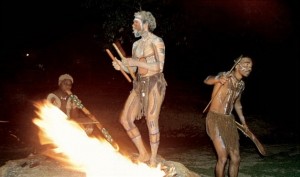
People Practicing a Ritual

Rituals were used extensively as Rites of Passage that mark a persons passage through certain cycles of life – birth, manhood, marriage, and death.  Rituals are not a unique human trait and it is very likely that ancient rituals came about as an outgrowth of animal rituals for mating, dominance, and the like – much like a bee’s intricate dance or a birds song.  In any case, death may have been the most influential rite of passage to early humans and ancestor worship was particularly common among early humans.  Rituals involving the death of a person have been observed even among the Neanderthals dating as far back as 40,000 years ago.  These rituals were used as a form of communication with the spirits of the dead and the afterlife.

That rituals – patterns of behavior – are used as communication devices provided the means to communicate with spirits in all sorts of realms in addition to the realm of the afterlife.  The spirits of the wind, the forest, the sea, and so on could be influenced by and communicated to through ritualized behavior.  Ritual also worked to bring cohesion, trust, and order to the social group.  Following the agricultural revolution, as human societies began to grow in size and complexity, exiting the hunter-gather state and forming chiefdom’s and eventually city-states, religion served the function of maintaining order, establishing social norms, and providing social control and divine legitimacy to the ruling elite.  It is these functions to which we turn our attention to next.

Further reading: Breaking the Spell by Daniel Dennett; The Evolution of God by Robert Wright

The Origins of Religion Part 2: Superstition and Spirituality

Having a complete sense of cause and effect helps people navigate through the world by being able to make accurate predictions as to the effects of actions and events.  In some cases, such as explaining cycling of the heavenly bodies, the changing seasons, harmful diseases, and even the movements and actions of living beings, early humans living in a prescientific world couldn’t complete their sense of cause and effect through natural processes. Instead they overcame that deficiency by evoking superstitions – a belief in supernatural causality.

Superstition

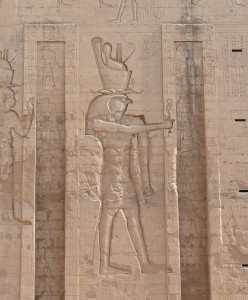
Horus
The Egyptian God Horus

Early religions personified these supernatural agents as souls, spirits, and eventually gods and these agents caused, intervened, and acted on worldly events.  In order to make these supernatural agents more meaningful and memorable a multitude of stories were built up around them.  Before the invention of writing, the stories of souls, spirits, gods and their deeds were passed down from generation to generation orally.  Eventually some of those stories were written down.  It is an exercise in futility to go through all of the gods that humanity has created since there have been tens of thousands of them.  We know today, of course, that all of them are imaginary.  As Richard Dawkins points out: “We are all atheists about most of the gods that humanity has ever believed in.  Some of us just go one god further.”

Spirituality

Superstition was supplemented by spirituality – a connection with the divine.  A connection with the divine was doubtless perceived through altered states of consciousness in states of dreams, hallucinations, and trances.  These altered states of consciousness helped lead to the widespread belief in the duel nature of beings – that the mind was separate from and could exist independently of the body.  This further implied the existence of a soul or spirit as an animating force that could be applied to people, and by logic also extended to other animals and plants, and even objects such as rocks, rivers, clouds and stars.

Sir Edward Tylor, the father of modern social anthropology, called this belief that nature had an animating soul or spirit animism, vaulting the hitherto obscure term to prominence in his 1871 book Primitive Culture.  He believed that animism was the first phase in the evolution of religions and argued that people originally used religion to explain phenomena in the natural world.  According to Tylor, animism easily answers many questions early humans had such as what happens when we dream.  Souls wandering out of the body in some cases, or neighboring souls visiting the body in other cases provided a plausible answer.

Invoking souls, spirits, and eventually gods allowed early humans to complete their sense of cause and effect about how the world worked.  This is not to say their sense of cause and effect was correct, but it was now at least complete.  With a complete set of beliefs about how the world supposedly worked, the next step was to try to begin to cooperate with and influence the world in order to achieve desired goals.  The methods thought to accomplish this task include rituals, prayer, and other means which we will look at next.

Further readingThe Dominate Animal by Paul and Anne Ehrlich; Breaking the Spell by Daniel Dennett; The God Delusion by Richard Dawkins; The Evolution of God by Robert Wright

The Origins of Religion Part 1: Cause and Effect

Religion is one of the most prevalent and influential aspects of human civilization and culture, yet the origins of religion remains shrouded in mystery to most people.  Nearly all societies across the globe in every recorded era have some sort of religion, worship a god (or gods), or possess a set of religious beliefs.  But… why?

People pour a great deal of time and energy into their religion with some willingly giving their life in the name of their sacred religion.  However, while nearly all groups of people have invented gods and the religious stories revolving around their gods, perhaps the most striking feature of religion is that these stories are wildly different. 

Consider the differing religious gods, stories, and teachings of the Norse, Greek, Roman, Persians, Hindus, Egyptians, Aztecs, Babylonians, Chinese, Indians, Christians, and Jews – to name a few of the thousands of religions and gods known through history.  These religions and gods have a few similarities, such as creation stories and stories about what happens after death, but their particulars are all very different.  So which religion is right, if any?  And how did these stories and gods come into existence?  A systematic inquiry into the evolutionary origins of religion can elucidate some understanding to those questions – and many others – regarding religion.

The Origins of Religion

Ancient Religion
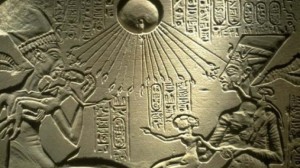
Ancient Sun-God Worship

Religion is a worldview and can be described as a set of beliefs about the causes, nature, and purpose of the universe.  Since human beings, and to a lesser extent all other animals, navigate the world by developing a set of cause and effect it would have been important for our ancestors to develop a sense of understanding about how our world worked.  Animals develop their sense of cause and effect in order to carry out tasks essential to their lives, such as where to find food, how to get mates, and how to avoid danger.  With the evolution of human intellect – the ability to have abstract ideas, to communicate those ideas through language, and to remember things from the past – people are able to perceive more about the world than other animals and therefore have a greater sense of cause and effect. This also meant we could ask more questions and attempt to answer them the best that we could given our knowledge and understanding of the world.

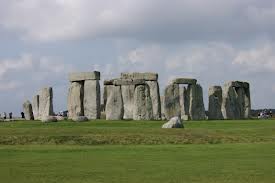
Stonehenge
Stonehenge

The primitive world of our ancestors was filled with dangers and its workings would have seemed confusing.  Cooperating with nature by knowing how certain things worked would have seemed vital to our survival. 

For instance, understanding why the Sun moved and how and why the seasons changed would have been important; understanding the weather would have been important; understanding why people got sick and diseased would have been important; understanding what caused the plants to grow and the animals to move would have been important, but how do you explain all of that?  Before the laws of motion and gravity were established; before plate tectonics and atmospheric and oceanic physics were explained; before microscopic germs, viruses, and bacteria were discovered; before the laws of thermodynamics, the process of photosynthesis and metabolic pathways were described; people had no clue as to the correct answers.  But people still needed answers to complete their sense of cause and effect so they could begin to understand how the world worked in an attempt to cooperate with it.

Cause and Effect in Practice

To take one example: noticing that the seasons change is important because when that happens we notice that some animals migrate at certain times of the year, plants grow and die at certain times of the year, and the temperature changes at certain times of the year.  When we draw connections between one thing and a second thing in the world – such as animals migrating when winter comes – we are creating relationships that complete our sense of cause and effect.  We can now better predict the effects of our actions on the world.  With human intellect, however, humans differ from other animals in that we not only notice that the seasons change, we can ask *why* the season changes.

Due to the relationship nature of causes and effects, it’s possible that knowing more about the first thing might help us understand more about the second thing.  So understanding why the seasons change might keep us from staving or freezing by helping us to better predict when the seasons will change.  People all over the world noticed these things and tried to answer the questions the best they could and they did it in the same basic manner – by invoking gods and spirits as causes to these unexplainable actions and events.  Thus in a prescientific world, the invention of religion with an accompanying set of beliefs about how the world works helped to complete a cause and effect understanding of the world for early human societies. Next, we’ll incorporate the role of the supernatural and spirituality into the origin of religion.

Further readingThe Dominate Animal by Paul and Anne Ehrlich; The Demon-Haunted World by Carl Sagan; The Magic of Reality by Richard Dawkins; Breaking the Spell by Daniel Dennett