In the late 1920s, the conceptual seeds of what would become the Big Bang theory were just beginning to emerge. At this time many scientists supported the Steady-State model. The discovery of Hubble’s Law by the American astronomer Edwin Hubble in 1929 added a significant piece of observational data in support of the expansion of the universe, a critical feature of the Big Bang Theory’s model. Hubble’s Law is the observation that galaxies are moving away from the Earth at speeds proportional to their distance away from the Earth. The further away a galaxy is from the Earth, the faster it is moving away.
The Cosmic Backdrop Before 1929
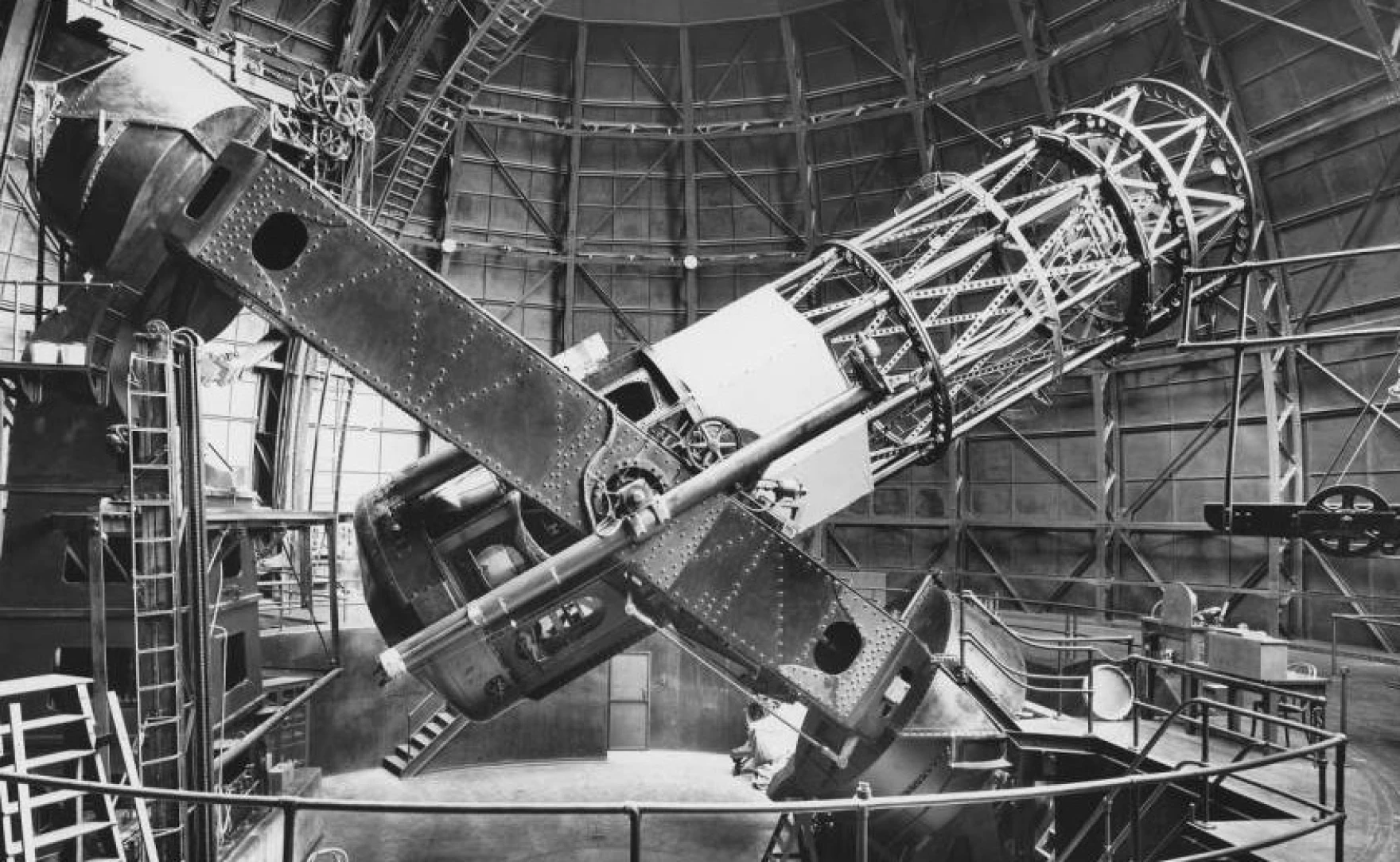
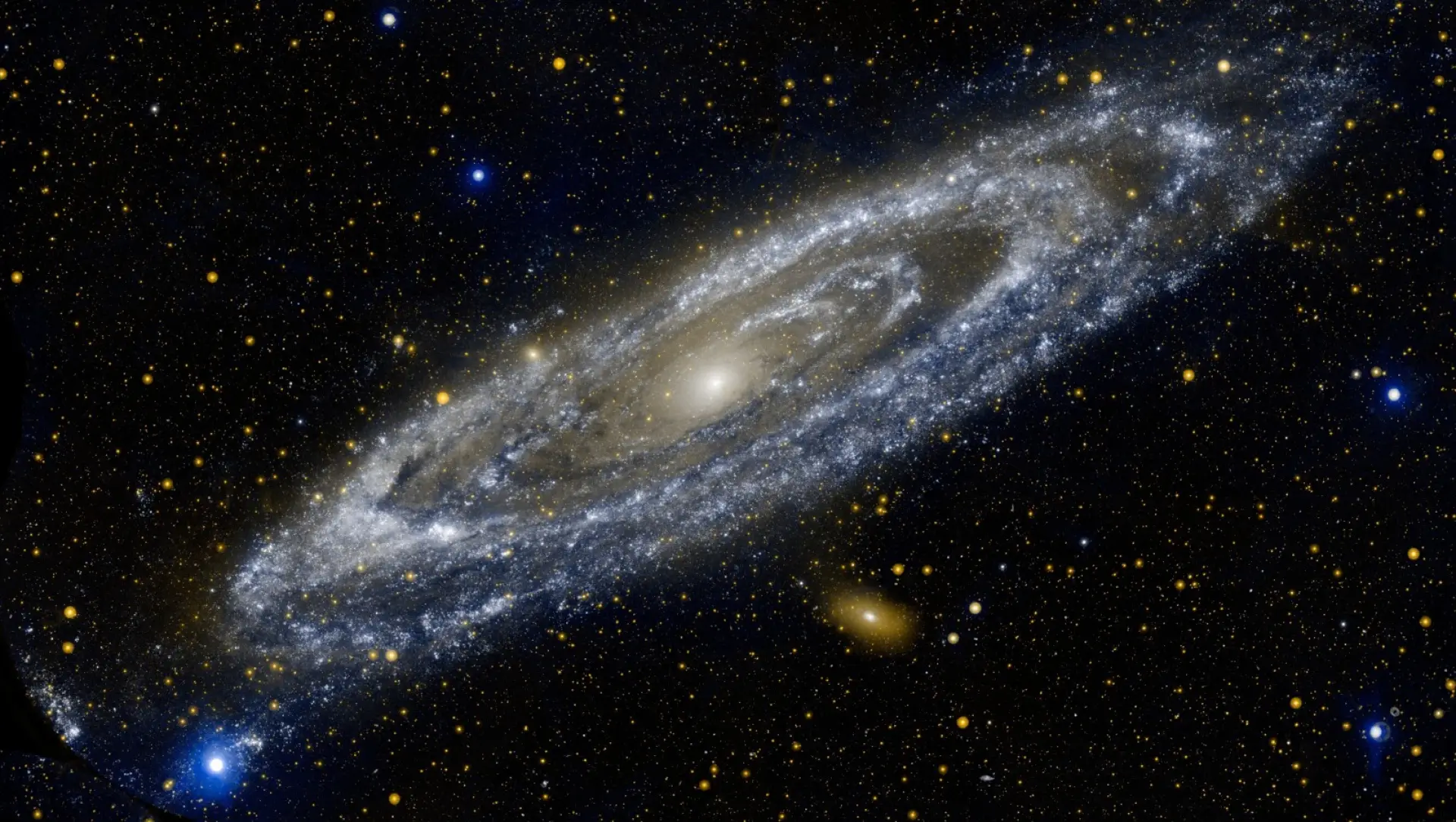
The early 20th century was a time of astronomical upheaval. For centuries, astronomers believed that the Milky Way galaxy was the entire universe. But in the early 1920s Edwin Hubble showed that this was not the case. Using the 100-inch Hooker Telescope at Mount Wilson Observatory in California, he identified Cepheid variable stars in the Andromeda Nebula. Using these stars as distant markers, he calculated their distance to be 900,000 light years away (later revised upwards to 2.5 million), and he was able to show the Andromeda was a separate galaxy. This realization increased the size of the universe from a single galaxy up to billions of galaxies. The known universe was now vastly larger.
Meanwhile, another astronomer, Vesto Slipher, had been measuring the spectra of spiral nebulae since 1912. He noticed that most of these nebulae showed a “redshift”, meaning their lights stretched toward the red end of the spectrum indicating that they were moving away from us. Since at the time nebulae were not thought to be other galaxies, Slipher did not realize the significance of his observations. By 1925, Slipher had measured redshifts for 42 galaxies, with velocities up to 1,800 kilometers per second.
Piecing the Puzzle Together: Velocities, Redshifts, and Distances
Hubble combined Slipher’s velocity data with his distance data and in 1929 he published his findings in the Proceedings of the National Academy of Sciences. Hubble discovered a rough but undeniable linear relationship between a galaxy’s redshift velocity and distance from Earth that could easily be plotted on a graph. The relationship can be written as v = H₀ d, with v as recession velocity, d as distance, and H₀ as the Hubble constant – a measurement of how quickly space is stretching.
(Credit: NASA)
Hubble’s law is sometimes referred to as the Hubble-Lemaitre Law because of the work of a Belgian priest and astronomer, George Lemaitre. In 1927, Lemaitre independently worked out Hubble’s law, arguing that the field equations from Albert Einstein’s General Theory of Relativity showed the universe is not static. To keep the universe static, Einstein added a coefficient he called the cosmological constant. Lemaitre went further, and he took some of the available redshift measurements, combined them with the available distant measurements, and noticed a linear trend between the two. However, his work was published in a little read French journal, so its impact was minimal, and Lemaitre opted to cite Hubble’s better and stronger data in giving credit to Hubble for the discovery of the law. After Hubble’s publication, Einstein abandoned his concept of a cosmological constant, calling it the “biggest blunder” of his career, although it’s been revived in recent decades to account for dark energy.
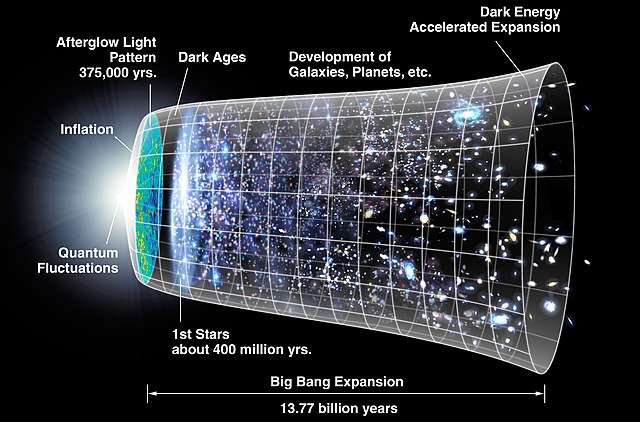
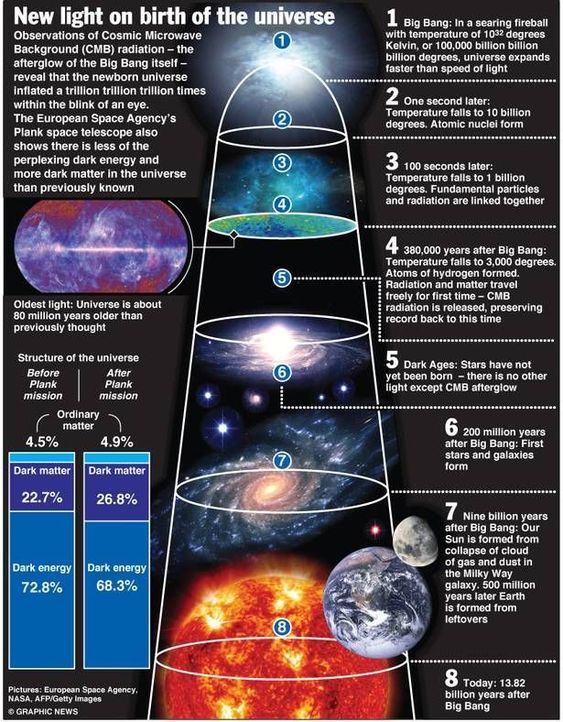
The implications of Hubble’s law are important. If galaxies are all expanding from each other, then rewinding time suggests they all more crammed together. Rewind time far enough, back to the beginning of the universe, and you arrive at a dense, hot beginning – the Big Bang.
Initial Skepticism and Hubble’s Legacy
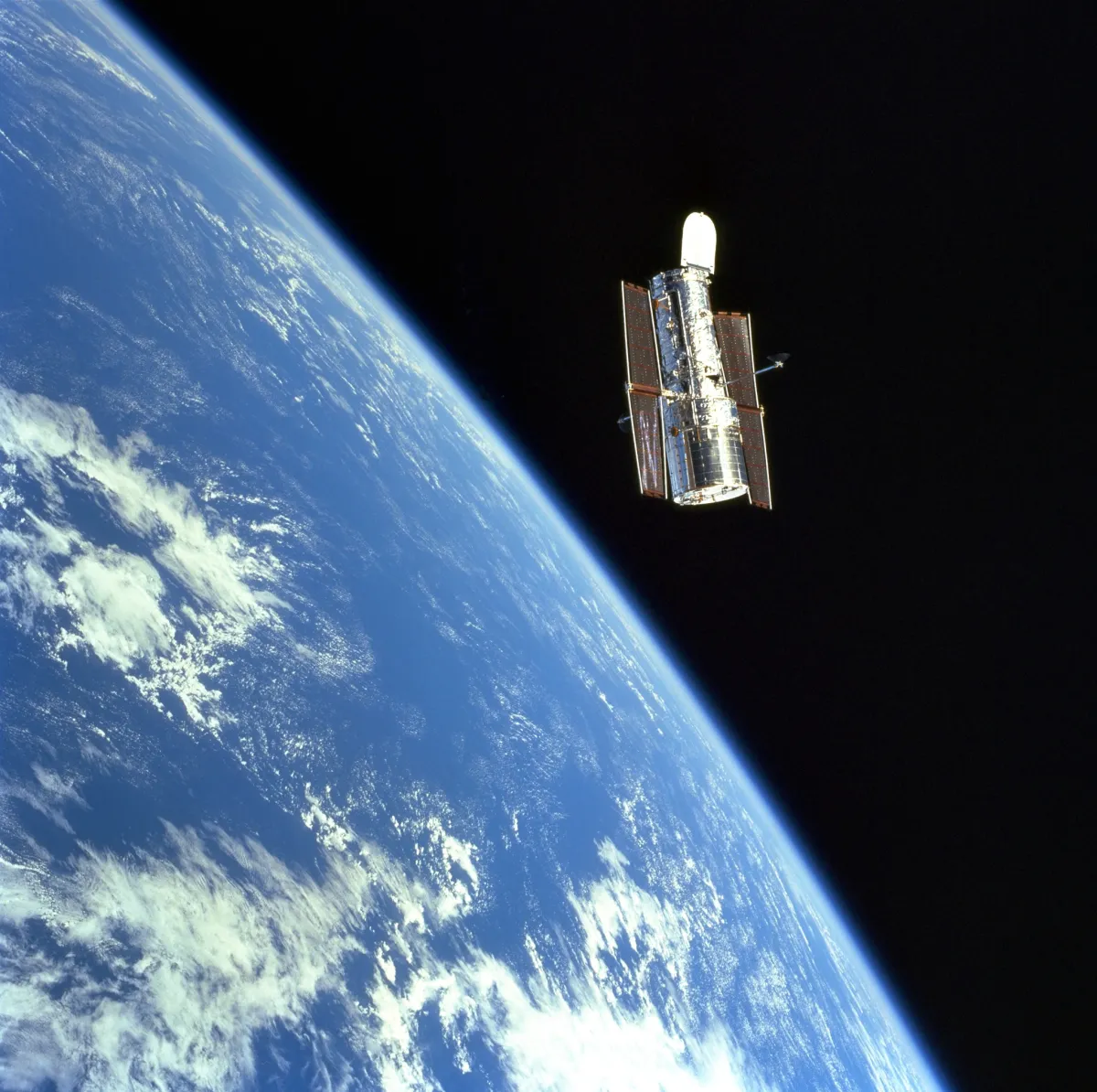
Hubble’s original value for his constant implied a universe younger than the Earth, puzzling scientists and shedding doubt on his results. Better telescopes, resulting in improved distance measurements, resolved this in the coming decades. Modern estimates place the Hubble constant near 70 km/s/Mpc, yielding an age of 13.8 billion years. The Hubble Space Telescope, launched by NASA in 1990 and named in his honor, has carried Hubble’s discovery into orbit, using Hubble’s law to map the expansion of the universe across billions of light-years.
(Credit: NASA)
Hubble’s 1929 breakthrough stands as one of astronomy’s greatest triumphs. Within a few years it elevated Georges Lamaitre’s previously ignored 1927 “Big Bang” theory from mathematical curiosity to mainstream cosmology. In the process it transformed our picture of reality from a static, island universe to the vast, to the expanding cosmos from a beginning that we know of today. Nearly a century later, Hubble’s Law remains the central pillar of observational cosmology.