Science was an exciting time in the 19th century, uncovering practical laws of electricity, heat, and more. The inner workings of the human body, however, remained largely mysterious. Few scientists other than Hermann von Helmholtz attempted to cross the boundaries between physics and physiology. Born on August 31, 1821, he investigated the physics of energy, measured the speed of nerve impulses, explored how humans see and hear, and invented an instrument that allowed physicians to look inside the living eye.
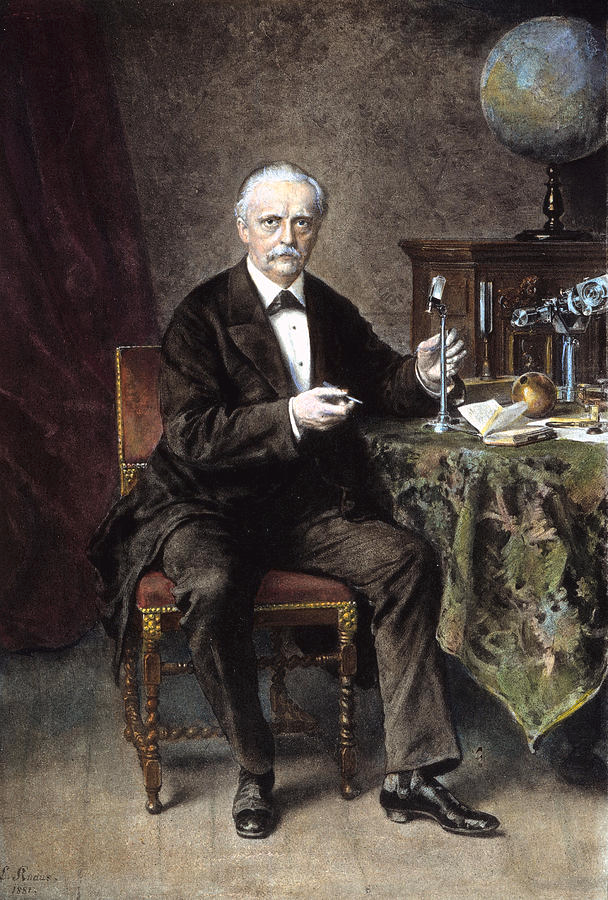
Helmholtz was originally trained as a physician, but he became one of the greatest polymaths of the century, making important contributions to physics, physiology, neuroscience, acoustics, and optics. In physics, his most important contribution involved the conservation of energy. In 1847, Helmholtz published On the Conservation of Force, arguing that energy could change forms, but not be created or destroyed. This work helped to establish the first law of thermodynamics, along with the work of others. He also brought measurement to the processes inside the body through his investigations on nerves, sounds and vision. In 1850 he invented the ophthalmoscope, an instrument that allowed physicians to look directly through the pupil and examine the retina and blood vessels at the back of the eye.
Few 19th century scientists moved as fluidly between disciples as Helmholtz did. He showed that the boundaries between disciples were less real than the underlying physical principles connecting them. Critically, he demonstrated that our biological functions could be investigated and explained by natural, physical laws. Our nerves, senses, muscles, and brains operate within the same principles as atoms, electricity, and energy – bringing us one step closer to understanding ourselves as part of nature and the universe.
Another day, another discovery. Browse the On This Day Archive.