Today, we know the speed of light travels at 299,792 kilometers per second in a vacuum – a very fast but finite speed. But for much of history, philosophers debated whether light took any time to travel at all. Maybe the speed of light was infinite and instantaneous? On September 30, 1676, the Danish astronomer Ole Romer provided the first compelling evidence that the speed of light travels at a finite speed.
Romer had been working in his Paris Observatory recording the timing of the eclipses of Io, one of Jupiter’s moons. After several years of recording this data, he noticed something interesting. When the Earth was closest to Jupiter in its orbit, they happened earlier. When the Earth was farthest away, the eclipses constantly lagged behind by as much as several minutes. Romer realized that when the planets were further apart, the light had to travel farther, and hence took longer to reach his telescope. On September 30, 1676, he made a prediction to the French Academy of Sciences that an eclipse expected in November would occur about ten minutes later than conventional calculations. The November 9th eclipse arrived roughly ten minutes late, just as Romer had predicted. Not everyone was immediately convinced of Romer’s reasoning, but some of the leading scientists of the day were including Christiaan Huygens and Issac Newton, and the idea eventually caught on.
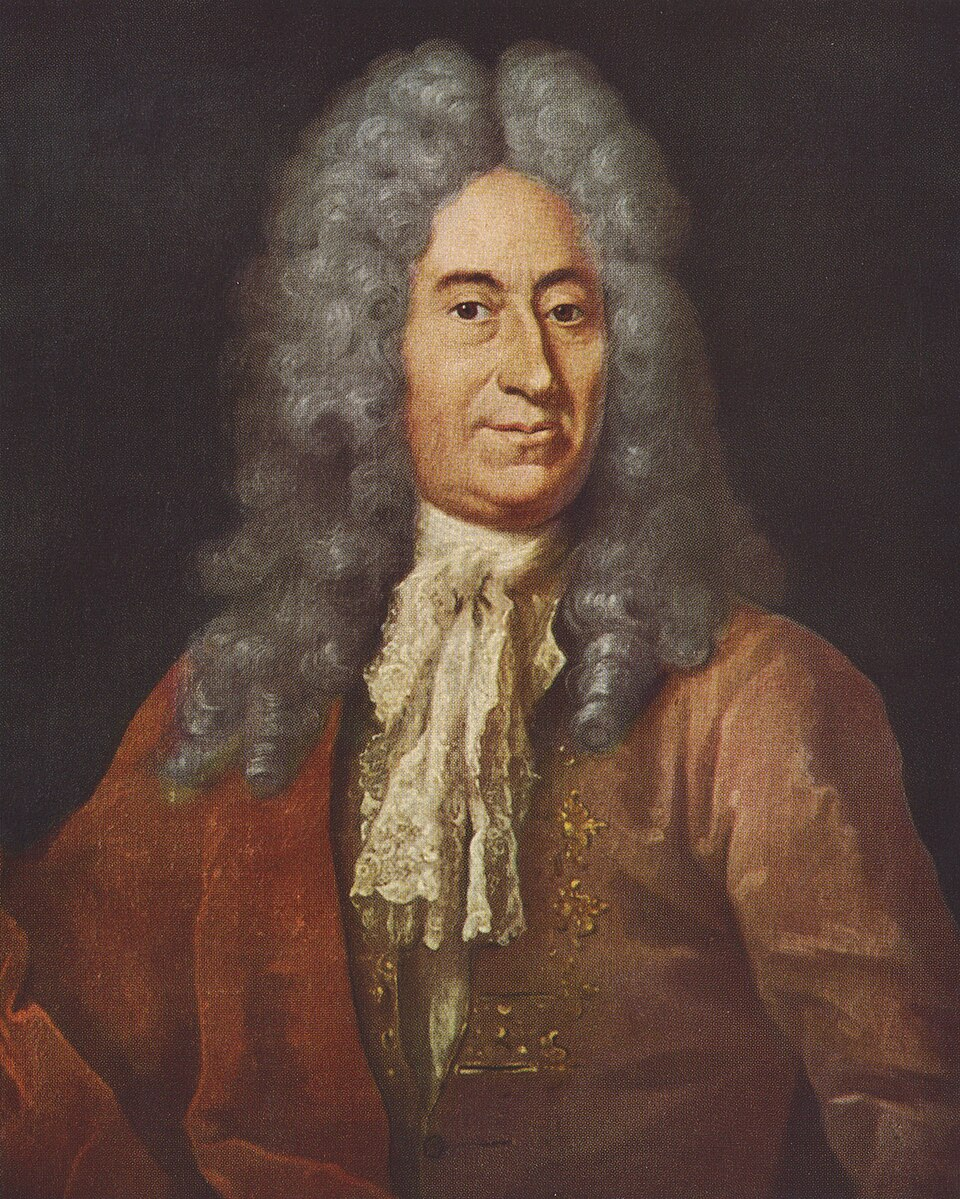
Portrait of Ole Romer, the first person to demonstrate that light travels at a finite speed
It was the first time in history that light had shown to be finite rather than instant. It was also a remarkable example of scientific ingenuity. Romer couldn’t time a beam of light with a stopwatch. Instead, he used a moon orbiting a planet as a clock, with the Solar System as his laboratory. It’s a perfect example to summarize the scientific process: careful observations, curiosity, and applying ingenuity to reveal a fundamental truth about the universe.
For those who like me who like learning about science, the science of learning should be an interesting topic. At one point, questions about learning, thought, and behavior were in the domain of philosophers. As science grew and expanded in knowledge, these questions came into the realm of science. Born on September 26, 1849, Ivan Pavlov was a key figure in this transition. His experiments on digestion with dogs led to his discovery of classical conditioning, a form of learning where an organism learns to associate one stimulus with another.
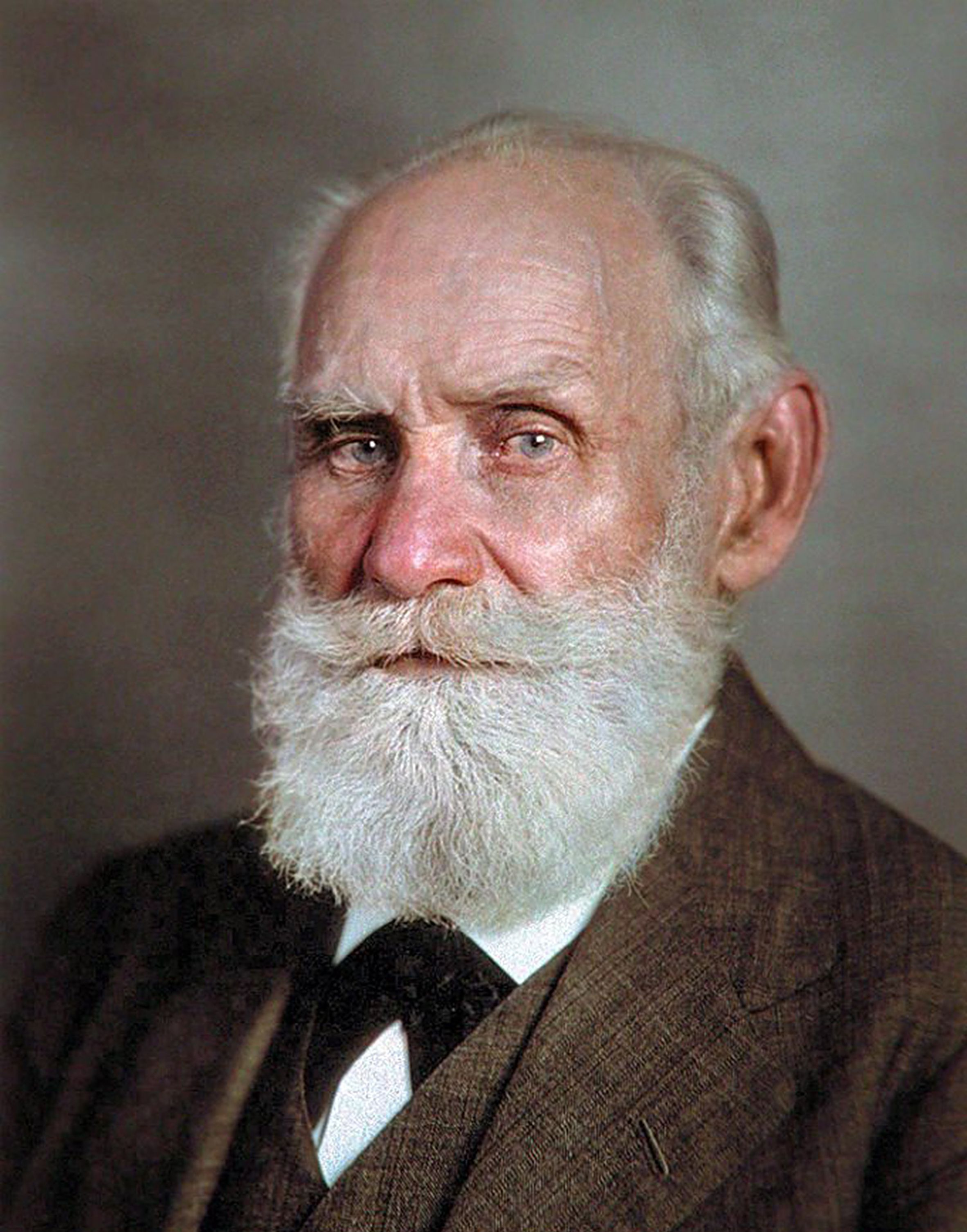
Ivan Pavlov
Pavlov came from a large family in Russia and was destined for a life in the clergy until his readings pulled him in the direction of the natural sciences instead. In 1870, he abandoned the seminary and enrolled in physics and mathematics at the University of St. Petersburg, eventually earning a medical degree. In 1904 he earned the Nobel Prize in Physiology or Medicine for his work on digestion. It was in the course of his research in this topic that he discovered what he is best remembered for – classical conditioning. During his work, Pavlov noticed that dogs started salivating not just at the sight or smell of food, but at once neutral cues that predicted the food was coming, such as the footsteps of a laboratory assistant. The popular version of this story is the ringing of a bell to make the dogs salivate in anticipation of food. In 1927 he published a book on his findings titled Conditioned Reflexes, which became a foundational pillar of behavioral science.
Pavlov’s experiments revealed how organisms learn from their environment. Sometimes, a response that seems automatic can be shaped by repeated associations from a stimulus in past experiences, even after the original stimulus disappears. Additionally, he showed that learning was not an invisible mystery beyond the reaches of science. It was a natural process that could be observed, tested, studied systematically, and understood.
For a professional athlete, serious injuries can derail or even end an entire career. For a pitcher in baseball, a torn ulnar collateral ligament (ULC) in the elbow was one of those types of devastating injuries. All of that changed on September 25, 1974, when orthopedic surgeon Dr. Frank Jobe performed an experimental procedure on Los Angeles Dodgers pitcher Tommy John.
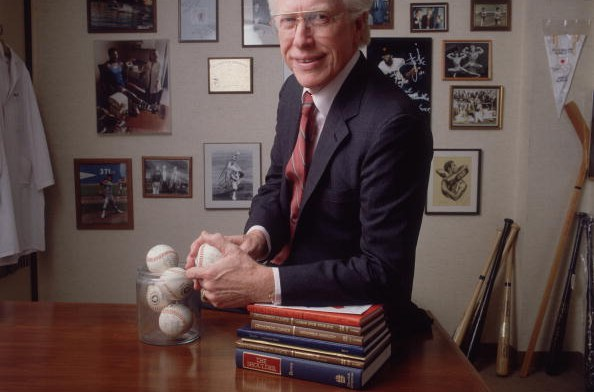
Dr. Frank Jobe, discoverer of Tommy John surgery
During the 1974 season, Tommy John had damaged his ULC in his pitching arm. The ligament helps to stabilize the inside of the elbow against the force when throwing a baseball. The standard treatment of the time was rest and rehabilitation, but this often was not enough for the repetitive stress of a major league pitcher and often meant the end of a career. John’s surgeon, Dr. Frank Jobe, proposed a radical solution for the time. He suggested he would reconstruct the ligament using a tendon from elsewhere in John’s body. This effectively created a replacement for the injured ligament. The operation had never been performed before on a major league pitcher and as Jobe recalls, he thought John had a low chance of ever pitching in the majors again. The rehabilitation period after the surgery lasted over a year, but in 1976 Tommy John returned to the majors to pitch again, continuing his career until 1989 and accumulating a remarkable 164 wins after the operation.
The procedure became known as Tommy John’s surgery and has since saved the careers of many pitchers, becoming one of the most successful procedures in sports medicine. With improvements in techniques and rehabilitation, the success rate is above 80% for today’s Tommy John surgeries. Additionally, it created an entirely new orthopedic possibility, spreading to shoulders, knees, and beyond.
Enormous sheets of ice over a mile thick once covering much of North America is a basic fact of Earth science. However, the idea that Earth’s past climate was once drastically different from the climate we have today is a recent concept. This idea is not obvious or intuitive and therefore required an accumulation of evidence to become gradually accepted before becoming an established fact of our planet’s history. Fortunately, these enormous glaciers disappeared without erasing the evidence of their existence.
Clues Left Behind by the Ice
Glacial striations (Credit: Tom Lowell)
The evidence of these enormous glaciers had been laying around for centuries. The most visible clue was rock – in this case called an erratic boulder. It was a large rock, sometimes as big as a house, sitting on top of something else: say granite perched on top of limestone. These were observed all over Europe but there was no explanation how they got there. The Biblical flood was proposed as an explanation, but in the early 18th century an alternative idea based on actual evidence was suggested by Jean-Pierre Perraudin. He noticed groves in the rock, called striations, which he thought were caused by glaciers that had since retreated. He shared the idea with the geologist Jean de Charpentier in 1815 who immediately dismissed it, only to come around to it years later.
Striations are reliable in showing which direction the ice flowed based on analysis from the rocks texture. Using this information, geologists could track erratic boulders back to their bedrock source. In other words, you could reconstruct the path the glaciers actually flowed. This could be done at enough sites where a pattern emerges of a continent-wide system of ice movement.
Louis Agassiz Makes a Surprising Proposal
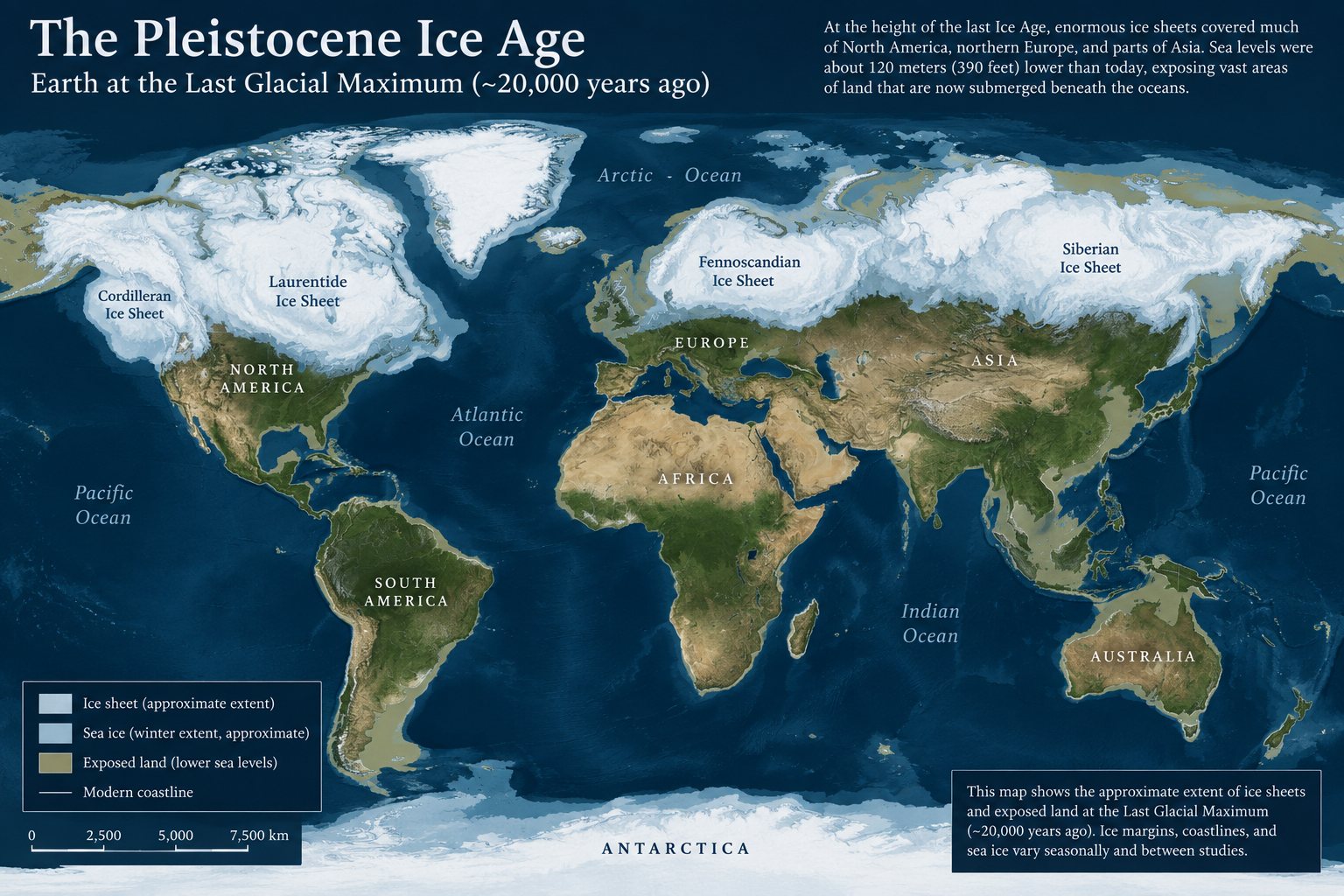
In 1836, the Swiss naturalist Louis Agassiz spent some time with Charpentier in Switzerland. Charpentier, along fellow Swiss Ignaz Venetz and the German botanist Karl Schimper likely convinced him of their glacial theories. On July 24, 1837 he presented at the Swiss Society of Natural Sciences his idea of the ice age: that the Earth had undergone a prolonged winter with huge sheets of ice covering much of the Northern Hemisphere.
A world map of the Pleistocene Ice Age at the last Glacial Maximum
The idea, as with most new and radical ideas in the history of science, was not initially well received. Additional evidence such as moraines – the piles of debris a glacier pushes ahead of itself, made the case stronger. Agassiz did field work, observing how real glaciers actually move. He personally pushed the idea for years, slowly converting other scientists who in turn convinced yet others. It took another 20 years for the scientific community to come around to what he’d proposed in 1837.
Ice Ages as we Understand them Today
Agassiz suggested that the much of the Earth was once covered in thick sheets of ice, but since then we’ve learned that these ice ages have happened several times in our planet’s history. Earth has experienced several major ice age periods in its history. Within an ice age, the climate varies between a glacial period, where the ice expands across the planet, and an interglacial period, where the ice retreats. We currently live in an interglacial period called the Holocene which began roughly 11,700 years ago. Not long after this period began agriculture was discovered and civilization as we know it began.
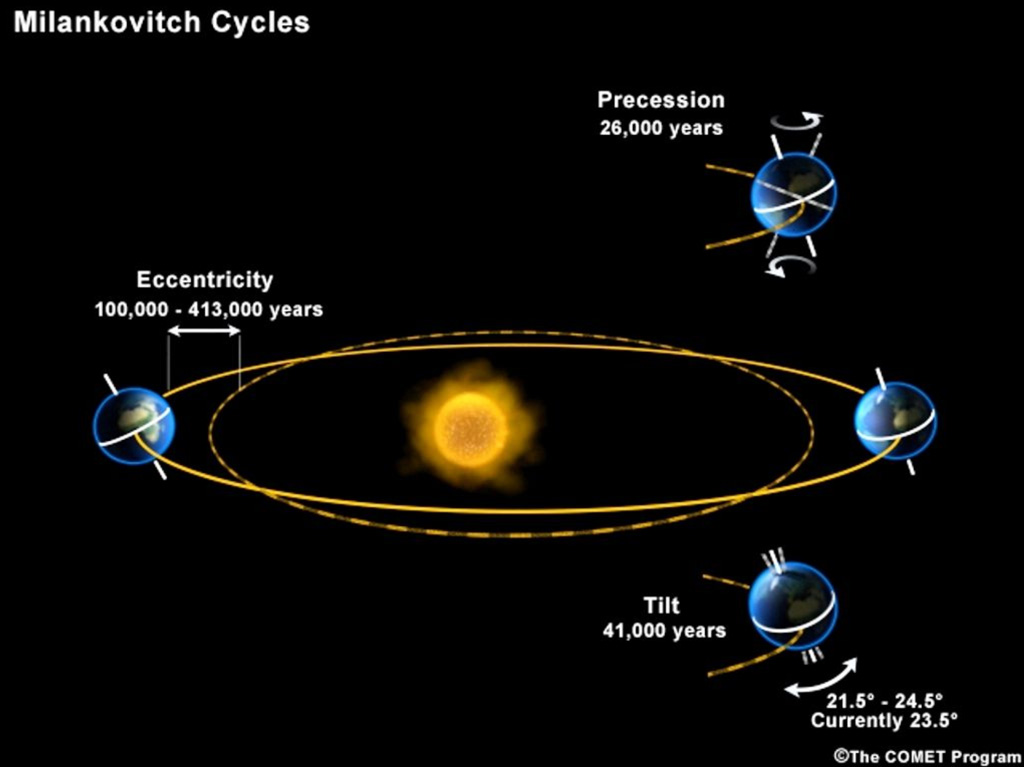
Illustration of the three Milankovic cycles (Credit: The COMET Program)
One of the last questions about ice ages to be answered was why the occurred at all. As early as the 19th century it was suggested that Earth’s orbit could influence the advance and retreat of ice. It wasn’t until the early 20th century when the Serbian mathematician and astronomer Milutin Milankovic developed the idea in much greater detail. Milankovic calculated that long term variations in Earth’s eccentricity (Earth’s orbit varies between more circular and more elliptical), obliquity (changes in the tilt of the Earth’s axis), and precession (the wobble of its rotational axis) alter the amount of sunlight reaching the Earth. Additionally, various positive and negative feedback loops, such as Earths albedo, either reinforce or diminish the effects of the varied sunlight. His theory unsurprisingly remained controversial until the 1970s when evidence from deep sea sediments showed that major climate changes closely followed his predictions. These orbital variations are now known as Milinkovic cycles and provide a powerful explanation for our planets ice ages.
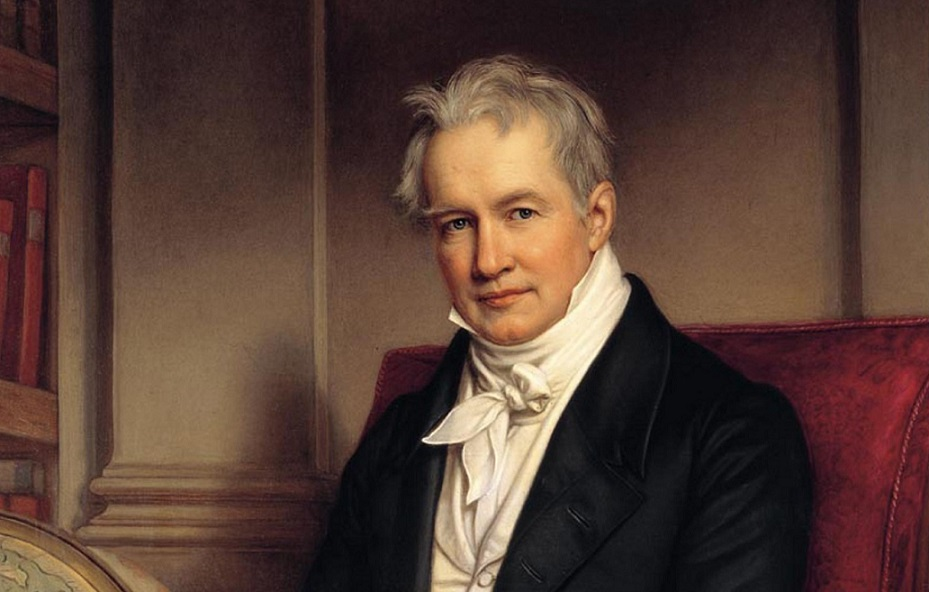
One of the key themes of this website is that everything is connected. Many times, people miss the forest – the big picture – for the single tree. But a forest consists of many different types of trees and other plants, which can determine which animals also live there. The climate also shapes the vegetation, the mountains shape the ecosystem, and changes in one part of the environment can ripple through the rest of the ecosystem. One of the first scientists to realize this was Alexander von Humboldt, born on September 14, 1769. He spent his life exploring the connections and relationships between climate, geography, geology, plants, animals, and human activity.
Alexander von Humboldt
Alexander von Humboldt was born into a wealthy Prussian family, developed an interest in naturalism, and became intrigued by voyages and exploration. In 1799, with the French botanist Aime Bonpland, Humboldt set out on a five-year expedition through Latin America that would shape the rest of his life. The two catalogued thousands of plant species and took thousands of measurements of temperature, altitude, atmospheric pressure, magnetism, and other natural phenomena. Crucially, Humboldt did more than record data, he thinking in systems and looking for connections between them. Humboldt spent his later years writing up his findings and producing an ambitious multi-volume work called Kosmos as an attempt to describe the entire physical universe as a single, interconnected system.
Humboldt died in Berlin in 1859, just short of 90 years old. By then, his influence has spread, inspiring Charles Darwin and his voyage aboard the Beagle. Today, his insights sit at the heart of ecology and Earth-systems science. His great contribution to science is the realization that the world is not a collection of isolated phenomena, but a web of relationships to be understood. Sometimes, we have to stop looking at the individual trees and start seeing the forest.
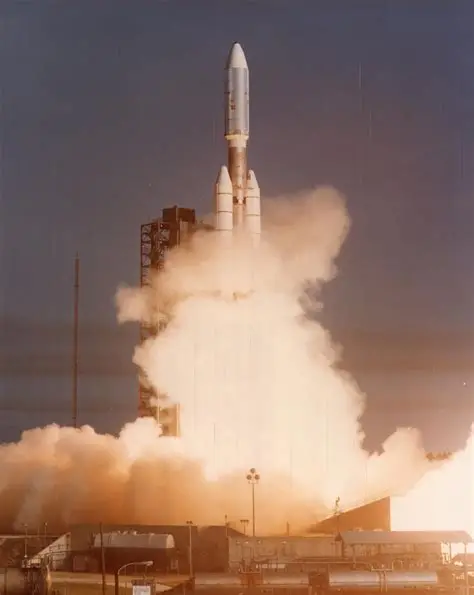
On September 5th, 1977, a spacecraft weighing less than a ton lifted off from Cape Canaveral, Florida and began a journey with no return. The first of two missions, Voyager 1 would encounter worlds no human had ever seen up close, and travel farther than any human-made object in history – eventually leaving the Solar System and heading into interstellar space.
Voyager 1 launched on September 5, 1977, from Cape Canaveral, Florida
Launched in 1977, the Voyager program was an ambitious mission designed to explore the boundaries of the Solar System and beyond. Voyager 1 first major destination was Jupiter, where it reached in 1979. It provided detailed observations of Jupiter’s atmosphere, magnetic field, rings, and moons. The following year it reached Saturn where it observed its rings and numerous moons and made a particularly close encounter with Titan. The spacecraft continued its journey away from Earth and in 2012 it crossed the heliopause and entered interstellar space, becoming the first human-made object to accomplish that incredible feat. Voyager 1 also carries on of humanity’s most remarkable messages: the Golden Record. This record contains images, music, natural sounds, and greetings representing various human cultures and was included on the spacecraft for the unlikely possibility that an alien civilization might someday find it.
The launch of Voyager 1 represents one of the greatest triumphs of science. Centuries of discoveries in a multitude of scientific disciplines gave humanity the capability of constructing a machine capable of traveling billions of miles to the edge of the Solar System and beyond. It’s a testament to what we can accomplish when curiosity is combined with the scientific enterprise.
For most of human history and civilization we have lived without electricity – a point which I repeatedly remind my wife and which she surely is sick of hearing by now. Nevertheless, all of the benefits of electricity have arrived to humanity within the last 150 years. By the late 19th century, scientists and inventors had learned how to generate electricity and produce practical lighting. The trick was how to deliver it to an entire city. On September 4, 1882, Thomas Edison’s Pearl Street Station began supplying electricity to customers in lower Manhattan, becoming the first permanent, commercial electric generating station in the United States.
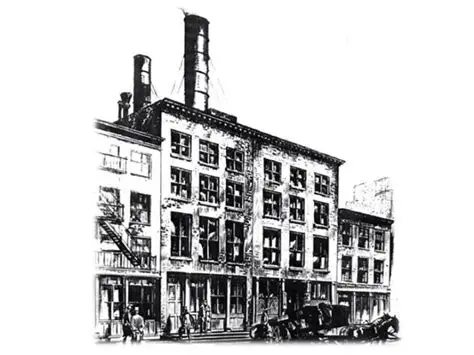
Pearl Street Station
The power plant generated electricity by burning coal and initially powered around 400 lamps to 82 customers. Although impressive for the time, the area it covered was small by today’s standards totaling roughly one quarter of a square mile. Six massive generators nicknamed Jumbo Dynamos produced direct current electricity that traveled through underground copper wires to the nearby buildings. The achievement was remarkable because Edison and his team did not succeed in producing just another device – it produced a system. The generators produced electricity, the underground cables distributed it, the meters measured the consumption, and the incandescent lamps converted the electricity into light.
The Pearl Street Station represents an important lesson in the history of science and technology: discovering the lasts of nature is only the beginning. The next important challenge is transforming that knowledge into something capable of improving everyday life. Within a few generations, electricity would revolutionize nearly every aspect of human life.
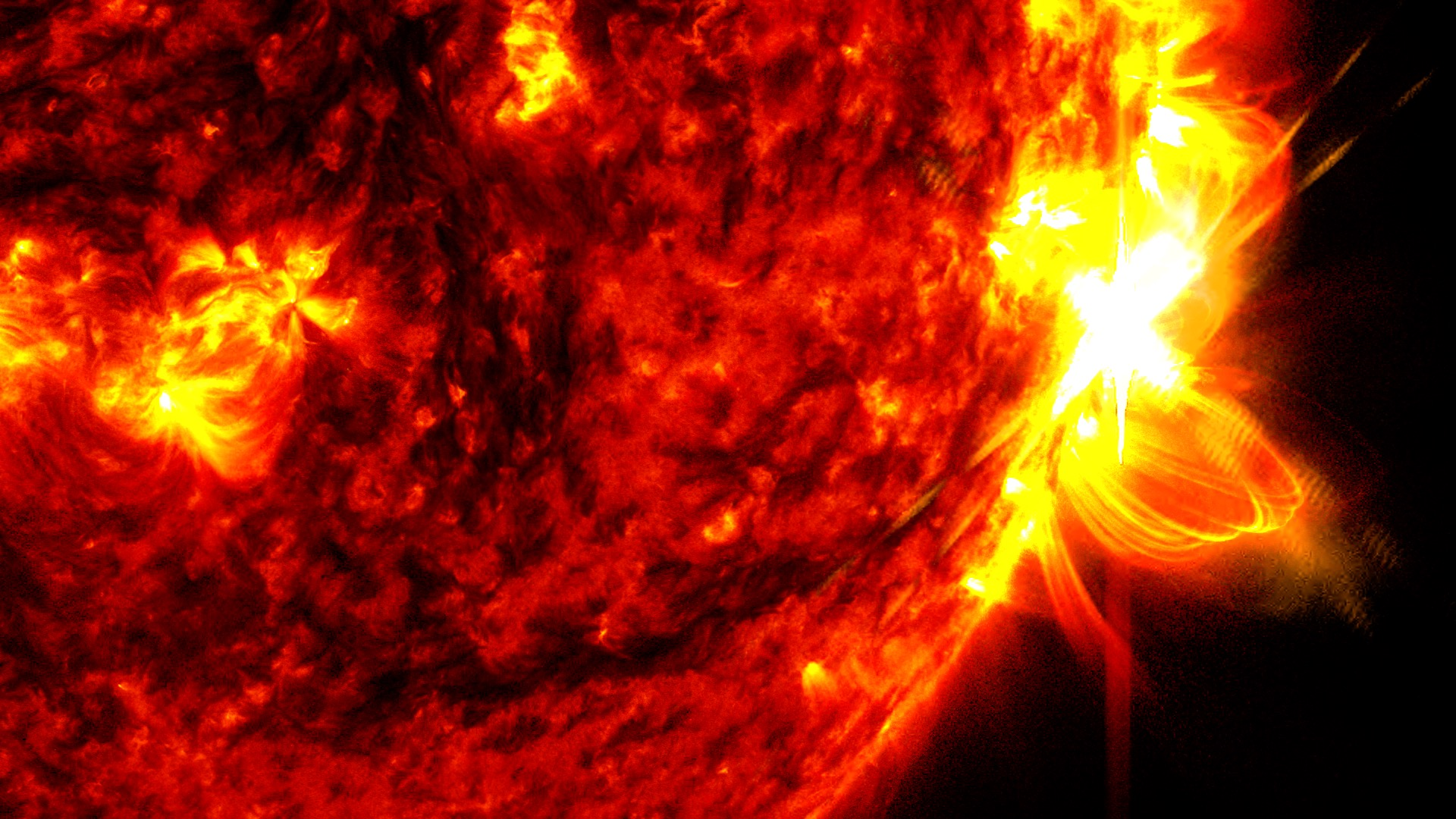
From 93 million miles away, the Sun can appear calm and unchanging to the naked eye. Appearances can be misleading, as the Sun is a violent star capable of hurling enormous eruptions of particles and energy into space. On the morning of September 1, 1859, the first dramatic demonstration of this happened when Richard Carringon observed and recorded the first solar flare. It was the beginning of one of the most powerful solar storms in recorded history.
Solar flare captured by NASA’s Solar Dynamics Observatory (Credit: NASA/SDO)
The morning of September 1 was clear when Harrington climbed into his private observatory on his country estate to observe and sketch sunspots. As he was watching, and without warning, two intensely bright white lights erupted from the sunspot group. He had just become the first human to record a solar flare. Another astronomer named Richard Hodgson independently observed it. Within hours, strange effects began to appear on Earth. The telegraph network began behaving strangely – currents caused equipment to spark, shocked operators, and disrupted communications. The following night, brilliant auroras illuminated huge portions of the night sky across the planet. Scientists began to realize there was a connection with the flares and these strange phenomena. It became known as the Carrington Event and helped to establish that activity on the Sun could directly influence the Earth’s magnetic environment.
Modern researchers believe the Carrington Event was at least twice as intense as any other geomagnetic storm in the past 500 years. In 1859, the world’s electrical equipment consisted of some telegraph wires. The scene is much different today, with much of civilization dependent on the electrical grid and telecommunications. A storm like that today could cost significant damage, cost and disruption to modern life. The Carrington Event is a reminder that the Earth is part of a much larger system, with hidden connections to seemingly unrelated events all around us.