On This Day, August 18: Discovery of Helium

The Sun was worshipped long before it was understood. From the Egyptian god Ra to the Greek god Helios, civilizations across the world regarded the Sun as a divine force, responsible for warmth, light, and even life itself. A few thousand years later, scientists would discover what the Sun is actually made of, when a new element was discovered in the heavens before it was discovered on Earth. On August 18, 1868, astronomer Pierre Janssen analyzed the Suns spectrum during a solar eclipse where he discovered an unknown element that he named Helium, after the Greek god Helios.
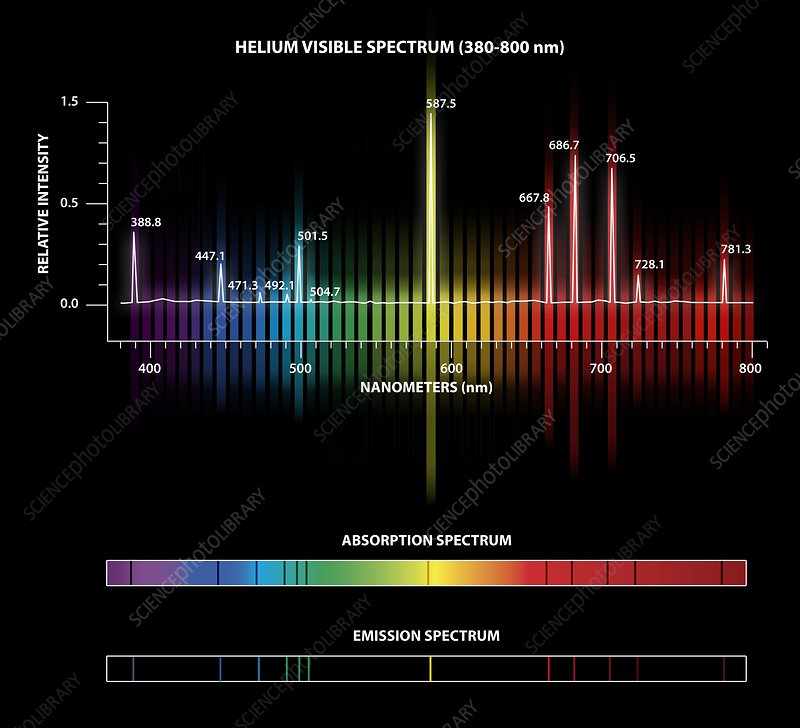
Helium emission and absorption spectra

Janssen made his discovery using a technique called spectroscopy that separates light into its component wavelengths. When elements absorb or emit light, the produce distinctive spectral lines that can be thought of as an elemental fingerprint. By observing and studying the patterns, the chemical composition of an object can be determined without ever actually touching it. While observing the Sun during a solar eclipse while traveling in India, Janssen noticed a yellow wavelength that did not match up with any known element. He soon submitted his findings to the French Academy of Sciences on the same day as the English astronomer Norman Lockyer independently submitted similar report, and the two share credit for the discovery of helium. It wasn’t until 1985 when the Scottish chemistry William Ramsay successfully isolated helium on Earth.

The discovery of helium illustrates the power of science. We did not need to travel to the Sun to discover the element, but rather by understanding the laws of light and matter we were able to discover the element 93 million miles away.

Another day, another discovery. Browse the On This Day Archive.
On This Day, August 28: Enceladus Discovered

By the late 18th century, telescopes were growing larger and more powerful, allowing astronomers to peer deeper than every into the universe. Few people pushed this technology further than William Herschel, who constructed some of the largest telescopes of his age. On August 28, 1789, while observing Saturn during the first use of his enormous 40-foot reflecting telescope, the largest of its time, Herschel discovered a tiny moon we now call Enceladus. It would take two more centuries to learn that beneath its frozen surface lies a vast ocean, making it one of the most interesting worlds in our Solar System.

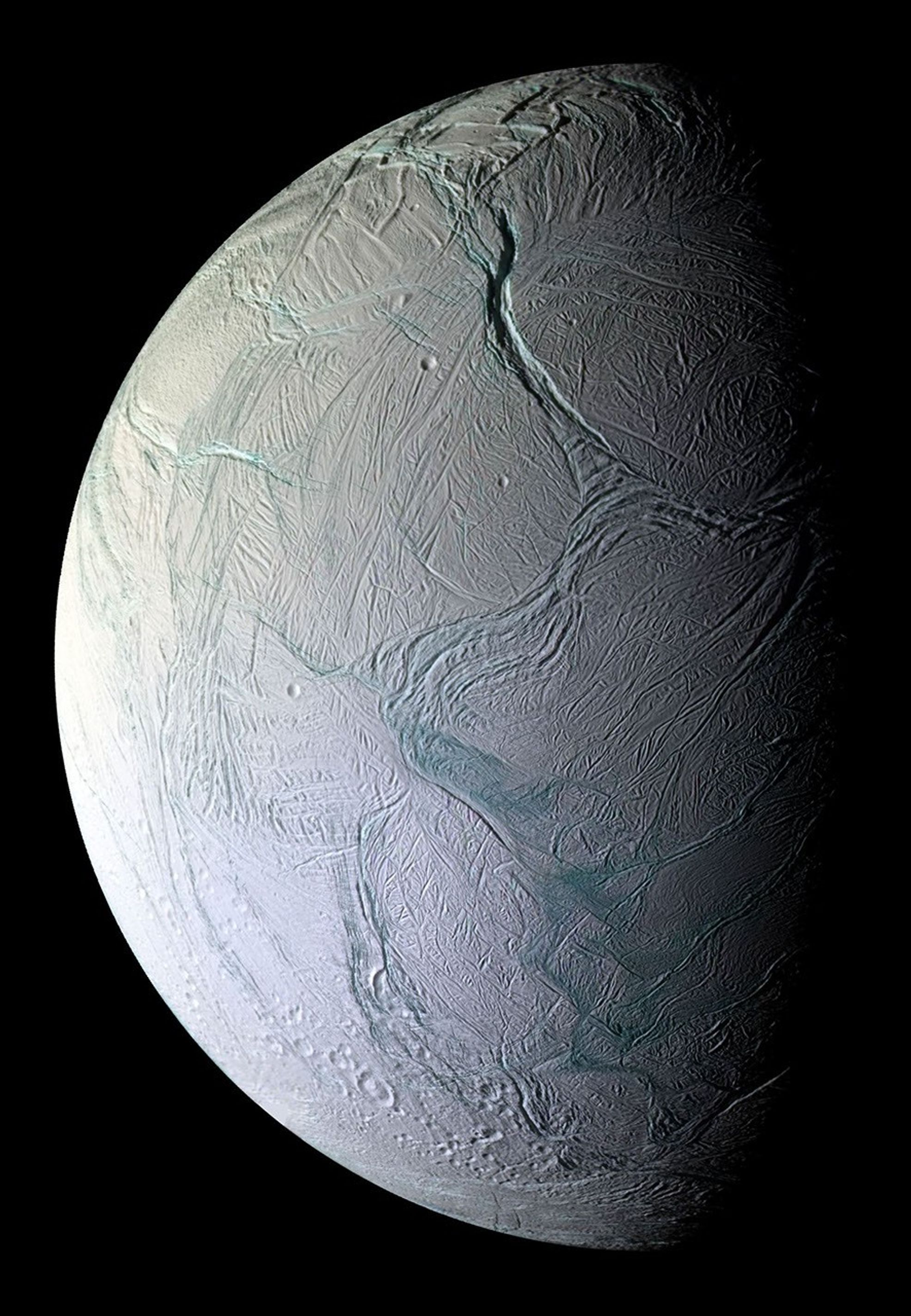
A mosaic of Enceladus created with images captured by NASA’s Cassini spacecraft
(Credit: NASA)

By 1789, Herschel was already one of the worlds most accomplished astronomers. Eight years earlier he discovered Uranus, the first planet to be discovered with a telescope, dramatically expanding the boundaries of our Solar System. He had just completed his famous 40-foot reflecting telescope and was using it to study Saturn when he noticed a fait point of light close to the planet. Careful observations showed it was moving with Saturn and was an unknown moon, later named Enceladus. Little was known about the tiny moon of about 310 miles in diameter until the Voyager missions flew by in 1980 and 1981. But the big discovery came in 2005 when the Cassini spacecraft revealed water vapor erupting from its south pole.  Subsequent observations showed that beneath its frozen crust lies a global liquid water ocean. Samples of the water vapor collected and measured by Cassini have found many of the chemical ingredients needed for life. 

Whether anything lives in the underground dark ocean of Enceladus remains a mystery to modern science. Future missions may provide a definitive answer. If life is discovered swimming beneath the ice of Enceladus, Herschel’s discovery will be remembered not simply as the discovery of another moon, but humanity’s first glimpse of another living world.

Another day, another discovery. Browse the On This Day Archive.