On This Day, July 27: Insulin Isolated

Every so often a medical breakthrough can be credited with saving millions of lives. Prior to 1922, a diagnosis of Type 1 diabetes was practically a death sentence, with nearly 100% of children dying within a few months to years of diagnosis. The discovery and isolation of insulin by Canadian surgeon Frederick Banting and medical student Charles Best on July 27, 1921 changed that reality, resulting in a revolutionary medical breakthrough.
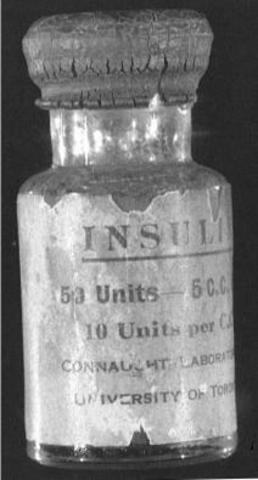
Insulin produced by Connaught Antitoxin Laboratories

Banting and Best were working in a laboratory at the University of Toronto under the guidance of J. R. Macleod, where for months they had been experimenting with extracts from the pancreas. They knew the pancreas contain a substance capable of regulating blood sugar, and after painstaking work, they succeeded in extracting insulin from a healthy dog to treat another dog with diabetes. The next step was to treat diabetes in humans. On January 11, 1922, a 14-year-old boy was the first person to receive and insulin injection to treat diabetes. After some initial adjustments and with the help of biochemist James Collip, the boys’ condition improved. Within a few years, insulin was being produced on a large scale, transforming diabetes from a fatal disease into a manageable condition.

By 1923, insulin was being used around the world and Banting and Macleod were awarded the Noble Prize in Physiology and Medicine. Banting shared his prize money with Best and Macleod shared his prize money with Collip, recognizing the collaborative process. More than a century later, insulin continues to save millions of lives every day. 

Another day, another discovery. Browse the On This Day Archive.
On This Day, July 26: Syncom 2 Launch

Humans are a social species, and communication has always shaped the course of history. The development of language sets us apart from all other species. Over the millennia, communication has expanded to include smoke signals, writing, the telegraph and the telephone, with each advance in technology transforming the scale at which we communicate. On July 26, 1963, another milestone was reached when NASA launched Syncom 2 – the world’s first geosynchronous communications satellite.

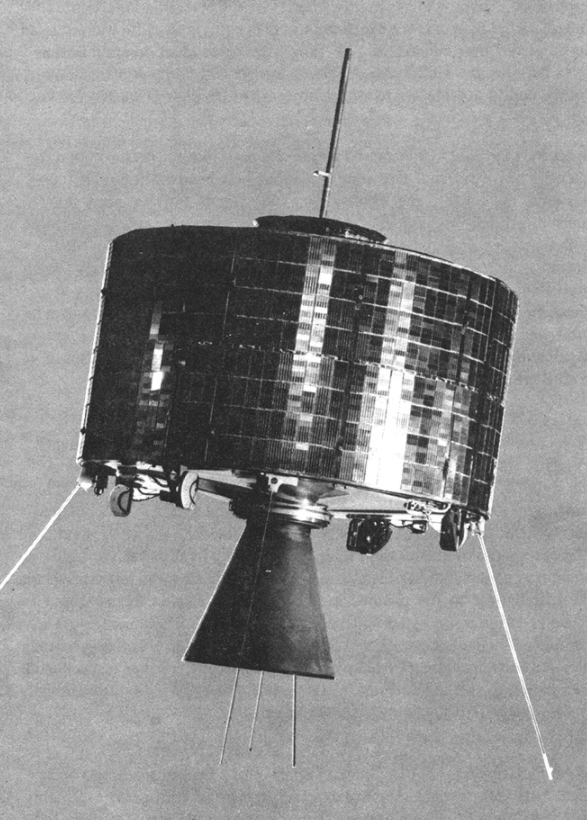
Syncom 2 - the world's first geosynchronous satellite
Syncom 2 – the world’s first geosynchronous satellite

Before satellites, long distance communication relied on underwater cables and networks of land-based radio stations. Satellites orbiting high about the Earth provided a better engineering solution. Orbiting approximately 22,300 miles above the Earth’s surface, Syncom 2 was the second of three experimental satellites, however it had a special distinction. It was the first geosynchronous satellite, meaning it matched the Earths 24-hour orbit, allowing it to remain fixed over a specific location. Syncom 2 successfully transmitted telephone signals and other communications, demonstrating that satellite technology worked.

In 1963, President John F. Kennedy telephoned the Nigerian Prime Minister, Abubakar Balewa, in the first two-way call between heads of states by satellite. The success of Syncom 2 paved the way for all future satellite telecommunications including GPS, the internet, and global television broadcasting. Today we take all of these communications for granted, a reminder of how seamlessly integrated scientific advancements can become integrated into modern society.

Another day, another discovery. Browse the On This Day Archive.