For a professional athlete, serious injuries can derail or even end an entire career. For a pitcher in baseball, a torn ulnar collateral ligament (ULC) in the elbow was one of those types of devastating injuries. All of that changed on September 25, 1974, when orthopedic surgeon Dr. Frank Jobe performed an experimental procedure on Los Angeles Dodgers pitcher Tommy John.
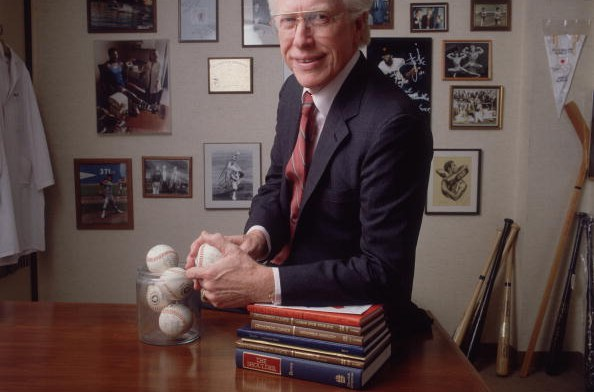
During the 1974 season, Tommy John had damaged his ULC in his pitching arm. The ligament helps to stabilize the inside of the elbow against the force when throwing a baseball. The standard treatment of the time was rest and rehabilitation, but this often was not enough for the repetitive stress of a major league pitcher and often meant the end of a career. John’s surgeon, Dr. Frank Jobe, proposed a radical solution for the time. He suggested he would reconstruct the ligament using a tendon from elsewhere in John’s body. This effectively created a replacement for the injured ligament. The operation had never been performed before on a major league pitcher and as Jobe recalls, he thought John had a low chance of ever pitching in the majors again. The rehabilitation period after the surgery lasted over a year, but in 1976 Tommy John returned to the majors to pitch again, continuing his career until 1989 and accumulating a remarkable 164 wins after the operation.
The procedure became known as Tommy John’s surgery and has since saved the careers of many pitchers, becoming one of the most successful procedures in sports medicine. With improvements in techniques and rehabilitation, the success rate is above 80% for today’s Tommy John surgeries. Additionally, it created an entirely new orthopedic possibility, spreading to shoulders, knees, and beyond.
Another day, another discovery. Browse the On This Day Archive.