Humans are a social species, and communication has always shaped the course of history. The development of language sets us apart from all other species. Over the millennia, communication has expanded to include smoke signals, writing, the telegraph and the telephone, with each advance in technology transforming the scale at which we communicate. On July 26, 1963, another milestone was reached when NASA launched Syncom 2 – the world’s first geosynchronous communications satellite.
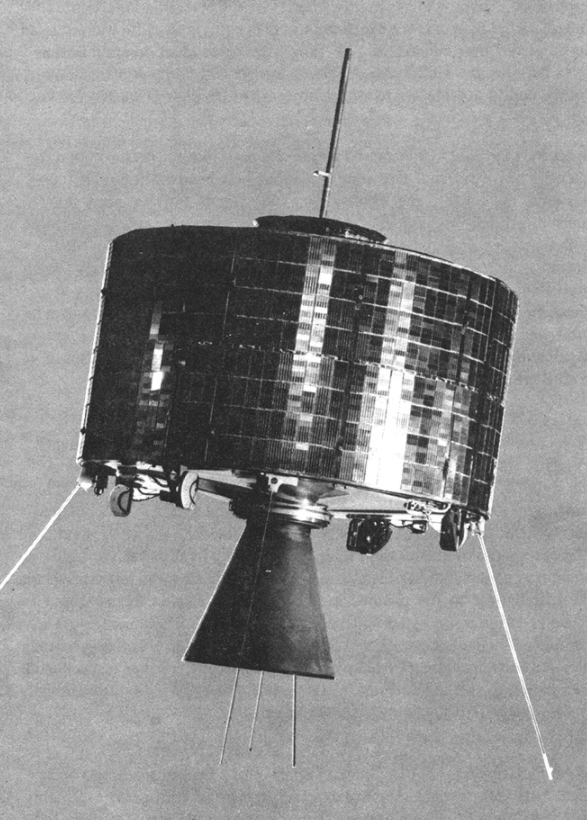
Before satellites, long distance communication relied on underwater cables and networks of land-based radio stations. Satellites orbiting high about the Earth provided a better engineering solution. Orbiting approximately 22,300 miles above the Earth’s surface, Syncom 2 was the second of three experimental satellites, however it had a special distinction. It was the first geosynchronous satellite, meaning it matched the Earths 24-hour orbit, allowing it to remain fixed over a specific location. Syncom 2 successfully transmitted telephone signals and other communications, demonstrating that satellite technology worked.
In 1963, President John F. Kennedy telephoned the Nigerian Prime Minister, Abubakar Balewa, in the first two-way call between heads of states by satellite. The success of Syncom 2 paved the way for all future satellite telecommunications including GPS, the internet, and global television broadcasting. Today we take all of these communications for granted, a reminder of how seamlessly integrated scientific advancements can become integrated into modern society.
Another day, another discovery. Browse the On This Day Archive.