On This Day, July 18: Birth of John Glenn

When John Glenn was born on July 18, 1921, humanity had barely begun to master flight. The first manned flight had occurred less than two decades ago and a flight beyond Earth’s atmosphere must have seemed more like science fiction than science reality. But four decades later that would become reality for John Glenn.

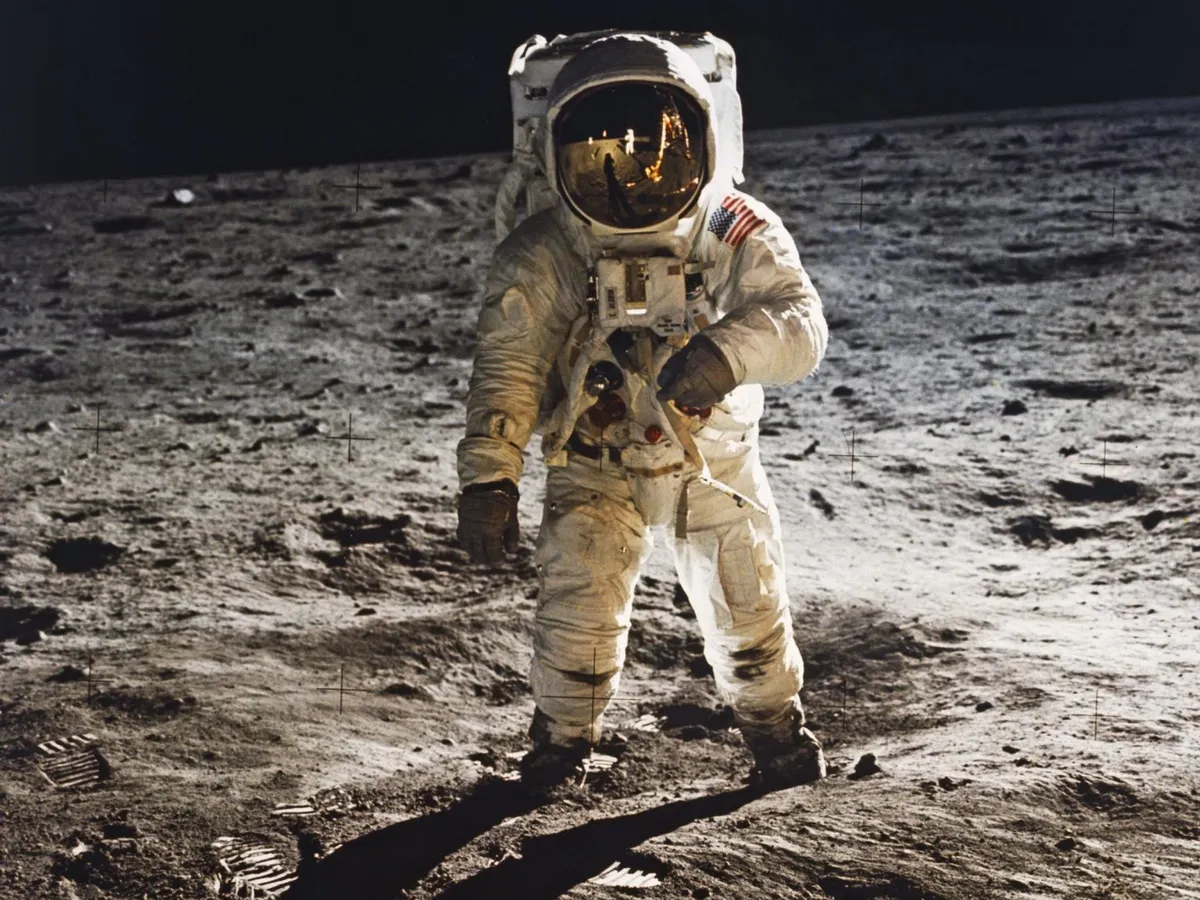
John Glenn in 1962
John Glenn in 1962

On February 20, 1962, aboard the Friendship 7 spacecraft, Glenn circled the planet three times in a nearly five-hour mission to become the first American to orbit the Earth. His success came at a pivotal time for the United States, as the country was locked in a Cold War with the Soviet Union and was up to this point losing the space race. The Soviet Union had already launched the first satellite and the first human, Yuri Gagarin, into space. Glenn’s mission restored confidence in the US space program while marking a major milestone in space exploration. 

The mission represented more than national pride, however. The lessons learned from Glenn’s flight directly influenced the Gemini and Apollo programs, culminating in the Moon lading just seven years later. Throughout his life, Glenn continued to remain involved in space exploration. In 1988, at the age of 77, he returned to space aboard the Discovery, becoming the oldest person to fly in space. John Glenn’s legacy for space exploration is impactful, but it goes far beyond his three orbits of Earth. He famously described his view from space and stated, “you don’t see borders.” What he saw was one fragile planet shared by all humans and all other living creatures – and this valuable perspective might be his more important legacy of all.

Another day, another discovery. Browse the On This Day Archive.
On This Day, July 17: Earliest Recorded Solar Eclipse

The Sun stood in constant awe and reverence in the ancient world. Nobody knew exactly what it was, but people knew it provided warmth and life to the living world. Because of this, people tracked the path of the Sun and often worshipped it as a god. So, imagine the reaction that would occur when the Sun vanished in the middle of the day.

On July 17, 709 BCE, court astronomers in in Qufu, capital of the ancient Chinese state of Lu, watched and recorded this exact event. It was recorded in the Spring and Autumn Annals (Chunqiu), with the line “the Sun was totally eclipsed”, marking the first recoding in human history of a solar eclipse. Without modern astronomy, ancient civilizations could not explain what they were witnessing. Across the world, eclipses were often interpreted as supernatural omens – warnings from the gods, signs of political upheaval, and so on. Recording these events must have seemed like a good idea.

A Total Solar Eclipse

Over centuries, Chinese, Babylonian, Greek, and later Islamic astronomers accumulated additional observations of eclipses. They began to notice that they were not random but occurred in predictable patterns. Today, astronomers can predict a solar eclipse centuries in advance with extraordinary precision. Using our understanding of gravity and orbital mechanics, we know exactly when the Moon’s shadow will cross Earth’s surface and where totality will occur down to the second.

Another day, another discovery. Browse the On This Day Archive.
On This Day, July 16: Trinity Test

For thousands of years, humanity sought to understand the fundamental building blocks of matter. What began decades earlier as a quest to understand the nature of the atom culminated in one of the most consequential moments in history. On the morning of July 16, 1945, a brilliant flash illuminated the New Mexico desert as the Trinity Test became the first successful detonation of a nuclear weapon, ushering in the Atomic Age.

As with many new technologies, the path to a nuclear weapon began much earlier with discoveries that transformed our understanding of the atom. Scientists such as Henri Becquerel, Marie Currie, Ernest Rutherford, Niels Bohr, and many others gradually revealed that the atom was in fact not indivisible but consisted of other elementary particles. These particles are arranged in a complex structure that stores an enormous amount of energy, some of which can be released under the right conditions. 

Fearing that Nazi Germany would develop an atomic bomb first, the United States launched the Manhattan Project to develop its own atomic bomb. The Manhattan Project brought together many of the world’s leading scientists and engineers, and after a few years of intense secrecy, research, and construction, it culminated in the Trinity Test.

A mushroom could from the Trinity Test

The explosion exceeded expectations. The mushroom could rose to 7 miles high in the sky, with temperatures from the blast exceeding the surface of the Sun. Although the Trinity Test marked the birth of the nuclear age, it also demonstrated the remarkable power of scientific inquiry. Some of the same discoveries that led to nuclear weapons also gave rise to nuclear energy, advanced imaging technologies, carbon dating, and a deeper, more complete understanding of the universe itself.

Another day, another discovery. Browse the On This Day Archive.

On This Day, July 15: Rosetta Stone Discovered

The hieroglyphics covering ancient Egyptian monuments spoke a language that nobody could understand. That changed on July 15, 1799, when a fortuitous discovery gave scholars the key they had been searching for. While strengthening the defenses of Fort Julien near the town of Rosetta, French soldiers serving in Napoleon’s Egyptian campaign uncovered a carved stone that initially looked ordinary enough. Yet that artifact, a large black basalt slab called the Rosetta Stone, became they key to deciphering the lost language of Egyptian hieroglyphics.

The Rosetta Stone
The Rosetta Stone

The Rosetta Stone contained on it a decree written in three different languages: Greek, Demotic, and Egyptian Hieroglyphics. Since the Greek language was known and could be read, researchers suspected the stone might serve as a translation key for the mysterious hieroglyphs. For nearly 1,500 years, no one could read the language of the ancient Egyptians. Their temples, monuments, and tombs were covered with elaborate symbols, but their meaning had been lost after the decline of the ancient Egyptian civilization. Some people even believed hieroglyphs were merely symbolic or mystical images rather than a true written language.

The breakthrough came in 1822 when French scholar Jean-Francois Champollion demonstrated that hieroglyphs represented both sounds and ideas, eventually unlocking the principles of the ancient writing system. Few archaeological discoveries have had such a profound impact. For the first time ever, historians could read the words carved onto Egypt’s temples, obelisks, and royal tombs, opening a window into more than three millennia of human civilization.

Another day, another discovery. Browse the On This Day Archive.
On This Day, July 14: Mariner 4 Mars Flyby

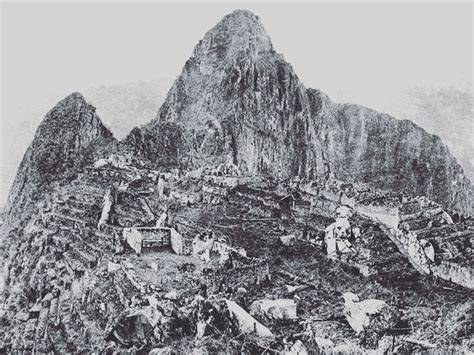
Few worlds have captured the human imagination like Mars. For thousands of years, it was little more than a red dot in the night sky. Even after the invention of the telescope, people wondered and debated what the Martian surface was like, and many wondered if life had existed on the planet. On July 14, 1965, a small 575-pound spaceship called Mariner 4 made the first successful flyby of Mars, revealing close up photos of the planet’s surface.

Mariner 4 spacecraft
(Credit: NASA)

Mariner 4 traveled more than 325 million miles over eight months to reach Mars, eventually passing within about 6,100 miles of the planet. For decades, some people, including a few scientists, believed Mars might harbor vegetation or remnants of advanced civilizations. The 22 photos from Mariner 4 replaced that speculation with evidence.

The photographs revealed a heavily cratered landscape that more closely resembled the moon instead of a living world. While this was disappointing for those who had hoped to find signs of life, it was a triumph for science. For the first time, humans had explored the surface of another planet not through imagination or speculation, but through direct observation. It also showed that interplanetary exploration was possible, paving the way for future missions such as Mariner 9, the Viking landers, and Mars rovers.

Another day, another discovery. Browse the On This Day Archive.
On This Day, July 13, Passing of August Kekule

During the mid-1800s, chemists knew the atomic composition of many organic compounds but struggled to understand their arrangement. Carbon in particular was present in an astonishing variety of substances but nobody could explain why. August Kukele, who passed away on July 13, 1896, helped solve this problem by proposing that carbons atoms could bond to one another to form long chains. This idea became a cornerstone of organic chemistry, leading to the rapid growth in knowledge in organic chemistry in the following century.

Portrait of August Kekule

Kukele’s most famous contribution to organic chemistry came in 1865, when he proposed the molecule benzene consisted of six carbon atoms linked together in a ring. The nature of his discovery also contains one of the most famous anecdotes in the history of science. Kukele claimed, nearly 25 years after proposing the structure of benzene, that the idea came to him after a dream where a snake seized its own tail. He awoke with a revelation: what if the carbon atoms in benzene from a closed ring rather than an open chain?

Kekule’s work underpins much of today’s modern organic chemistry. His vision (or dream?) of carbon atoms linked into rings provided chemists with an entirely new framework for understanding the molecular world. Our plastics, medicines, agricultural chemicals, synthetic fibers and various other industrial materials all rely on principles that trace back to his insights.

Another day, another discovery. Browse the On This Day Archive.

On this Day, July 12: First JWST Images

The James Webb Space Telescope, NASA’s successor to the Hubble Space Telescope and the world’s most powerful telescope, was launched on Christmas Day of 2021. For months, astronomers knew the telescope was working, but nobody outside a small group of scientists had seen what it was capable of. On July 12, 2022, the first full-color images from the James Webb Space Telescope (JWST) were finally released by NASA, to the delight of millions of people worldwide.

The images revealed stunning views of the Carina Nebula, the Southern Ring Nebula surrounding a dying star, Stephans Quintet of interacting galaxies, and the atmosphere of the exoplanet WASP-96b. The JWST observes the universe in infrared light, allowing it to penetrate clouds of cosmic dust, revealing parts of the universe that were previously invisible. Its primary mirror allows for more than six times the light collecting area than the Hubble telescope.

Southern Ring Nebula, taken from two different instruments from JWST
(Credit: NASA)

The JWST has to ability to transform our understanding of nearly every area of astronomy. It is currently being used to learn more about the formation of early galaxies and black holes, the birth of stars and planetary systems, and the atmospheres of distant worlds that may one day reveal life on another planet.

Another day, another discovery. Browse the On This Day Archive.